
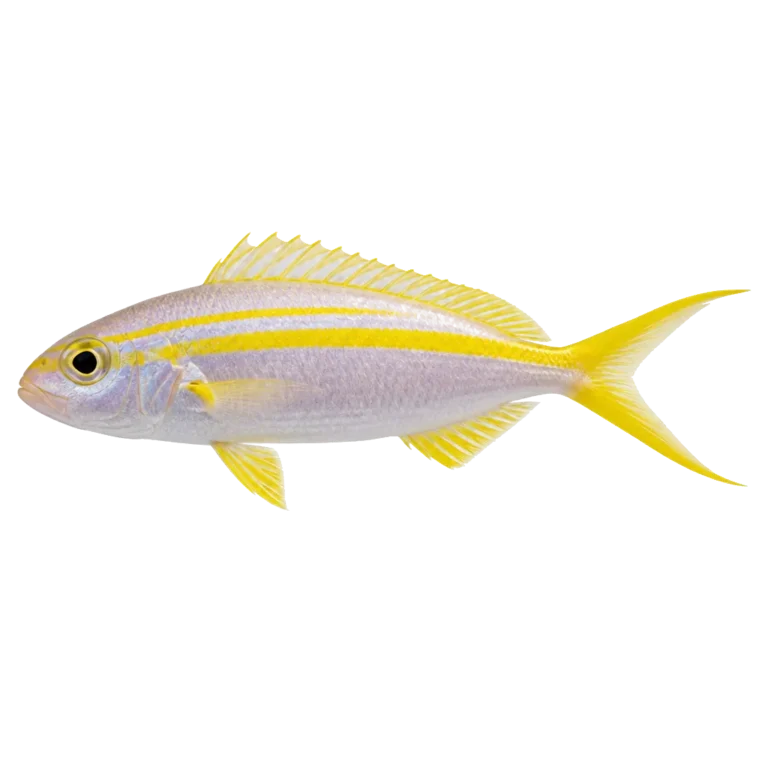
Yellowfin Whiptail
Summary
Pentapodus emeryii is an active, bottom-oriented threadfin bream that spends much of the day cruising open sand and taking mouthfuls from the surface layer to find small prey. This is normal foraging rather than a sign that it is failing to settle, but it also means the fish needs usable sand area rather than a reefscape built wall-to-wall with rock.
Its generally peaceful manner can be misleading: anything small enough to fit in its mouth may eventually be treated as food. Choose it for a roomy community built around similarly sized fish, not as a harmless clean-up fish for a nano-fish or ornamental-invertebrate display.
Care
Build the layout around a broad, unobstructed sand zone and a long swimming route. Leave rockwork securely supported and include a few shaded crevices at the edges; the fish should be able to retreat when startled without losing the open bottom it uses for feeding.
A mature sandbed is useful during settling because a new Yellowfin Whiptail may initially search the substrate more readily than the water column. Do not rely on natural sandbed fauna alone, however: persistent, intensive sifting with little interest in offered food is a warning that deliberate feeding support is needed.
Feeding
Offer varied, marine-based meaty foods in several smaller feeds through the day. Rotate mysis, finely chopped shrimp, mollusk flesh, krill, and marine fish flesh, and deliver part of the ration close to the sand so a new arrival can find it where it expects to forage.
Feed deliberately when housed with quick midwater feeders. Use a baster or feeding tube to place thawed food on or just above the substrate, then confirm that the whiptail is actually swallowing food rather than only sifting sand. If it refuses prepared foods at first, enriched live foods can help initiate feeding; transition it onto a varied frozen diet rather than allowing a narrow live-food diet to become the long-term routine.
Compatibility
Keep Pentapodus emeryii as a single specimen. It is best paired with peaceful fish that are too large to be swallowed and that will not repeatedly beat it to every meal.
Avoid very small fish and ornamental crustaceans, and do not treat it as fully invert-safe simply because it usually ignores corals. Corals are generally left alone, but shrimp and other small mobile animals remain at risk. Introduce the whiptail before especially assertive or fast-feeding tankmates when possible, so it can establish normal feeding behaviour before competition is added.
Good to know
Use a tightly fitting cover with no practical exit gaps. This species is a capable jumper, particularly when newly introduced or frightened; an otherwise healthy fish found on the floor is a preventable loss.
Early feeding behaviour deserves close observation. A newcomer may ignore food in open water and concentrate on the sandbed, so visible body thinning, a pinched belly, or repeated sand-sifting without feeding should prompt targeted bottom-level meals rather than assuming it is obtaining enough food from the substrate.