
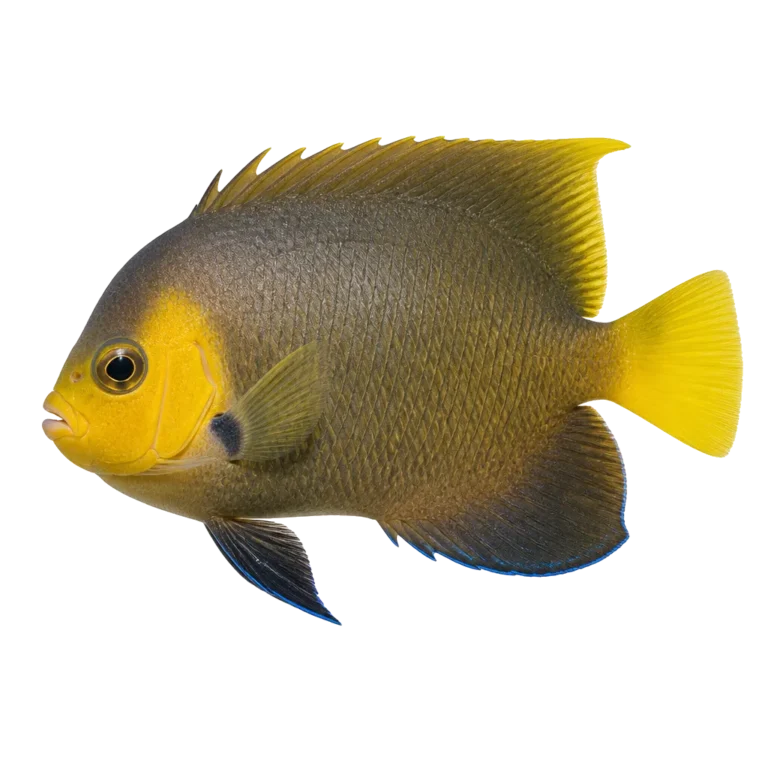
Xanthotis Angelfish
Summary
Apolemichthys xanthotis is an active, deliberate grazer that patrols rock and coral structure rather than hovering in open water. Its natural habit of moving through coral-rich reef faces helps explain why it needs a mature, complex aquascape and why it may repeatedly investigate sessile invertebrates with exploratory nips.
Treat this as a fish for an established display where its grazing, cruising and occasional territorial behaviour can be accommodated. A specimen that remains hidden continuously, is excluded from the rockwork, or never joins feeding activity is not settling normally and should prompt a review of bullying and available cover.
Care
Build the aquascape as a network of stable rock formations with shaded retreats, arches and open lanes between them. Apolemichthys xanthotis needs room to turn and patrol, but also uses structure to break lines of sight; a bare, open layout can make territorial chasing more persistent.
Use mature live rock with natural grazing surfaces, while keeping swimming routes clear. Strong, oxygen-rich circulation is useful, but avoid directing an unbroken, blasting flow at its preferred sheltering areas; the fish should be able to move between cover and open water without constantly fighting the current.
Introduce it only to a settled system with dependable feeding opportunities. This species can be slow to gain confidence after arrival, so watch for repeated inspection of food followed by refusal, loss of body fullness, or spending all day behind one rock rather than treating these as harmless shyness.
Feeding
Offer a varied omnivorous diet built around sponge-based angelfish preparations, marine algae and substantial marine meaty foods such as mysis. Feed multiple small meals through the day rather than relying on a single heavy feeding, because this species is adapted to frequent grazing and browsing.
Make sure food reaches the angelfish before fast, surface-oriented tankmates consume it. Clip or secure algae where it can graze undisturbed, and deliver frozen foods near its usual route through the rockwork; a fish that repeatedly arrives late to food can decline even when the aquarium is being fed generously.
Do not rely on algae alone or on a single frozen food. Poor dietary variety can show up as a fish that accepts food but gradually loses condition, while a newly imported individual that refuses prepared foods may need a greater emphasis on sponge-containing foods and repeated small offerings.
Compatibility
Keep Apolemichthys xanthotis singly in most home aquariums. Although it occurs in pairs or small groups in nature, combining adult or similarly sized angelfish in captivity can produce sustained territorial pressure, especially toward other Apolemichthys, similarly shaped angelfish, or fish that use the same rockwork.
Choose robust, non-pugnacious tankmates that occupy different feeding zones and can ignore occasional displays. Avoid adding timid grazers, slow feeders, or another established angelfish that is likely to contest the same caves and grazing routes. Add this angelfish after more passive community fish, but before an especially assertive fish that could prevent it from settling and feeding.
Reef compatibility is individual and must be treated as a real stocking risk, not a guarantee. It may nip both stony and soft corals and can target clam mantles; do not select it for a reef containing corals or clams that cannot tolerate repeated picking.
Good to know
Territorial behaviour may become clearer only after the fish has settled and claimed the central rockwork. Brief posturing or a short chase can be manageable, but repeated pursuit that confines another fish to a corner, prevents it from feeding, or causes torn fins calls for intervention rather than waiting for the hierarchy to resolve.
Watch corals and clams after introduction, including well after the first few calm days. Repeated visits to one colony, retracted polyps during the fish's patrols, or a clam that stays tightly closed are practical signs that an individual has developed a damaging nipping habit and may need to be removed from the reef.
Because this species spends much of the day inspecting rock and coral surfaces, distinguish normal browsing from distress. Normal fish patrols, grazes and comes out for food; a stressed fish repeatedly wedges into cover, breathes hard, or refuses several feeding opportunities.