
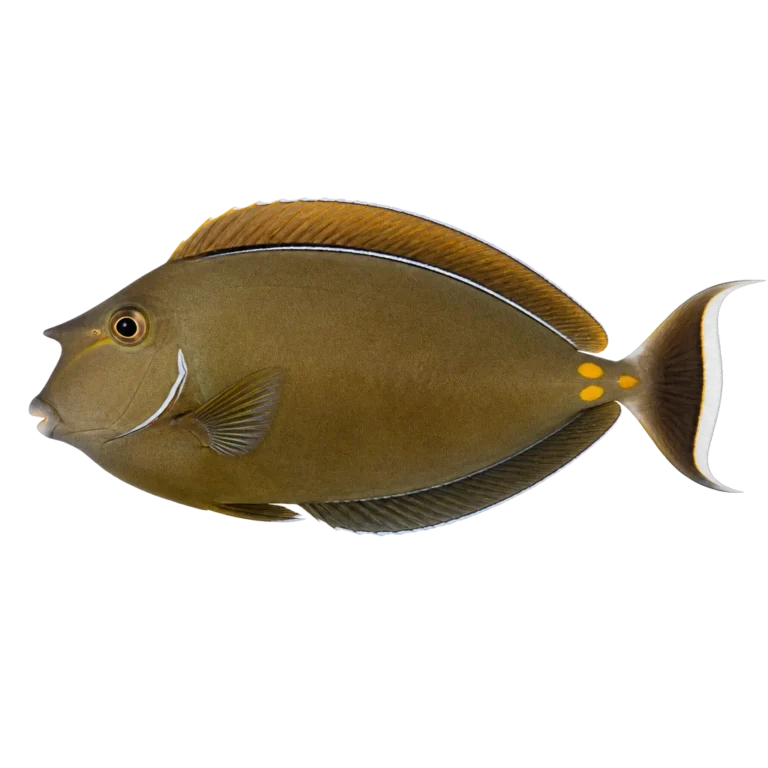
Whitemargin Unicornfish
Summary
Naso annulatus is a daylight cruiser that naturally forages in open water and along reef faces, then retreats into reef structure at night. In an aquarium, it needs room to travel continuously rather than a rockscape that forces repeated tight turns; persistent pacing along panes is a sign that the available swimming layout is inadequate.
Its eventual bulk and constant activity make it a specialist choice for a purpose-built, very large reef display rather than a fish to purchase with a future upgrade assumed. A juvenile may initially appear manageable while still being on a trajectory that the system cannot support.
Care
Build the aquascape around a broad, unobstructed swimming lane, with rockwork consolidated into secure islands or a rear structure. Every rock and coral placement must tolerate the fish passing close by, because an adult can shift unsecured pieces simply through body movement.
Provide a substantial shaded retreat within the rockwork for nighttime use, but do not fill the display with caves at the expense of open water. A fish that stays hidden through the day, breathes heavily after routine swimming, or repeatedly turns at the same pane is not settling normally.
Plan filtration, circulation, and maintenance around a high food input and a very large herbivore-planktivore. This species produces considerable waste, so deteriorating water clarity or rising nutrients after feeding usually indicates that the system's export capacity is being exceeded rather than that the fish should be fed less.
Feeding
Offer a mixed daily diet built around marine algae and vegetable-based prepared foods, supplemented with substantial planktonic fare such as appropriately sized frozen crustaceans. Keep algae available regularly and divide richer foods into several portions so the fish can graze and feed actively without receiving one oversized meal.
Feed where the unicornfish has clear access. Faster tangs and large planktivores can monopolize suspended foods, so spread food across the current and use more than one feeding point when needed. A pinched area behind the head, reduced daytime grazing, or a hollow-looking belly calls for a review of food quantity, access, and variety.
Do not rely on meaty foods alone. Naso annulatus takes large zooplankton, but it also consumes algae; a protein-heavy routine can leave it without the plant material and feeding pattern that support sustained condition.
Compatibility
Keep a single Naso annulatus in most private systems. Although adults may be encountered in small groups in nature, adding more than one in captivity creates a high risk of sustained pursuit and surgeonfish conflict unless the display is exceptionally spacious and all individuals can be introduced together.
Choose robust, non-territorial fish that will not challenge it for swimming space or food. Avoid crowding it with other large surgeonfish, especially similar Naso species or established tangs, since conflict can escalate as fish mature. If surgeonfish are being combined, introduce the Whitemargin Unicornfish before more territorial tangs whenever the system and stocking plan allow.
Reef compatibility is conditional rather than automatic. It is unlikely to deliberately feed on corals, but its size can topple unsecured colonies or scrape them while turning, so mount corals and rockwork as though they will be contacted by a large moving fish.
Good to know
Expect temperament to change with size and social context. A specimen that is calm when young can become forceful toward other surgeonfish after it establishes feeding routes, so repeated chasing, fin displays, or exclusion from algae sheets should be acted on early rather than treated as harmless settling-in behaviour.
Handle only when necessary and avoid loose netting around the caudal peduncle. Like other surgeonfish, Naso annulatus has sharp defensive structures in that area; a rigid specimen container is safer for both fish and keeper during transfer.
Nighttime hiding is normal when the fish has a suitable retreat. Daytime withdrawal, refusal to emerge for food, or extended dark resting outside shelter is more concerning and warrants checking for bullying, injury, or declining condition.