
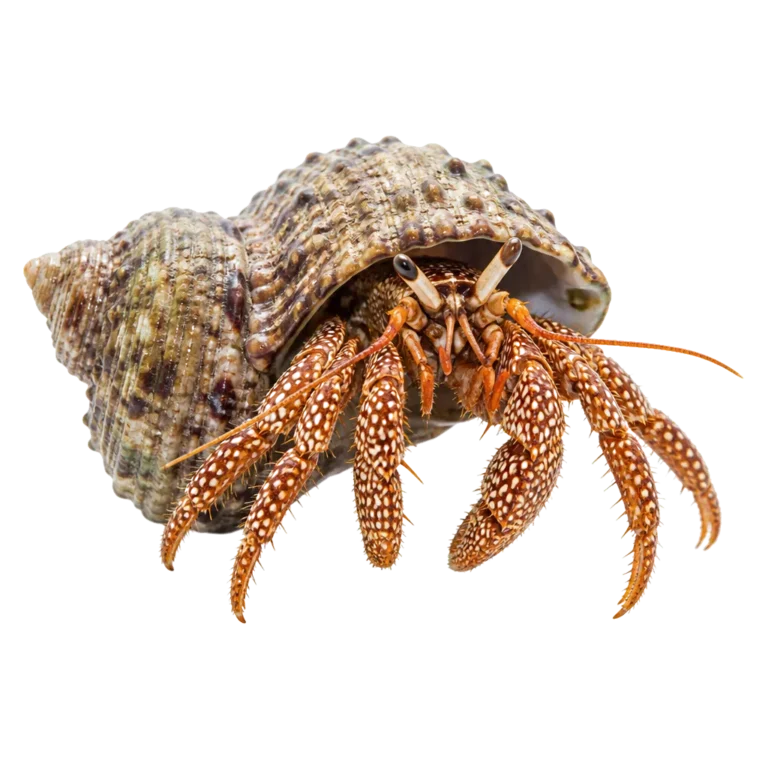
White-spotted Hermit Crab
Summary
Dardanus megistos is a large, red hermit crab marked with pale spots and carried in a borrowed gastropod shell. Its Indo-Pacific habitat includes reef flats, lagoons, rubble, rock, and sand, which fits its active bottom-roaming behavior in captivity rather than life as a small algae-picking reef cleaner.
Choose it for a fish-only or invertebrate-light system where its size, strength, and opportunistic feeding can be accommodated. It is not a dependable reef-safe hermit: a roaming adult can move loose frags, topple unsecured décor, and treat smaller animals as food or shell competition.
Care
Give Dardanus megistos open routes across sand or rubble, with firmly seated rockwork that cannot shift when it climbs or pushes beneath it. It does not require special lighting; the important layout feature is secure, open floor space rather than a densely packed coral garden.
Keep several clean, empty marine gastropod shells available in a range of progressively larger sizes. A crab that repeatedly inspects, grips, or pulls at another snail’s shell may be seeking a better home, and a shortage makes conflict with snails and other hermits more likely.
An established marine aquarium is preferable because this crab relies on a consistent supply of natural grazing, detritus, and meaty foods between target feedings. Do not add it to a sparse new tank expecting it to sustain itself on nuisance algae.
Feeding and role
Feed a varied omnivorous diet directly, including marine algae or seaweed-based foods, sinking pellets, and substantial meaty items such as shrimp, mussel, and fish. Offer food near the crab after lights dim if it is being outcompeted; repeated scavenging around tankmates or attempts to take their food can indicate that its own ration is inadequate.
It will consume uneaten food, detritus, and some algae, but one Dardanus megistos is not a cleanup solution for a stocked aquarium. Its scavenging value must be weighed against its willingness to eat snails, smaller crustaceans, and other accessible invertebrates.
Compatibility
Keep Dardanus megistos away from snails, small hermits, ornamental shrimp, and other small bottom-dwelling invertebrates. These are potential prey and may also be attacked for their shells, especially when food or suitable shells are limited.
Do not rely on it in a coral display. It can dislodge unsecured corals and rockwork while climbing, so even corals it does not consume can be damaged by being knocked over or buried. Secure any fixed structure before introduction.
Add this species as a single specimen rather than as part of a hermit group. Multiple large hermits increase competition for food, territory, and shells; keeping more than one requires unusually ample floor space and a deep surplus of appropriately sized shells.
Avoid housing it with animals that specialize in eating crustaceans, including large predatory crabs and crustacean-feeding fishes. The hermit is particularly exposed while newly molted and before its shell is fully reoccupied.
Good to know
Dardanus megistos molts as it grows. A crab that becomes unusually reclusive, stops feeding, or remains hidden may be preparing to molt; leave it undisturbed and avoid moving its shell or dismantling nearby rockwork. Afterward, a pale empty shell-like casing may be its shed exoskeleton rather than a dead crab.
Never expose it to copper-based medications, which are hazardous to crustaceans. Acclimate carefully to the display’s salinity and temperature, then ensure a suitable shell is available immediately; a crab without a secure shell is highly vulnerable and may become more confrontational toward tankmates.