
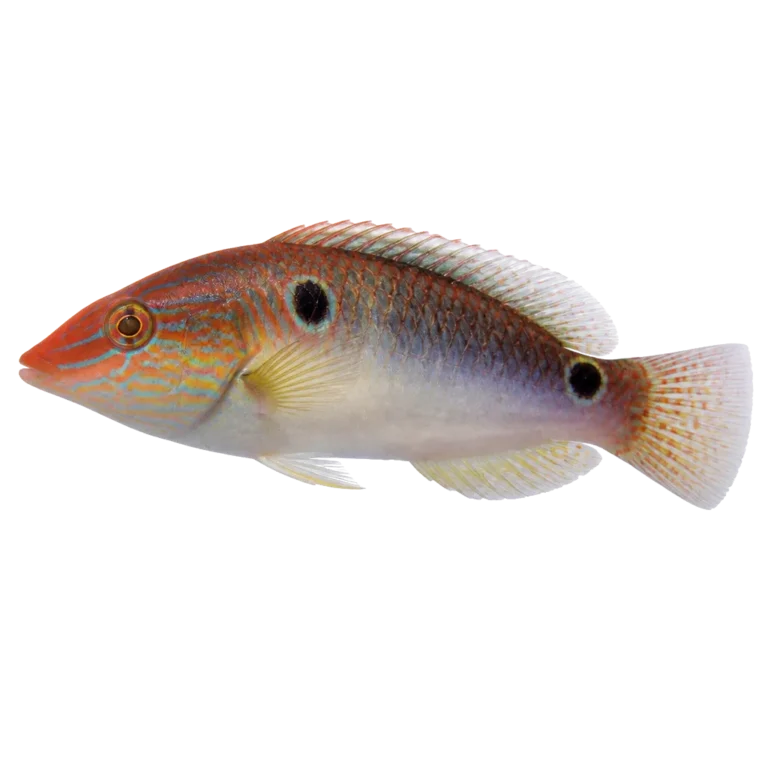
Two-spot Wrasse
Summary
Oxycheilinus bimaculatus is a deliberate, structure-oriented wrasse that spends much of its time inspecting rockwork, rubble-like areas and the lower water column for prey rather than cruising continuously in open water. Expect it to become bolder once it has learned the layout, then repeatedly work the same hunting routes and investigate small mobile animals.
Care
Build an aquascape with stable rockwork, broken sightlines and sheltered recesses, while leaving clear lanes around the structure for it to patrol. This species uses reef rubble, algae clumps and similar cover in nature, so an overly bare display can leave it exposed and prone to pacing along the glass instead of settling into a predictable route. Keep loose frags, small shells and unsecured rock from shifting when it probes around the base of the scape.
Feeding
Offer varied marine meaty foods in small portions at least twice daily, rotating mysis, enriched brine shrimp, finely chopped crustacean and mollusk flesh, and quality marine fish preparations. Feed broadly across the tank or use a target-feeding area if faster midwater fish intercept most food; a Two-spot Wrasse that only gets scraps may stay active but gradually lose body condition. Do not rely on clean-up-crew animals or incidental pests as food, because hunting those animals is not a complete or dependable diet.
Compatibility
Keep Oxycheilinus bimaculatus singly. Although wild fish may pair for breeding, adding another Two-spot Wrasse in a home aquarium creates a substantial risk of persistent territorial pressure once one fish has claimed the rockwork.
Choose robust fish that are too large to be treated as prey and that do not closely resemble a small wrasse. Avoid very small fish, timid bottom dwellers, and smaller or similarly shaped wrasses, especially in an established layout where this species can defend familiar patrol areas. Add it after more peaceful fish have settled, and use an acclimation box if existing wrasses are likely to challenge it.
It is generally coral-safe, but it is not reliably safe with ornamental crustaceans, snails, worms, feather dusters or other small motile invertebrates. Treat those losses as predation rather than a coral-reef compatibility issue.
Good to know
Territorial behaviour may not be obvious on the first day. Watch for repeated chasing, blocking another wrasse from feeding lanes, or a smaller fish remaining pinned in cover after the Two-spot Wrasse has settled; these are signs that the social fit is failing, not normal brief introduction behaviour.
Its hunting behaviour can become more pronounced as it gains confidence. If a previously visible shrimp, snail or small fish disappears after this wrasse begins actively searching crevices, reassess the livestock mix rather than assuming the animal simply hid.