
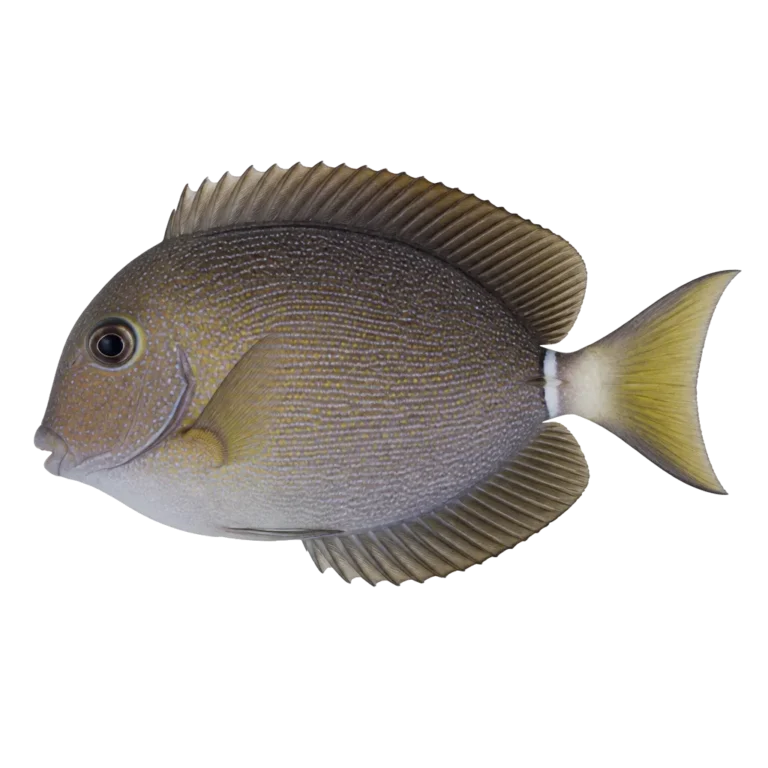
Tomini Tang
Summary
Ctenochaetus tominiensis is a constantly active bristletooth tang that spends much of the day picking film algae, detritus, and fine material from rockwork. This makes it most suitable for an established reef with mature grazing surfaces; in a newly set-up or overly sterile display, persistent searching, weight loss, or repeated attention to the glass can signal that natural forage is not meeting its needs.
It is usually focused on its own route through the aquascape rather than deliberately harassing unrelated fish, but it can become forceful around fish that look or feed like competing tangs. Expect a fish that is busy and visible, not one that remains tucked into a single cave.
Care
Build the aquascape with broad, algae-bearing rock faces and open corridors between structures. Ctenochaetus tominiensis grazes while moving, so a wall of tightly packed rock can restrict its normal feeding pattern, while an entirely open layout offers too few surfaces to work over.
Provide a few shaded crevices or overhangs that allow it to retreat without being cornered. It may wedge itself into rockwork to rest, particularly after lights out; this is normal unless it remains hidden through feeding periods or shows rapid breathing.
Maintain strong oxygenation and enough water movement to keep the fish exercising without turning every resting area into a high-flow zone. A mature, well-filtered system matters because this tang produces substantial waste while requiring frequent feeding.
Feeding
Offer marine algae every day, using nori or a similar seaweed on a clip as a reliable baseline rather than expecting aquarium algae alone to sustain it. Rotate algae-based prepared foods and spirulina-rich foods, then add small portions of quality frozen foods for dietary variety.
Feed in several small opportunities across the day where practical. Ctenochaetus tominiensis is built for repeated grazing, and a single large feeding can leave it undernourished even when it appears keen to eat.
Place seaweed where the fish can feed without being displaced by assertive tankmates, and use more than one feeding point if other grazers are present. A pinched belly, reduced picking at rock, or fading interest in food warrants prompt attention; long-term reliance on meaty foods without sufficient vegetable matter is a poor strategy.
Compatibility
Keep Ctenochaetus tominiensis singly in most reef aquariums. A second Tomini Tang, or another Ctenochaetus species, is a high-risk pairing because both fish compete for the same grazing routes and may escalate from displays to repeated chasing once territory is established.
It generally fits with peaceful to moderately assertive reef fish that occupy different feeding niches. Avoid pairing it with established, similarly shaped surgeonfish in confined layouts, or with exceptionally aggressive fish that can deny it access to algae sheets and grazing areas.
When combining tangs is appropriate only in a much larger, highly structured system, introduce the potential competitors together and preferably before either has claimed the aquascape. If adding one to an established tang community, use a social acclimation box and be prepared to intervene if chasing prevents feeding.
It is considered coral-safe, but it may graze heavily on desirable film growth and ornamental macroalgae. Do not rely on it to ignore decorative algae displays simply because it leaves corals alone.
Good to know
Territorial behaviour often appears after Ctenochaetus tominiensis has settled in rather than on its first day. Brief posturing can be normal, but repeated lateral displays, tail-slashing attempts, blocked access to food, or a tankmate remaining hidden are signs that the pairing is failing.
Like other surgeonfish, it has sharp tail spines. Use a rigid container rather than a net whenever possible for capture or transfer, since the spine can snag and the fish can injure itself while struggling.
Tangs are notably prone to visible marine ich outbreaks after transport stress or social conflict. Select a specimen that is already eating confidently, watch closely for scratching, excess mucus, or white spots after any disruption, and treat a disease episode as a whole-system risk rather than merely a cosmetic problem on the tang.