
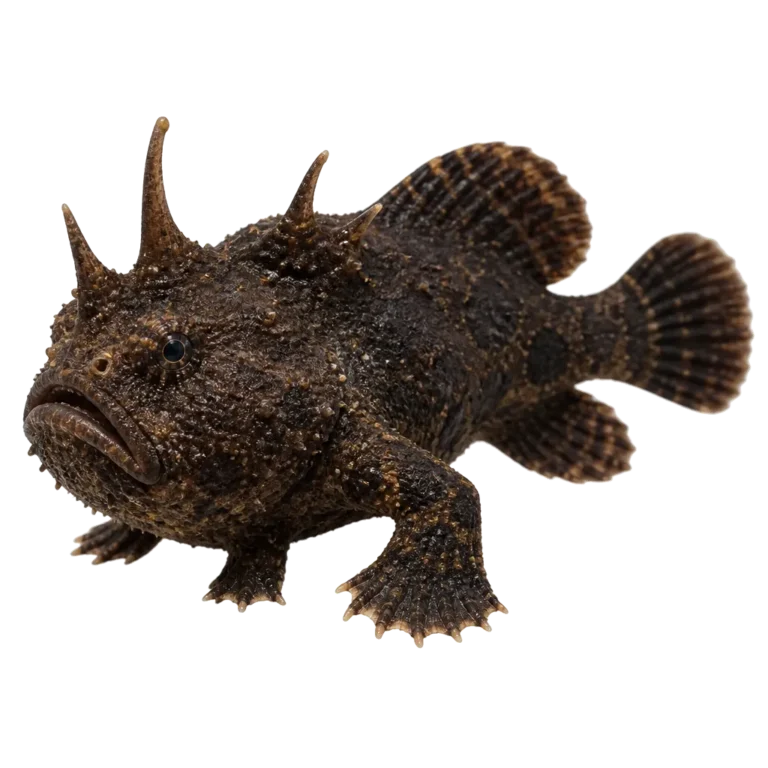
Three-spined Frogfish
Summary
Batrachomoeus trispinosus is a bottom-oriented ambush predator that may spend long periods motionless on the substrate, beneath an overhang, or beside rockwork. That stillness is normal hunting behaviour rather than a sign that it is inactive or unwell; choose it only for a display where a cryptic, sedentary fish is acceptable.
Its extremely large mouth determines most husbandry decisions. Anything that can be swallowed, including apparently established small fish and mobile invertebrates, can become prey. Corals are usually ignored, but this is not a conventional mixed reef community fish.
Care
Build the layout around open, soft-bottom resting areas with shaded cover at the edges: secure caves, low ledges, and overhangs let the fish choose an ambush position without having to wedge itself deep into unstable rockwork. Keep rock structures firmly supported, because a heavy fish settling beneath them can dislodge poorly placed pieces.
Avoid directing strong pump flow at its preferred resting sites. Batrachomoeus trispinosus does not cruise the water column like an active reef fish; persistent blasting flow can leave it struggling to hold position or force it into unsuitable shelter. A dim retreat is useful even in a brightly illuminated coral aquarium.
Confirm the salinity history of the individual before purchase. The species is associated with both marine and brackish environments, so a newly acquired fish should be matched and transitioned carefully to the intended system rather than assumed to have identical salinity tolerance to every reef fish.
Feeding
Offer varied, marine-based meaty foods with feeding tongs, placing the food close enough for an ambush strike. Pieces of marine fish flesh, shrimp, krill, mussel, and similar seafood work better than expecting it to chase food in open water.
Feed measured portions two or three times weekly and watch the body condition rather than rewarding every feeding response. This sedentary predator has a low activity demand, and repeated large meals can quickly lead to excess condition and substantial waste from uneaten food.
Feed after more assertive tankmates have been distracted, or target-feed in its shelter. A frogfish that is not physically challenged may still miss meals when fast fish intercept every item. Avoid making freshwater feeder fish a staple: they add parasite risk and are a poor long-term substitute for a varied marine diet.
Compatibility
Keep Batrachomoeus trispinosus singly. Reliable pair or group husbandry is not established, and another bottom-dwelling predator can turn its preferred resting and feeding areas into a conflict zone.
Favour only robust tankmates that are much too large to swallow and will not harass a sedentary fish. Avoid small fish, ornamental shrimp, crabs, and other mobile invertebrates, as well as slow bottom dwellers that may be viewed as either prey or competitors.
Add the frogfish only after the tank’s long-term residents and feeding plan are decided. Introducing small livestock later is particularly risky because its apparent tolerance can end abruptly once it recognizes an animal as edible. Corals are generally the reef-safe exception, but their placement must still leave open resting and feeding ground.
Good to know
A fish that remains hidden or nearly motionless through the day may simply be following its normal ambush routine. Assess it at feeding time: a healthy individual should orient to suitable food and strike decisively, while repeated refusal, laboured breathing, or inability to hold a resting position merits investigation.
Expect activity and feeding interest to increase around lower-light periods. Plan target feeding so food reaches the fish rather than being carried away or taken by daytime-active tankmates.
Its camouflage can make it easy to overlook during maintenance. Check its usual resting places before moving rocks, siphoning around shelters, or placing hands and equipment into the aquascape.