
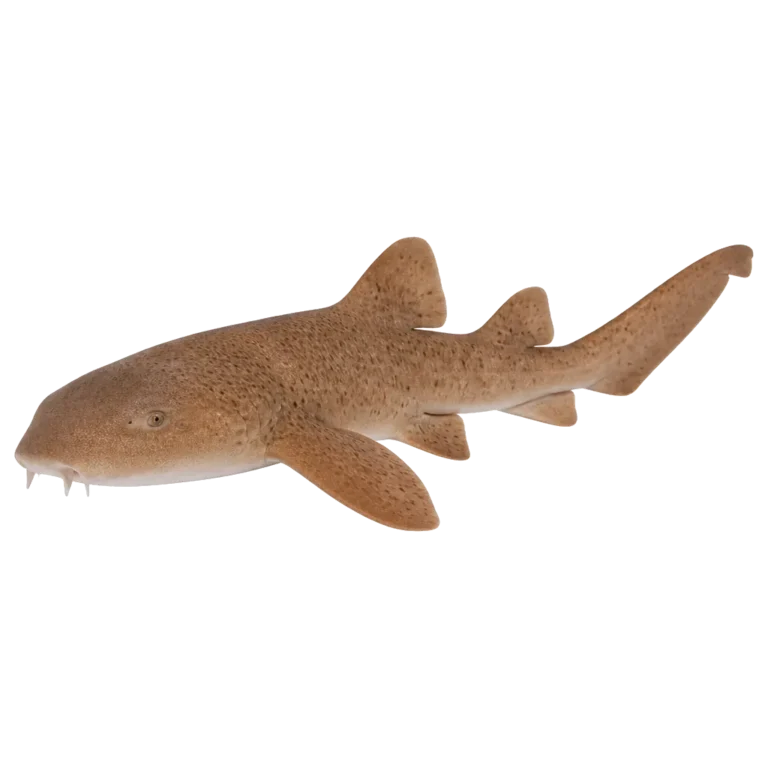
Tawny Nurse Shark
Summary
The tawny nurse shark, Nebrius ferrugineus, is a large bottom-dwelling shark whose calm daytime resting behaviour can be misleading: it becomes an active nocturnal hunter that investigates crevices, takes prey by powerful suction, and can consume animals that initially seemed too large or well sheltered. Its eventual size, turning needs, and predatory diet make it unsuitable for a conventional home reef aquarium.
A shark resting in a cave or against the aquarium floor is normal behaviour, especially under bright daytime lighting. Judge its condition instead by whether it emerges to feed, moves normally after dark, and has no abrasions on the belly, fins, or flanks from unsuitable décor.
Care
Keep this species only in a purpose-built, public-aquarium-scale shark system with a very large uninterrupted floor area and broad turning routes. A sedentary shark still needs room to pivot without scraping walls or rockwork; repeated rubbing, damaged fin edges, or a shark that cannot turn without contacting décor are signs that the enclosure is inadequate.
Build the aquascape around open sand-bottomed space, with only a few broad, smooth-edged shelters placed where the shark can rest without becoming trapped. Tight caves, narrow arches, exposed pump intakes, unstable rock structures, and sharp coral skeletons create injury risks when the shark moves after dark.
Use secure, protected circulation equipment and plan all maintenance so the shark cannot become confined or handled unnecessarily. It is generally docile when left alone, but its size and feeding response make close contact unsafe for both keeper and animal.
Feeding
Offer a varied marine carnivore diet by target-feeding appropriately sized portions of whole or substantial pieces of marine fish, squid, and crustaceans. Rotate foods rather than relying on one frozen fish item, because a monotonous diet can leave a long-lived shark with nutritional deficiencies even when it accepts food readily.
Feed deliberately at dusk or after lights dim, using tongs or a feeding pole so the shark receives its ration before faster tankmates strip the food away. Do not hand-feed: the shark locates food by smell and suction, and an accidental bite can be serious.
Remove missed food promptly and adjust portions to body condition. Food left under the shark or in its shelter is easily overlooked and can foul a system that already has a high consequence for poor water quality.
Compatibility
Treat Nebrius ferrugineus as a species for a shark-focused institutional display, not a mixed reef. It will eat corals, crustaceans, echinoderms, and smaller fishes, so ornamental invertebrates and any fish that can be swallowed are unsuitable regardless of how long they have previously coexisted.
Large, non-aggressive fishes that do not harass the shark and cannot be treated as prey are the only realistic companions, and even those require enough open bottom space that they do not block its resting sites or feeding route. Avoid persistent fin-nippers, highly territorial fishes, and large predators that may bite or crowd a resting shark.
Do not use stocking order as a safeguard against predation. Select tankmates on their adult size, behaviour, and ability to live in the same shark-scale system; an established community can still become incompatible as the shark grows. Although tawny nurse sharks may rest in loose groups in nature, housing multiple adults requires specialist assessment of space, sex, feeding access, and individual behaviour rather than simply adding another shark.
Good to know
Daytime inactivity is expected, but a shark that remains unresponsive after dark, repeatedly refuses offered food, breathes with obvious effort, or develops rubbing injuries needs prompt specialist evaluation. Do not try to stimulate it by touching, moving, or cornering it; harassment can provoke a defensive bite.
Its peaceful reputation applies mainly to unprovoked daytime behaviour. During feeding and when disturbed in a shelter, this shark is powerful, food-driven, and capable of injuring a keeper or damaging unsecured aquascaping.
A juvenile may appear manageable for a period, which is the main stocking trap with this species. Plan only for its full adult requirements from the beginning; upgrading after it has outgrown the enclosure is not a reliable welfare plan.