
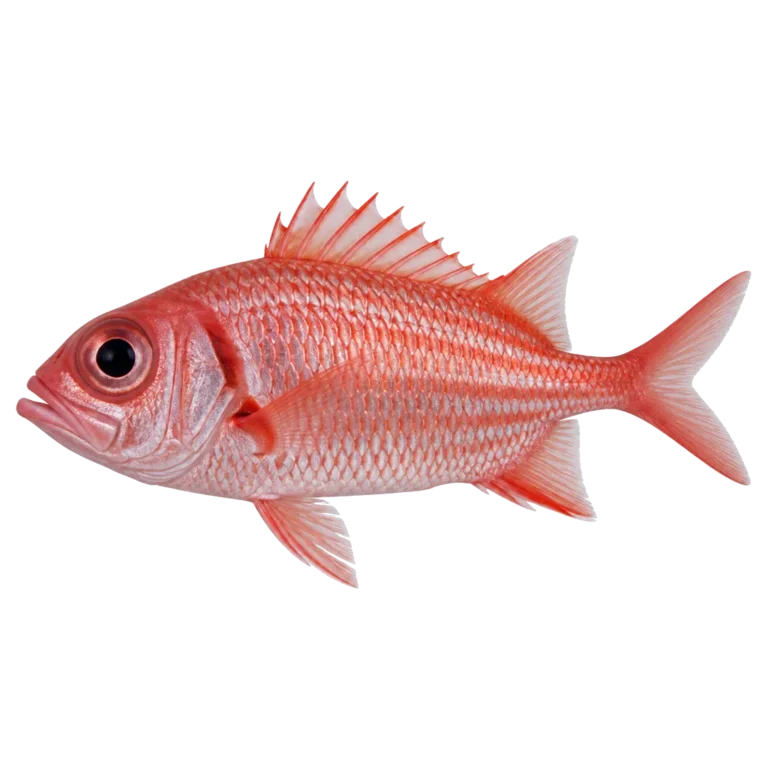
Tahitian Squirrelfish
Summary
Sargocentron tiere is a mainly nocturnal, structure-oriented predator. Expect it to spend much of the photoperiod tucked into a dark crevice or beneath an overhang, then become noticeably more active around dusk and after the main lights are out. A fish that remains hidden by day but emerges confidently to feed at night is usually behaving normally.
Its adult predatory behaviour matters more than its peaceful daytime appearance: anything small enough to be swallowed, especially mobile crustaceans and very small fish, should be treated as potential prey.
Care
Build the aquascape around several deep, shaded retreats rather than open-water swimming space alone. Sargocentron tiere uses holes, ledges and crevices as daytime security, and a shelter with more than one exit reduces the chance that a dominant tankmate can trap it inside.
Leave a clear route between the rockwork and open water so it can make short, purposeful foraging swims after dark. If it repeatedly presses into an exposed corner or refuses to leave cover even to feed after settling in, reassess whether its shelter is too bright, too shallow, or being controlled by another fish.
Feeding
Offer a varied marine-meaty diet, rotating items such as mysis, chopped shrimp, krill, squid, clam and marine fish flesh. Feed toward dusk or after the display lighting has dimmed, placing food close to its chosen refuge until it learns to come out earlier.
Make sure food reaches the squirrelfish rather than relying on a broadcast feeding. Fast daytime feeders can strip the water column before it emerges; target-feeding with a baster or feeding tongs helps confirm that the fish is eating. Do not rely on ornamental shrimp or cleanup-crew crustaceans as food sources, since predation can become the outcome instead.
Compatibility
Keep Sargocentron tiere singly in most home aquariums. It can become territorial toward other squirrelfish, particularly when they compete for the same daytime den, so adding another individual after one has claimed the rockwork is a common route to persistent chasing and exclusion.
Choose calm, robust fish that are too large to be swallowed and that will not continually invade its shelter. Avoid tiny fish, ornamental shrimp, and small crustaceans. Corals are usually not the concern, but a reef should be considered compatible only with caution because its invertebrate predation can change the stocking plan.
If combining it with assertive community fish, introduce the squirrelfish before territorial residents become entrenched, or ensure it has inaccessible-to-rivals retreats from the start. Watch at dusk: that is when both feeding competition and territorial pursuit are most likely to become obvious.
Good to know
Do not judge its wellbeing only by daytime visibility. A settled fish may remain almost entirely concealed under bright lighting, while a sudden failure to emerge for food at its usual evening period is the more useful warning sign.
Handle this species carefully during transfer or maintenance. The preopercular spine is venomous, so use a rigid specimen container where possible and avoid gripping or reaching into the fish’s refuge by hand.