
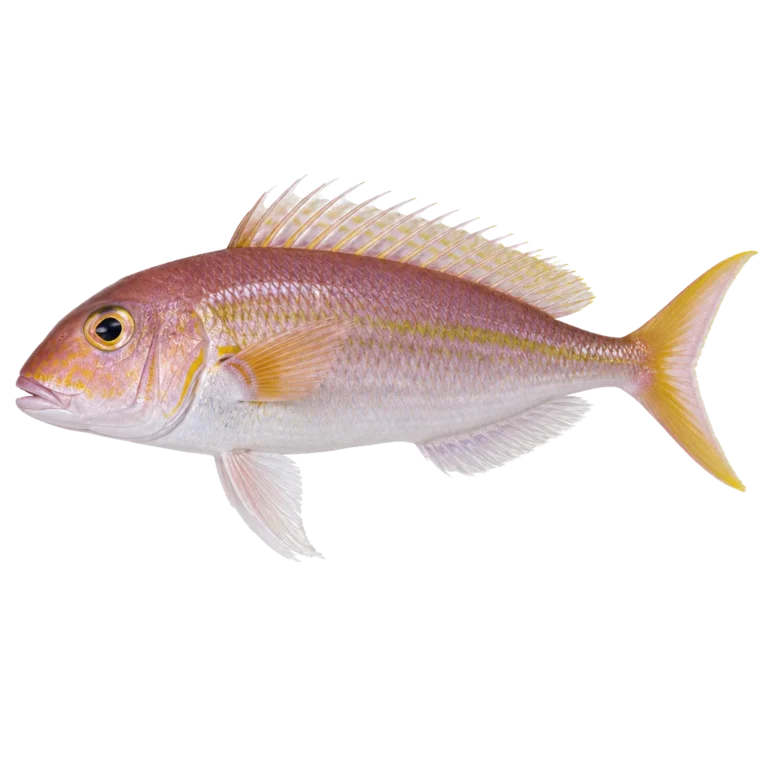
Stark’s Tilefish
Summary
Hoplolatilus starcki is a wary planktivore that spends much of the day hovering in open water close to a chosen burrow, then vanishes headfirst into cover when startled. A fish that remains pinned in a crevice, repeatedly rebuilds its shelter, or bolts at routine movement is signaling that the aquascape, tankmates, or traffic around the aquarium are making it feel exposed.
Its natural retreat is a rubble-lined burrow rather than a coral crevice alone. Plan for visible sand-moving and occasional rearrangement near the shelter; this is normal security-building behavior, not necessarily a sign that the fish is unwell.
Care
Build the layout around a protected burrow site: use a sandbed with rubble or small stable stones at the base of firmly supported rockwork, while leaving an open hovering lane above it. Secure every rock before the fish is added, because excavation can undermine rock placed directly on loose sand.
Keep the display calm and predictable. Hoplolatilus starcki is easily unsettled by sudden movement, boisterous fish, or repeated disruption around its refuge; a settled individual should hover near its burrow and retreat briefly rather than remaining hidden for long periods.
A mature system is preferable because this fish needs frequent feeding without allowing uneaten food to accumulate. Strong mechanical export and deliberate feeding locations help meet its food demand without turning the burrow area into a detritus trap.
Feeding
Offer small, varied suspended foods several times through the day: copepod-rich foods, mysis, enriched brine shrimp, and finely chopped marine foods are useful staples. Release food into the water column near its hovering area so it can intercept individual items rather than relying on food that falls to the sand.
Do not assume a peaceful tilefish will compete successfully at a busy feeding. Fast wrasses, anthias, damsels, and larger planktivores can strip the water column before it feeds; use multiple feeding points or temporarily distract dominant feeders. A consistently concave belly, shortened hovering periods, or failure to emerge at feeding time warrants prompt intervention.
Avoid making a single rich food the entire diet. A narrow diet, especially one dominated by brine shrimp, can leave a fish apparently eating but gradually losing condition.
Compatibility
Keep one individual, or introduce an established bonded pair of Hoplolatilus starcki together. Pairs are the natural social arrangement, but adding an unfamiliar second tilefish to a resident can lead to persistent chasing around the established burrow rather than a partnership.
Choose peaceful, predictable tankmates that leave the lower open-water zone and burrow entrance alone. Avoid territorial sand-sifters, excavating fish, large boisterous feeders, and predators that can make the tilefish remain hidden or trigger escape attempts.
Add this species after the most assertive compatible fish have settled, but before the aquarium becomes crowded with rapid water-column feeders. Although it is reef compatible, place low corals and loose frags away from its chosen burrow: excavation can bury, tip, or abrade them.
Good to know
Treat every opening in the cover as an escape route. Hoplolatilus starcki can launch upward when alarmed, including after a sudden shadow, netting, a conflict near its refuge, or nighttime disturbance. Use a tightly fitted lid that also closes gaps around plumbing, cords, and light mounts before introduction.
The first days after introduction are often dominated by shelter work and cautious appearances. Resist repeatedly flushing the fish from cover to check on it; repeated disturbance can turn normal caution into chronic hiding or a jump attempt.
If a settled fish abruptly abandons its established burrow, inspect for harassment, a collapsed excavation, or changes that have made the site exposed. Restoring a secure rubble-supported retreat is usually more useful than trying to force the fish into a different part of the aquascape.