
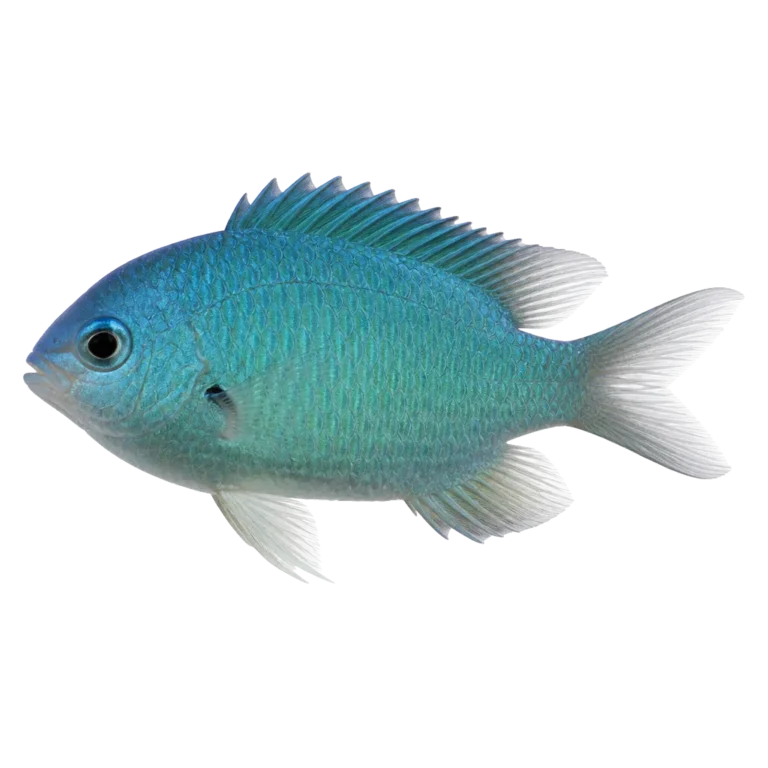
Similar Damselfish
Summary
Pomacentrus similis is a small, alert damselfish that spends much of the day making short foraging sorties close to rockwork, then retreating quickly when challenged. That reef-edge, cover-oriented behaviour translates into an aquarium fish that is usually visible and active but becomes increasingly possessive of a chosen crevice, coral base, or section of rubble once settled.
Its manageable size should not be mistaken for a passive temperament. A fish that repeatedly rushes neighbours away from one patch of rock is establishing a territory rather than playing; this is the central behaviour to plan around when choosing tankmates.
Care
Build the aquascape with several separated rock formations, caves, and broken sightlines rather than one continuous wall of rock. Pomacentrus similis uses structure as both a retreat and a territorial boundary, so alternate routes around the reef reduce constant face-to-face encounters.
Leave open water immediately above and in front of the rockwork for its stop-and-go swimming style, while ensuring lower-ranking fish have cover that is not controlled by the damselfish. Persistent confinement to a top corner, refusal to leave a shelter, or torn fins on another small fish indicates the layout or stocking mix is not providing an escape route.
Feeding
Offer small portions of varied prepared marine foods and appropriately sized meaty fare, with a regular algae-based component. Feed in more than one area when housed with fast, assertive feeders, because Pomacentrus similis readily joins the rush for food but should not have to defend every mouthful from one fixed spot.
Use a modest, repeatable feeding routine rather than large infrequent meals. A fish that remains active around its territory but loses body condition is often being beaten to suspended foods; redirect some fine food into the current near its cover while feeding larger tankmates elsewhere.
Do not rely on enriched brine shrimp as the main food. It is useful for variety and to trigger feeding, but a narrow diet can leave an otherwise eager damselfish in poor condition.
Compatibility
Keep a single Pomacentrus similis in a mixed community unless the aquarium is deliberately arranged for a group with ample, separately structured territory. Adding several juveniles does not guarantee lasting harmony: as they mature, one individual may repeatedly exclude another from food and shelter.
Favour tankmates that are confident, similarly robust reef fish but occupy different territory or feeding niches. Avoid adding timid, similarly sized rock-dwelling fish, other damselfish, or closely similar Pomacentrus after this fish has claimed the aquascape, as they are the most likely targets of persistent chasing.
Add Pomacentrus similis after more peaceful small fish have settled, or introduce it during a broader planned stocking change with the rockwork rearranged. It is reef-compatible, but its behaviour can still make it unsuitable for a tranquil nano-fish community; reef safety does not mean community safety.
Good to know
Territorial behaviour often strengthens after the fish has been established for some time, especially as it matures. Do not judge compatibility only by the first calm days: repeated charging, a fish being pinned behind equipment, or one individual missing meals calls for intervention before chronic stress becomes visible as weight loss or fin damage.
Use a secure cover. Damselfish can bolt upward when startled during maintenance, netting, or a sudden dispute, and an open gap around plumbing is enough for an escape.
If aggression begins after a new addition, moving the newcomer alone usually reinforces the resident's claim. Rearrange the defended rockwork first, provide new visual barriers, and be prepared to remove the established aggressor if pursuit remains one-sided.