
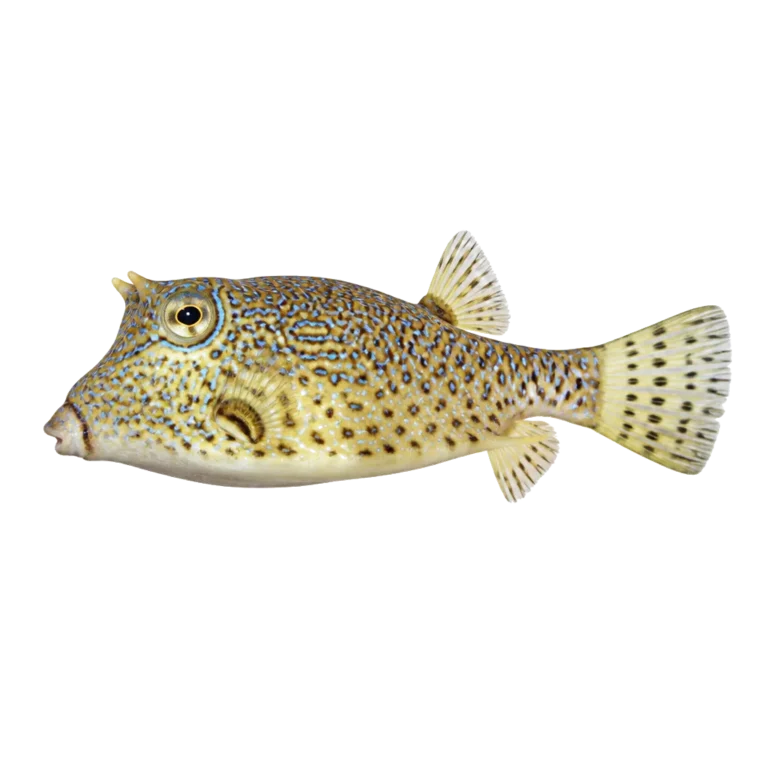
Scribbled Boxfish
Summary
Ostracion solorensis is a deliberate, hover-and-inspect feeder rather than a fast open-water swimmer. It spends much of the day picking over rockwork, sand, and reef surfaces, so a fish that repeatedly patrols and investigates the aquascape is behaving normally; one pinned in a corner, hiding continuously, or being driven from food is not.
Its rigid body shape makes it poorly suited to a hectic community. Choose it for a calm display where it can move slowly through the aquascape and feed without being rushed, rather than for a tank built around fast, boisterous fish.
Care
Build open cruising lanes around stable rockwork, with broad gaps and sheltered edges rather than a dense wall of rock. Ostracion solorensis needs room to turn and inspect surfaces, but also benefits from low-conflict retreats when lights dim or another fish approaches.
Aim flow so the fish can cross the tank without constantly fighting a direct blast. Persistent tumbling, being swept into rockwork, or avoiding an otherwise open part of the tank indicates that the flow pattern is too forceful for it.
Keep pump intakes and overflows safely screened. Its slow, deliberate movement and rigid body make a collision or suction incident especially serious, and severe physical stress is a greater concern with boxfish than with many ordinary community fish.
Feeding
Offer small, varied meals through the day, using finely sized mysis and chopped shrimp, clam, squid, marine algae, and sponge-based preparations. Rotate foods instead of relying on one rich frozen item; this species is an active browser and may gradually lose condition when offered only occasional large meaty meals.
Feed in a calm, repeatable area and make sure food reaches the boxfish directly. Fast wrasses, anthias, tangs, and other vigorous feeders can clear the water column before it has taken enough; a rounded but not distended body and regular foraging suggest that the feeding plan is working.
Do not use hunger to control its feeding load. Uneaten food should be removed and portions adjusted, but a boxfish that stops browsing, spits food repeatedly, or becomes visibly thin needs prompt attention rather than a longer interval between meals.
Compatibility
Keep Ostracion solorensis singly in most home aquariums. It can be territorial toward another boxfish, particularly another male, and apparent tolerance at introduction can turn into persistent following, cornering, and exclusion from food once territories are established. Only attempt more than one when they are a known compatible pair and the aquascape provides extensive broken sightlines.
Favour peaceful fish that do not nip fins, crowd feeding stations, or repeatedly challenge slow-moving tankmates. Avoid aggressive triggers, large predatory fish, highly territorial established residents, and hyperactive feeders that create chronic pressure around the boxfish.
Add the boxfish before strongly territorial fish when possible, or rearrange established territories before introduction. This gives it time to learn feeding areas and shelter routes without immediately being treated as an intruder.
Reef compatibility is conditional: individuals may nip corals and tubeworms and may consume small ornamental invertebrates. Do not select this species for a tank where small shrimp, delicate worms, or a particular coral colony must be left untouched.
Good to know
The major failure mode is severe stress or a dying fish. Ostracion solorensis may release ostracitoxin, which can endanger the rest of the aquarium. If it is in acute distress or there is an unexplained rapid decline in other fish, increase aeration immediately, run fresh activated carbon, prepare substantial water changes, and remove the boxfish only if it can be done without further injury or prolonged chasing.
Treat repeated chasing, damage from a tankmate, or a sudden refusal to leave shelter as urgent compatibility problems rather than behaviour to wait out. For this species, preventing prolonged stress protects both the individual and the wider livestock.
Sexes are visually different in this species, but appearance alone does not make mixed-sex housing reliably safe in a confined aquarium. A new boxfish should not be added on the assumption that differing colour pattern will prevent territorial conflict.