
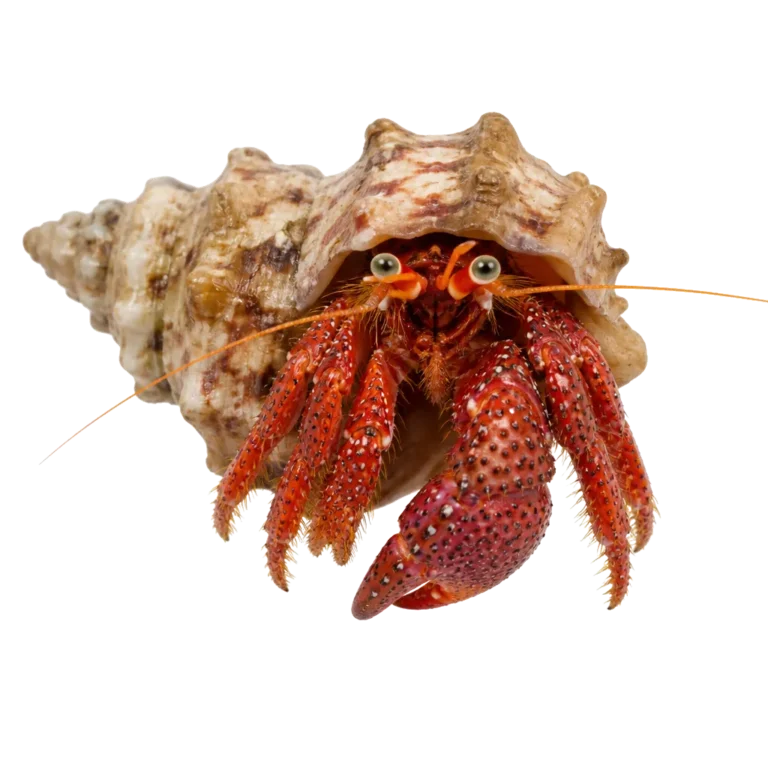
Scarlet Reef Hermit Crab
Summary
Paguristes cadenati is the scarlet reef hermit crab: a bright red Caribbean and western Atlantic hermit with yellow to yellow-orange eyestalks. Confirm the scientific name when buying, because “red-legged” and “scarlet” hermit crab are used loosely for several species with different temperaments and adult needs.
Its natural association with reef hard bottom and coral rubble explains its aquarium behavior: it spends much of its time picking over rock, sand, and detritus rather than staying in one place. It needs a suitable empty gastropod shell as permanent protection, so shell availability is as important as food.
Care
Add it to an established marine aquarium with accessible live rock or other mature hard surfaces to graze. A newly set-up, overly clean tank may not provide enough natural films, detritus, or leftover food for a small scavenging crab.
Use a normal reef substrate if desired, but do not add a deep sand bed solely for this species. Leave routes around the rockwork and a few protected crevices so it can forage and withdraw from disturbance, especially around molts.
Keep several clean, empty marine snail shells in a range of openings and shapes near its current shell size. Replace shells that become too small for the crab population; limited suitable housing is a common cause of shell competition.
Feeding and role
Paguristes cadenati is an omnivorous scavenger. It grazes algae and biofilm and eats detritus, carrion, and uneaten meaty foods, but it should not be expected to live indefinitely on nuisance algae alone. In a tidy or lightly stocked reef, offer small portions of dried marine algae and occasional meaty marine foods so the crab does not have to compete aggressively for food.
Treat it as a supplementary cleanup animal, not a solution for an algae outbreak or accumulated waste. One crab can pick at films, scraps, and small patches of detritus within its foraging area, but it will not replace export through maintenance, nutrient control, or an appropriately sized cleanup crew.
Compatibility
This species is generally coral-safe and normally ignores healthy corals. Secure newly placed frags, however, because a roaming hermit can dislodge a loose plug while climbing over the rockwork.
Do not house it with fish or invertebrates that routinely crush or consume crustaceans, such as large predatory wrasses, triggerfish, puffers, or large crabs. A crab that remains hidden for prolonged periods, loses limbs, or disappears after introduction may be facing predation rather than simply being shy.
Snails and other hermits are the main compatibility concern. Paguristes cadenati may fight for a preferred shell when appropriate empties are scarce, so keep spare shells available before adding it. Multiple scarlet hermits can be kept when food and shell choices are adequate, but add only as many as the aquarium can support rather than using a large group to compensate for poor algae control.
Good to know
A motionless crab, an apparently empty shell, or a crab that has retreated out of sight can indicate a molt. Do not remove a discarded exoskeleton immediately; check carefully for the living crab first, then leave the molt available for a time because it may consume it for minerals.
Like other crustaceans, this species is highly vulnerable to copper-based medications and many treatments intended for fish. Move the crab before medicating a display aquarium, and verify that any treatment is explicitly safe for marine invertebrates.
Acclimate gradually to the aquarium’s salinity and temperature. Sudden osmotic change can leave a newly introduced crab inactive, unable to right itself, or unable to maintain a secure grip on its shell.