
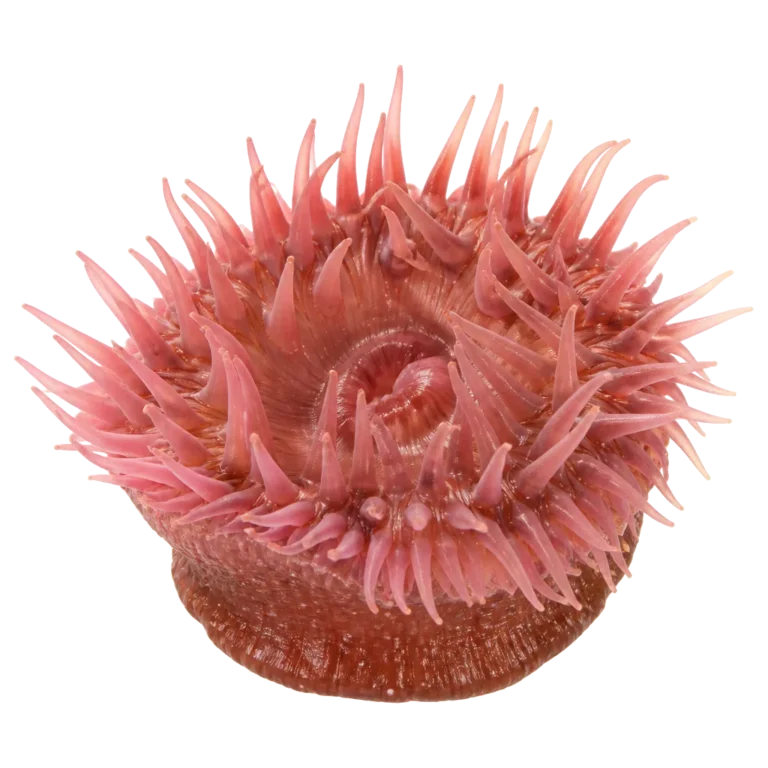
Rose Anemone
Summary
Anthopleura rosea is a temperate New Zealand rock-pool anemone, not a tropical rose bubble-tip anemone. Its short, often pink-banded tentacles and sand- or shell-catching column suit a sheltered rocky setup, but its cold-water needs make it a poor fit for a conventional warm reef aquarium.
Care
Keep Anthopleura rosea in a dedicated temperate marine system within 10–18 °C50–64 °F; prolonged tropical-reef temperatures are a major reason this species is difficult to maintain. A mature system is important because it must provide dependable conditions and regular access to suspended or target-fed food rather than relying on a newly cycling tank.
Seat the pedal disc on secure rock or among coarse natural material in a sheltered area. Use indirect, gentle-to-moderate flow that keeps debris from settling without pinning the tentacles closed, and provide moderate lighting for its symbiotic algae. A shaded crevice is useful as an initial settling site, but do not force the animal into place if it chooses to move.
Feeding and role
Light supports the zooxanthellae that contribute to its nutrition, but it still needs small meaty zooplankton-sized foods or other suitably fine marine prey offered near the tentacles. Feed conservatively and remove uneaten food; repeated refusal, a persistently gaping mouth, or loss of tentacle inflation calls for checking placement, temperature, and water quality rather than adding larger meals.
This is a predator, not a cleanup-crew animal. It may capture tiny drifting animals and suspended food, but it will not control nuisance algae, detritus, or a pest population in a practical aquarium sense.
Compatibility
Leave open space around Anthopleura rosea. Its tentacles can sting corals, other anemones, and nearby sessile invertebrates when it expands or relocates, so do not place it where a shift in position will bring it into contact with valuable livestock. Very small animals that settle on or drift into the tentacles may be captured.
Avoid fishes and crabs that pick at anemones or other sessile invertebrates, as repeated nipping prevents normal expansion and feeding. Start with one specimen rather than adding a crowded group; this species may reproduce by division, and additional individuals still need their own room to expand without contact.
Good to know
Guard pump and overflow intakes before introduction. An attached anemone can still relocate, and contact with an unprotected intake can tear tissue quickly. If it is firmly attached, do not pull it free; encourage movement by changing the immediate light or flow instead.
Do not use copper-containing medication in its system. During acclimation, avoid abrupt temperature changes and expose the animal to air only when unavoidable; transfer it submerged when possible. A newly divided individual can look misshapen or remain contracted while it heals, but tissue breakdown, a persistent open mouth, or failure to reattach are warning signs rather than normal settling behaviour.