
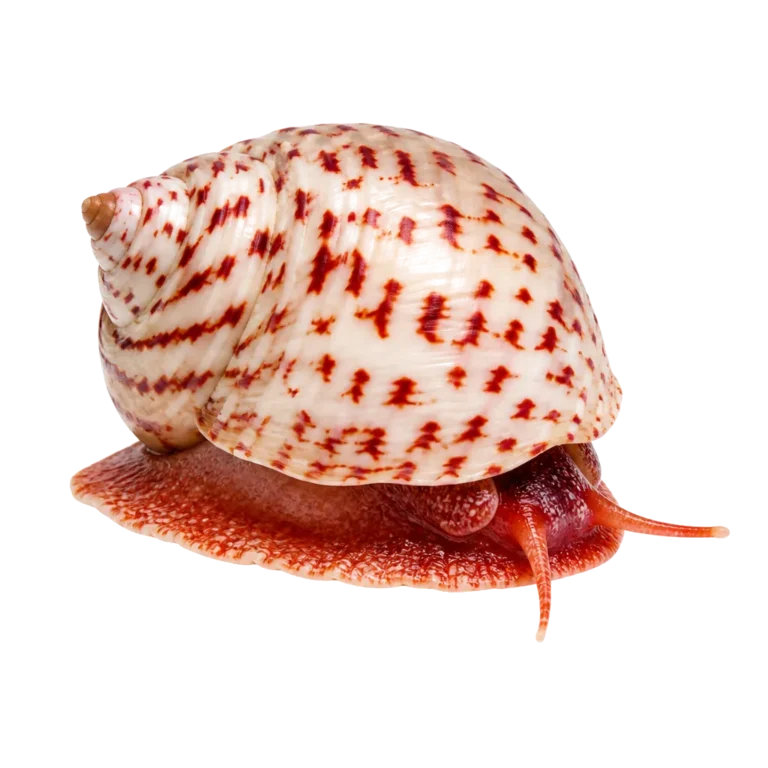
Red Foot Moon Snail
Summary
The Red Foot Moon Snail is Norrisia norrisii, also commonly listed in the trade as N. norrisi. Its reddish foot and rounded, top-snail shell distinguish it from many common tropical algae grazers, but its most important trait is its temperate kelp-forest origin along the rocky Pacific coast of California and Baja California.
This is a kelp-associated herbivore rather than a general-purpose tropical reef snail. It naturally spends much of its time climbing large brown algae, so it is best considered for a dedicated cool-water system with substantial macroalgal growth, not a warm coral reef aquarium.
Care
Keep Norrisia norrisii in a mature, chilled temperate marine aquarium where brown macroalgae can grow continuously. A newly established tank with only a light algal film may look suitable at first but cannot provide the sustained grazing this snail needs.
Secure large macroalgae or provide tall, stable rockwork with crevices and shaded resting areas. The snail commonly climbs rather than remaining on the substrate; loose algae and unstable frags can be dislodged as it moves.
Use enough water movement to keep surfaces clean and oxygenated, but avoid directing an overwhelming jet at its usual grazing and resting areas. Lighting should be chosen primarily to maintain the macroalgae that feeds it, rather than for the snail itself.
Feeding and role
Provide a continual supply of marine macroalgae and film algae. Brown algae and kelp-type foods are especially appropriate; when the aquarium’s natural growth is being consumed faster than it regrows, offer dried seaweed secured where the snail can reach it.
Its cleanup role is limited to herbivory. One snail can graze algae from rock, glass, and macroalgal surfaces, but it will not solve a persistent nutrient problem or clear a large outbreak on its own. It may also eat intentionally grown decorative macroalgae, so treat planted display algae as potential food rather than protected livestock.
Act when it becomes inactive, loses its grip, or repeatedly falls from surfaces: these are practical warning signs that food, temperature suitability, or general condition needs attention.
Compatibility
Do not combine Norrisia norrisii with snail-eating fish or invertebrates. Puffers, triggerfish, large wrasses, crabs, lobsters, octopuses, and predatory sea stars can crush, pull apart, or drill shelled snails.
It is not a coral predator, but its cool-water requirement makes it a poor fit for most tropical coral displays. It can also graze desirable macroalgae and may disturb unsecured frags while climbing, so keep important algae and loose corals firmly attached.
Add individuals only where the available algal food can support them. Multiple snails can coexist in a suitably productive temperate macroalgal system, but adding a group to a small or sparsely planted tank increases the chance that they compete themselves into starvation.
Good to know
Avoid copper-based medications and treatments in any system housing this snail. Like other marine gastropods, it is highly vulnerable to copper exposure, including residual medication in shared equipment or poorly rinsed holding containers.
Acclimate slowly to the aquarium’s salinity and especially to its cool temperature. A rapid transfer into warmer water can cause decline even when other reef inhabitants appear unaffected.
Starvation is the main long-term risk. A snail that has cleaned visible algae is not necessarily well fed; continue offering suitable seaweed if the system cannot replace its grazing supply.