
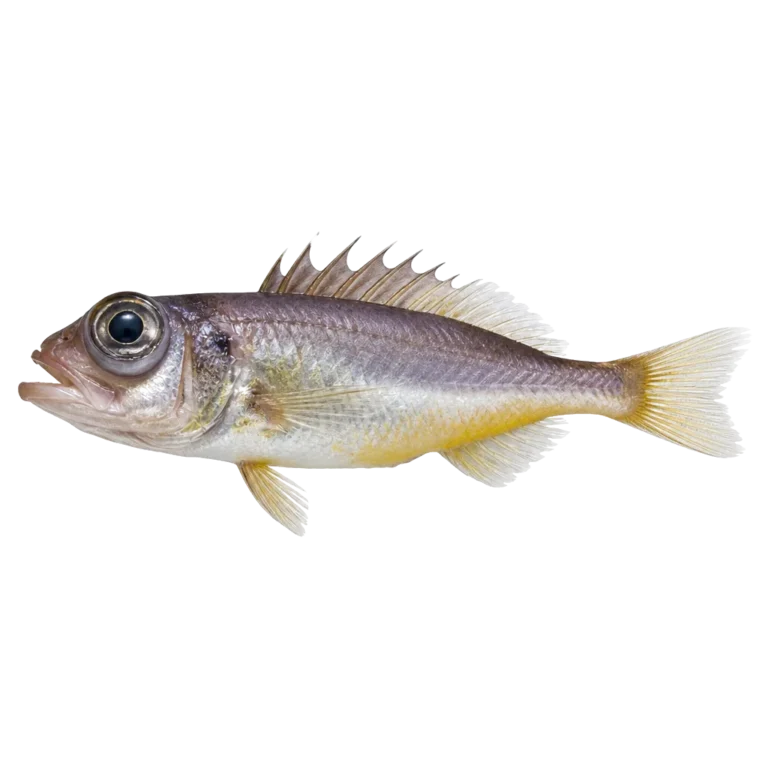
Popeye Catalufa
Summary
Pristigenys serrula is a shy, largely nocturnal predator that commonly spends the bright part of the day tucked beneath an overhang or deep in a cave, then becomes much more visible at dusk. A fish that remains in cover during daytime is therefore often behaving normally rather than failing to settle.
Its large eyes and broad mouth are useful stocking clues: it is a deliberate hunter of suitably sized animals, not a community fish for small reef livestock. Judge compatibility by what can fit in its mouth, not by its otherwise calm manner around larger fish.
Care
Build the aquascape around several deep, shaded retreats with a clear route in and out, rather than relying on small decorative crevices. Pristigenys serrula should be able to hover near cover and withdraw without being cornered; pacing along the glass, refusal to emerge even after dark, or repeated dashes from a shelter can indicate that its refuge is too exposed or contested.
Leave open water adjacent to the rockwork for its measured cruising style, but avoid placing it in a stark, intensely illuminated display with nowhere dim to rest. It usually settles best when the main shelter is low-light and away from the busiest feeding and flow zones.
Use a secure cover, particularly while the fish is new or repeatedly startled. A catalufa that is chased from its shelter may bolt upward rather than stand its ground.
Feeding
Offer a varied, meaty marine diet after the lights have dimmed, when Pristigenys serrula is most willing to leave cover. Rotate suitably sized pieces of shrimp, squid, clam, krill, mysis and marine fish flesh, and use a quality carnivore preparation as part of the rotation rather than feeding a single item indefinitely.
Deliver food close to its chosen shelter with tongs or a target feeder if fast daytime fish strip the water column first. A newly introduced individual may ignore food in full light yet take the same food at dusk; persistent refusal after several evening opportunities deserves attention.
Do not use small feeder fish as a staple. They can create a poor nutritional routine and encourage the fish to view similarly sized ornamental tankmates as prey.
Compatibility
Treat Pristigenys serrula as a single-specimen fish unless the aquarium has abundant separated shelter and you can closely monitor feeding and nighttime behaviour. It is not a shoaling species for which a group should be assumed safe; any additional individual must have access to its own retreat and food without being excluded.
Choose peaceful to moderately assertive tankmates that are too large to swallow and that will not continually drive it from cover. Avoid very small fish, ornamental shrimp, small crabs and other mobile invertebrates that can be taken as prey, especially once the catalufa has settled and begins hunting after dark.
Add the catalufa before highly territorial rock-dwelling fish when possible, so it can establish a reliable daytime refuge. Its reef compatibility is conditional: corals are not the main concern, but small mobile reef animals remain at risk.
Good to know
Daytime reclusiveness is expected, but assess the fish after dusk. A settled individual should venture out to investigate food and cruise near its shelter; continuous hiding at night, laboured breathing, or frantic collision with the glass is not normal nocturnal behaviour.
Predation can become more apparent as the fish gains confidence rather than immediately after purchase. Do not interpret a calm introduction period as proof that small gobies, shrimp or other bite-sized residents will remain safe long term.
Because it may feed when other fish are resting, check that food is actually reaching it rather than assuming a full-bodied daytime community guarantees it is eating. Watching an evening feeding response is more useful than judging appetite during the main photoperiod.