
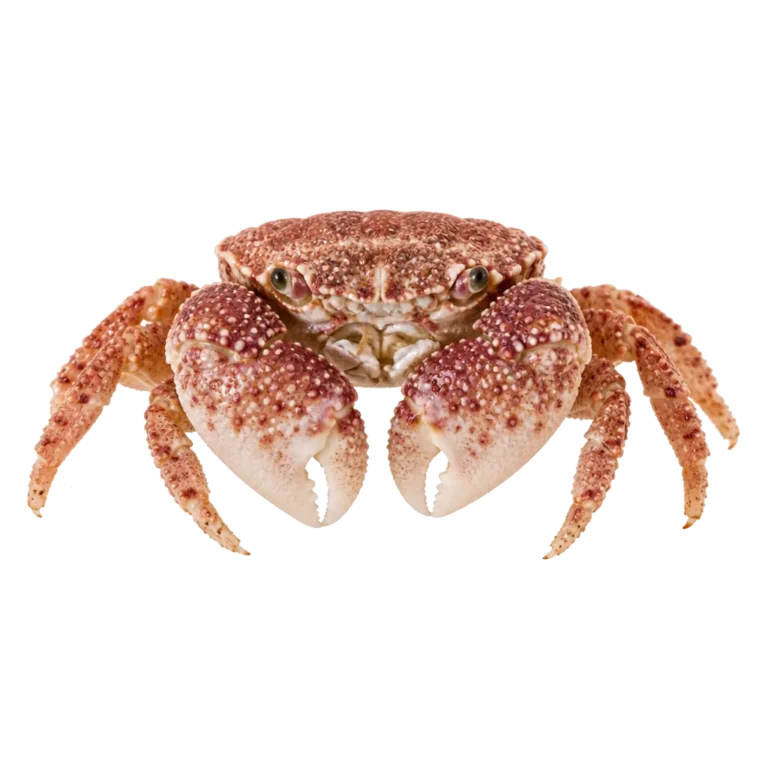
Pitho Crab
Summary
Pitho mirabilis is a compact, heavily armoured Caribbean and western Atlantic crab that spends much of its time picking algae from hard surfaces. Its flattened body and stout claws suit a rockwork-based reef aquarium: expect it to work across rock faces and in crevices rather than sift a sand bed.
Care
Provide established live rock with algae-coated surfaces and narrow retreats. A sand bed is not required, but secure loose frags and unstable rockwork because the crab will climb through the aquascape while grazing.
No specialized lighting or flow pattern is needed for the crab itself. Choose lighting and circulation for the corals and algae management plan; Pitho mirabilis needs accessible rock surfaces, not a bare, newly set-up aquarium with no natural grazing or supplemental food available.
Feeding and role
Let Pitho mirabilis graze film algae, hair algae, and bubble algae on the rockwork, but offer dried seaweed or sinking algae foods once natural algae becomes scarce. Include occasional small meaty foods so it does not have to search coral bases or sessile invertebrates for an alternative meal.
Treat one crab as a targeted grazer and maintenance helper, not a cure for a severe algae outbreak. If it ignores a particular algae, do not assume it will learn to eat it; remove or manage that growth by other means while continuing to feed the crab appropriately.
Compatibility
This species is usually compatible with healthy corals, but it remains an opportunistic omnivore. Watch for repeated picking at the same coral, sponge, clam, or other sessile invertebrate, especially after the available algae has been depleted; remove or rehome the crab if the behaviour continues.
Avoid housing it with fish and invertebrates that readily hunt crabs, including large wrasses, triggerfish, puffers, and similar crustacean predators. Add Pitho mirabilis individually as a first choice. Additional crabs should be considered only when the aquarium has enough separate grazing area and food, with monitoring for food competition or clashes around shelters.
Good to know
A shed exoskeleton can look like a dead crab. Check for an intact but empty shell before removing it, then leave the molt in the aquarium for a time because the crab may consume it for minerals.
Acclimate gradually to avoid osmotic stress, and never expose Pitho mirabilis to copper-based medications. As a crustacean, it is highly copper-sensitive, and a crab that stops grazing or remains withdrawn after treatment or a rapid salinity change may be in serious trouble.
A crab that becomes increasingly interested in coral tissue or other sessile animals is often telling you that its natural grazing supply is insufficient. Respond by offering suitable foods promptly, rather than relying on nuisance algae to sustain it indefinitely.