
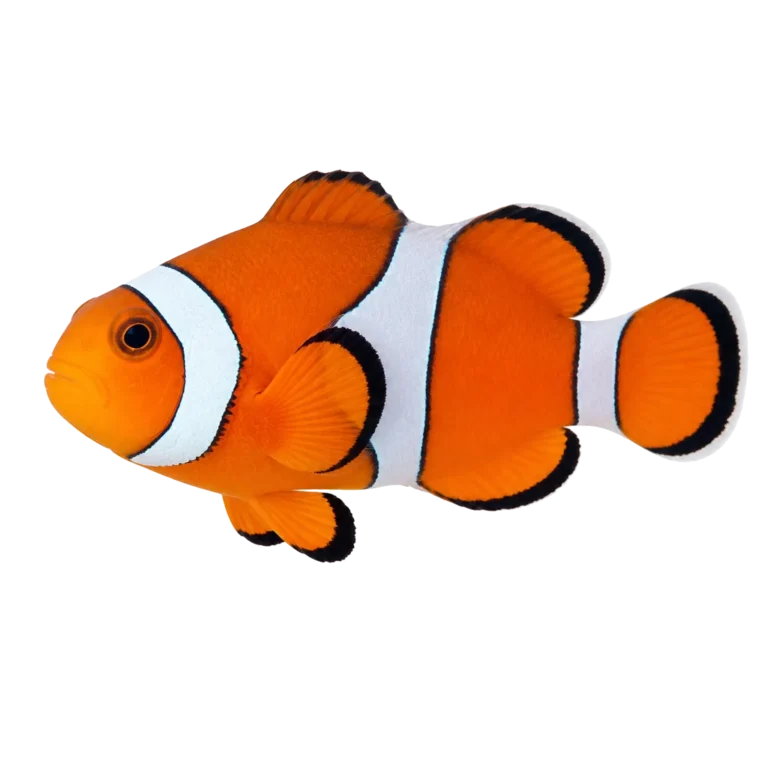
Percula Clownfish
Summary
Amphiprion percula is a site-attached clownfish rather than a roaming reef fish. Once it adopts an anemone, coral, rock ledge, or other fixed spot, it repeatedly hovers, darts out to feed, and returns to that home area. This makes it easy to observe, but it also means a settled fish may defend a surprisingly small part of the aquascape.
An anemone is not required for long-term success. In a reef tank, a clownfish may instead try to host a fleshy coral or similar sessile animal; this can be harmless, or it can leave the chosen coral persistently closed from repeated contact.
Care
Build the aquascape with a calm, clearly defined home zone rather than expecting this fish to use the full water column. A rock face, overhang, or sheltered corner gives it a place to hover and retreat to, while open water immediately in front of that area lets it make its short feeding forays.
Avoid placing the intended home area directly in the strongest, most turbulent flow. Amphiprion percula can handle normal reef circulation, but it is most comfortable when it can hold position and sleep near its chosen site without being continually blown across the tank.
Do not add a demanding host anemone solely for the clownfish. The fish does not need one, and a newly added anemone can wander into pumps or sting neighboring corals before it settles. If an anemone is already established, leave adequate open space around it because the pair will treat its immediate surroundings as territory.
Feeding
Offer small, varied marine foods in several modest feedings through the day: finely sized crustacean and zooplankton-based frozen foods, quality marine pellets or flakes, and some algae-containing fare. Alternating foods is more useful than relying on a single rich frozen preparation.
Feed where the pair can see the food, but spread food across the surface or use a second feeding point when shy tankmates are present. Established clownfish often rush the same small area at every meal and can keep slower fish from getting a fair share.
Avoid making every meal a heavy dose of fatty or single-ingredient food. A clownfish that eagerly accepts food but develops a rounded body and leaves excess food in its home area is being overfed; reduce the portion rather than reducing dietary variety.
Compatibility
Keep either one Amphiprion percula or a compatible pair. The most reliable route to a pair is an established pair or two juveniles introduced together, with a clear size difference so a hierarchy can form. Adding a second mature or similarly dominant clownfish to an established resident is a high-risk introduction.
A pair generally works with peaceful to moderately assertive reef fish that do not need the same small shelter or repeatedly enter the clowns' chosen corner. Avoid combining them with other clownfish or anemonefish in the same display, and be cautious with fish that are easily intimidated around a feeding station or vulnerable to repeated territorial nipping.
Add the clownfish before highly aggressive fish, but avoid allowing a settled pair to claim the only protected area needed by a later, timid addition. Once they are defending a host or nesting surface, their aggression is directed most strongly at fish that pass close to it.
They are generally reef compatible, but the exception is their choice of host. A pair that repeatedly presses into a fleshy LPS coral, leather coral, or clam may cause chronic retraction and, in some cases, tissue injury. Relocate or protect the affected sessile animal rather than assuming it will adapt.
Good to know
A bonded pair has a strict size-based hierarchy: the dominant fish becomes female and the smaller partner functions as male. If the female is lost, the male can transition to female, so do not assume a replacement adult female will be accepted by the remaining fish.
Brief chasing, nipping, and a smaller fish's quivering submission display can occur while a pair establishes rank. Intervene if the subordinate is pinned in a corner, cannot feed, has damaged fins, or is being pursued across the tank rather than merely displaced from the home site.
Territorial behavior often intensifies after the fish adopts a host or begins using a cleaned patch of rock beside it as a nesting site. A pair that was previously tolerant can then bite hands, tools, and nearby fish whenever that small area is approached.