
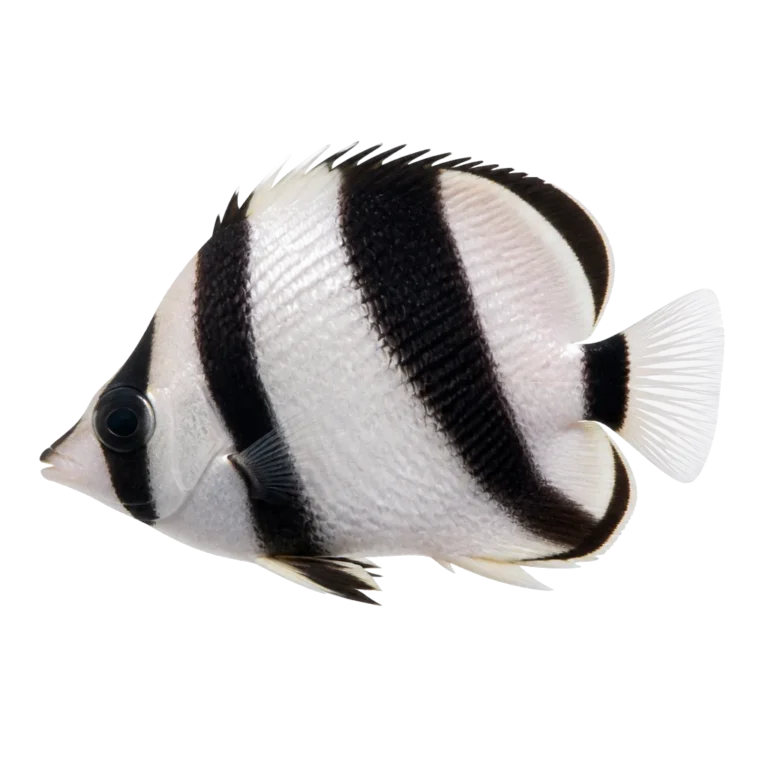
Panda Butterflyfish
Summary
Chaetodon adiergastos is an active, deliberate browser that spends much of the day inspecting rockwork and coral surfaces for small animal foods. That foraging pattern explains both its high feeding demand and its poor fit for a display reef: repeated nipping is normal feeding behaviour, not a habit that can reliably be trained away.
It is usually peaceful toward unrelated fish, but it needs enough usable space to keep moving between feeding areas. In a cramped layout, a fish that initially appears mild can begin defending its preferred route or rockwork.
Care
Build the aquascape as open lanes around firmly placed rock rather than a dense wall. Chaetodon adiergastos needs room to cruise and turn, but should be able to retreat behind or between structures when startled; pacing along the glass or repeated circling of one small area suggests that the layout or available space is too restrictive.
Use a mature fish-focused system with extensive live rock and stable biological capacity for a heavy-feeding butterflyfish. The rockwork provides grazing opportunities between meals, but it is not a substitute for a prepared diet; a fish that continually pecks while losing body condition is not finding enough nutrition.
Keep it away from a coral display and from ornamental sessile invertebrates you intend to preserve. Its normal feeding repertoire includes coral tissue and small benthic invertebrates, so damage may begin as frequent inspection and progress to persistent targeting of particular colonies.
Feeding
Confirm that a prospective fish is taking prepared foods before purchase. Offer a varied meaty diet of finely chopped marine seafood, mysis, enriched frozen blends and quality marine pellets, using several small feedings spread through the day rather than relying on one large meal.
Deliver some food close to the rockwork as well as into open water. This matches its browsing style and gives a slower feeder repeated chances to eat; a healthy fish should actively investigate food and maintain a full, rounded profile rather than becoming pinched behind the head.
Do not house it with fast, dominant feeders that clear the water column before it can feed, such as large aggressive triggers or established boisterous tangs. If competition cannot be avoided, target-feed the butterflyfish at a consistent area and watch that it swallows food rather than only making exploratory pecks.
Avoid treating live corals or ornamental invertebrates as a feeding solution. That may reinforce destructive picking without providing a dependable, balanced long-term diet.
Compatibility
Keep a single Chaetodon adiergastos unless you can obtain a confirmed compatible pair and provide a layout with ample separate cruising routes. Unrelated individuals may not accept one another simply because the species is seen in pairs or groups in nature; chasing, repeated face-offs and one fish being excluded from food are reasons to separate them.
Favour calm, non-predatory fish that leave it room to browse, including similarly peaceful community fish that do not monopolize feeding. Avoid large predators, highly territorial fishes, and other butterflyfish that may compete for the same feeding space or provoke territorial disputes.
Add this species before strongly territorial fish when possible. An established resident that guards the main rock structure can prevent the butterflyfish from feeding naturally, even if there is no obvious physical injury.
It is not reef-safe. The specific exception is not merely occasional coral sampling: coral polyps and other invertebrates are part of its normal diet, so it is best reserved for a fish-only system with live rock rather than a coral or ornamental-invertebrate display.
Good to know
The most important early warning sign is feeding decline. A newly imported fish that ignores prepared foods, repeatedly mouths and spits food, or visibly thins can deteriorate quickly; respond by reducing competition and offering a wider range of suitable frozen and prepared marine foods rather than waiting for it to adapt on its own.
Territorial behaviour is most likely to emerge after the fish has settled and selected familiar feeding routes. Brief displays are less concerning than sustained pursuit that blocks another fish from rockwork or meals; rearranging the disputed structure may help, but chronic conflict calls for separation.
Coral nipping should be assumed from the start, including toward colonies that initially seem ignored. Moving the fish after damage is established is more reliable than expecting its diet to eliminate the behaviour.