
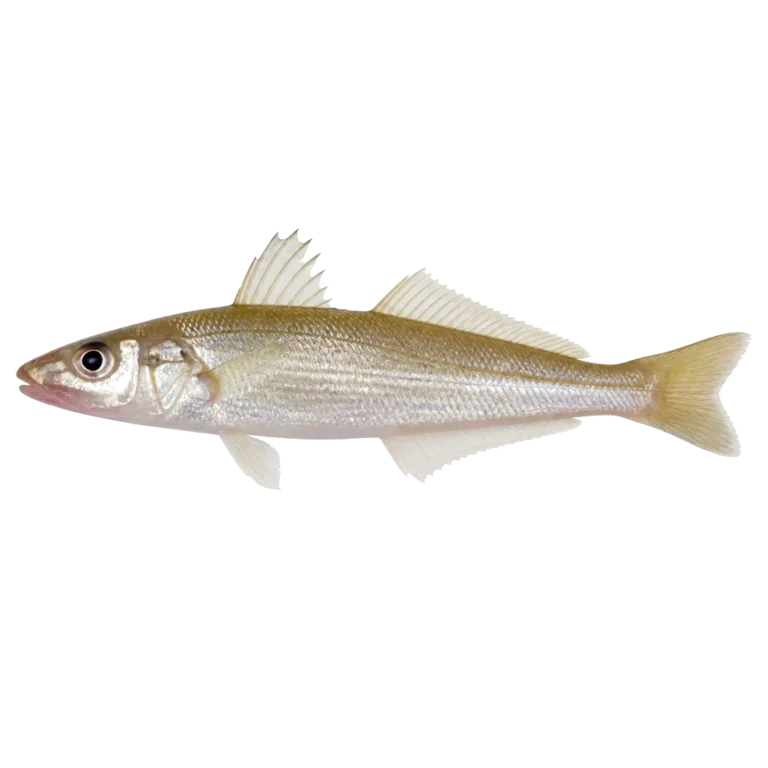
Northern Whiting
Summary
Sillago sihama is a fast-moving, bottom-oriented whiting that spends much of its time cruising and probing open sand for buried prey. It is not a perch-and-wait reef fish: a healthy individual should repeatedly work the substrate and make short, purposeful runs across the bottom.
This species naturally shoals and may bury into sand when alarmed. Sand-burying after a disturbance can therefore be normal; persistent hiding combined with refusal to feed is more concerning. Its mouth and feeding style also mean that any fish or mobile invertebrate small enough to be swallowed should be treated as potential prey.
Care
Build the aquarium around a broad, unobstructed area of fine sand rather than a dense wall of rock. Sillago sihama needs room to travel close to the bottom, sift and probe the substrate, and settle into it when startled; coarse gravel, sharp rubble, or a rockscape that leaves only narrow lanes restricts normal behaviour and can leave the fish continually exposed.
Keep rockwork firmly supported so digging and sand movement cannot undermine it. Leave some open sand in quieter sections as well as along the active swimming route. A fish that repeatedly races the glass, stays pressed into one corner, or cannot settle on the bottom usually needs more usable floor space or less harassment from tankmates.
Although it occurs in variable coastal habitats, it is best treated as a marine sand-bed fish rather than as an estuary experiment. Good oxygenation and clean, suspended-free water matter because it lives and feeds directly at the substrate; detritus accumulating in the sand can make its feeding area unsuitable.
Feeding
Offer meaty foods that reach the bottom: finely chopped marine shrimp, clam or mussel, enriched frozen crustacean foods, marine worms, and a suitable sinking carnivore pellet. Feed at least daily, with an additional smaller offering when the fish is competing with quick mid-water feeders. Target food onto open sand or use a feeding station so the whiting can locate it by probing rather than chasing food through the water column.
Vary the diet instead of relying on a single shrimp-based food. Sillago sihama is adapted to a range of benthic prey, and a narrow diet can lead to declining condition even when it still eats eagerly. Watch the belly and body line: a fish that remains thin behind the head is often losing food to faster tankmates or receiving pieces that are too large or too buoyant.
Do not depend on live ornamental shrimp, worms, or small fish as a continuing food source. The fish may hunt them successfully, but this is expensive, can destabilize the clean-up fauna, and does not provide a controlled, balanced feeding plan.
Compatibility
Sillago sihama is generally peaceful toward fish it cannot swallow, but it is a predator of suitably small animals. Choose robust, similarly sized community fish that use other parts of the aquarium, and avoid very small gobies, newly settled juvenile fish, delicate ornamental shrimp, and worm-dependent display systems.
More than one can be kept when the aquarium has ample open sand and enough feeding area for a group to spread out. Introduce compatible individuals together where possible, and distribute food across the substrate; crowding several whitings into a limited sand lane can turn a normally shoaling fish into a persistent food competitor.
It is reef-compatible only with caution. Corals are not the primary concern, but ornamental crustaceans, polychaete worms, and other desirable sand-bed animals can become prey. Add it after deciding whether the aquarium’s shrimp and microfauna are livestock to protect or expendable forage.
Good to know
A sudden disappearance into the sand is often an alarm response, especially after netting, aquascape work, or the arrival of a dominant fish. Give the fish a clear sand refuge and observe at feeding time before assuming it has died or is trapped. Repeated burial is less reassuring when paired with rapid breathing, damaged fins, or failure to emerge for food.
Because Sillago sihama feeds by searching the substrate, it can quietly reduce visible worm and small-crustacean populations over time. This is most noticeable in mature reef tanks whose sand bed is intended to support ornamental sand fauna; reduced activity from those animals may reflect predation rather than a water-quality problem.
Its common name is applied inconsistently in trade and reference material, so confirm the fish as Sillago sihama when planning around its eventual predatory size and sand-bed requirements. A small juvenile may appear suitable for a mixed nano-fauna display, then outgrow that role as its diet shifts toward larger benthic prey.