
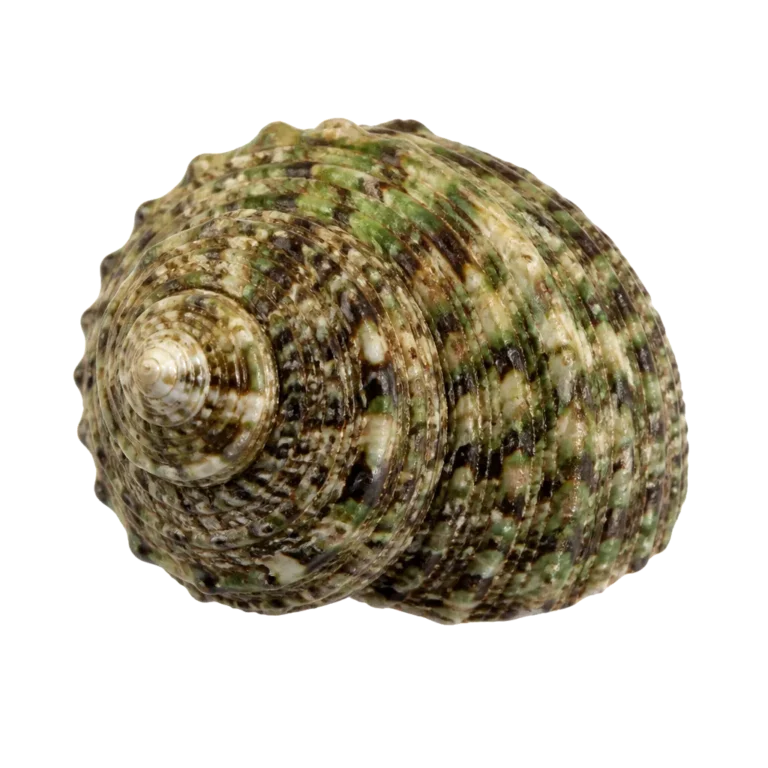
Mexican Turbo Snail
Summary
Turbo fluctuosus is a large, heavy-shelled grazing snail from the eastern Pacific coast of Mexico. Its size gives it useful reach across exposed rock and glass, but also means it can shift loose frags or unstable pieces of rock as it moves.
Choose it for an established reef with visible algal growth and a temperature profile suited to this relatively cool-water snail. It is a peaceful herbivore, but its appetite makes it a poor fit for a very new, exceptionally clean, or lightly stocked display with little natural grazing available.
Care
Provide broad areas of secure, algae-coated live rock and accessible glass for grazing. Interlock rockwork and firmly mount coral frags before adding this snail; a snail pushing against an unsecured frag or small rock can topple it rather than simply graze around it.
Add it only after the display has matured enough to grow a dependable film of algae and diatoms. Lighting needs to support the aquarium’s normal reef husbandry and, importantly, enough natural algal production for grazing; this species has no separate lighting requirement of its own.
Keep strong direct jets from constantly striking its usual grazing routes. It does best when it can travel across rock and glass without being repeatedly blown loose, while normal reef circulation still keeps surfaces supplied with oxygenated water.
Feeding and role
Let Turbo fluctuosus graze film algae, diatoms, and suitable soft macroalgae on rock and glass. Once those surfaces are visibly clean, offer dried marine algae or an algae-based food in a place the snail can reach; an active snail that has cleaned its available surfaces still needs a continuing herbivorous food source.
Treat one snail as maintenance help, not a cure for a major algae outbreak. It can noticeably reduce accessible grazing algae, but it will not resolve the nutrient imbalance or husbandry issue driving persistent nuisance growth, and it cannot reach every crevice or replace manual removal of heavy algae.
Compatibility
This snail is coral-safe in the sense that it does not eat healthy corals, but place and secure frags with its weight in mind. A dislodged frag, shifted small rock, or repeatedly disturbed coral is the realistic risk in a reef tank.
Keep it away from animals that eat or attack snails, including puffers, triggerfish, snail-hunting wrasses, and predatory crabs or large hermit crabs. Empty shells do not make a hungry hermit crab reliable company for a living turbo snail.
Add Turbo fluctuosus individually at first and base any additional snails on the amount of algae the aquarium can continuously produce. Several large grazers can exhaust a limited food supply quickly, especially after they have cleaned a small or tidy display.
Good to know
Acclimate slowly to the receiving aquarium’s salinity and temperature rather than making a rapid transfer. Sudden changes can leave a snail inactive or unable to gain a secure hold on the glass and rock.
Do not expose Turbo fluctuosus to copper medications or copper-contaminated water; like other marine snails, it is highly sensitive to copper. Move fish needing copper treatment to a separate treatment system rather than medicating the reef display.
Check a newly introduced snail if it remains upside down on open substrate. Turn it upright onto a stable surface near grazing algae if it cannot right itself, then observe whether it resumes a normal grip and grazing pattern. A persistently motionless snail with no response to gentle handling should be removed promptly to avoid fouling the aquarium.