
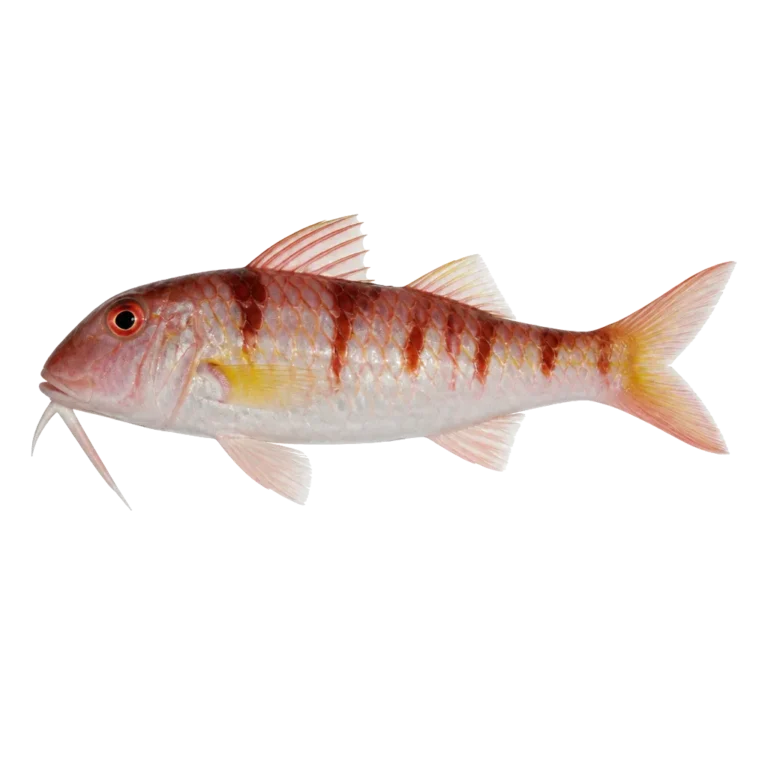
Manybar Goatfish
Summary
Parupeneus multifasciatus is an active daytime bottom-forager that moves continuously across sand, rubble, and rock edges, using its chin barbels to locate buried prey. Expect persistent probing and short bursts of digging rather than a fish that cruises quietly in midwater; this behaviour is normal when it is actively searching for food.
Care
Build the aquascape around a broad, accessible sand area, with open routes around firmly seated rockwork. The Manybar Goatfish repeatedly pushes its snout and barbels under rock edges and through the substrate, so rock must rest securely on the tank base rather than on loose sand; otherwise its foraging can destabilize the structure.
Leave exposed sand around the base of coral colonies and secure loose frags, sand-dwelling corals, and other sessile animals. A goatfish may not target them as food, but regular digging and sand displacement can bury, topple, or irritate them. Open-bottom space matters more than densely packing the aquarium with caves, although shaded breaks in the rockwork give it somewhere to pause when startled.
Feeding
Offer frequent small meals of thawed marine meaty foods, including mysis, finely chopped shrimp, mollusk flesh, and worm-based foods. Deliver part of the ration directly onto the sand or just above it so the fish can feed in its natural foraging zone instead of having to compete only in the water column.
Do not rely on live sand fauna to sustain Parupeneus multifasciatus. Its constant searching can make a recently imported fish appear busy even while it is underfed; a pinched abdomen, reduced sand-probing, or loss of interest at feeding time calls for more suitable prepared foods and less competition at the feeding site.
Feed deliberately around fast plankton feeders and large, forceful carnivores. The goatfish is active, but it can lose repeated feeding opportunities when food is intercepted high in the tank; target-feeding the bottom keeps its intake more reliable without excessive broadcast feeding.
Compatibility
Keep ornamental shrimp, small crabs, desirable worms, and very small fish out of its reach. Parupeneus multifasciatus is generally peaceful toward larger fish, but its normal substrate hunting can turn small mobile invertebrates and tiny fishes into prey rather than tankmates.
A single specimen is the lower-risk choice for most displays. This species may associate loosely in nature, but a group is not a dependable schooling arrangement in an aquarium; introduce only compatible individuals together in a system with ample open bottom and watch closely for one fish repeatedly excluding another from food-rich sand areas.
Favour robust, reasonably sized fishes that use other parts of the aquarium and can tolerate an energetic bottom-forager passing beneath them. Add delicate sand-associated livestock only after deciding whether its repeated excavation is acceptable, because reef compatibility is limited chiefly by predation on small animals and disruption of unsecured residents rather than coral feeding.
Good to know
Persistent sand sifting is expected, but a sudden pattern of frantic digging around a newly placed coral, clam, or frag is a practical warning that the item may be buried or shifted. Move or secure the vulnerable animal rather than trying to stop the goatfish from foraging.
Its foraging can steadily reduce the visible population of small crustaceans and worms in the sandbed. Treat that change as a stocking consequence, not as evidence that the fish has become aggressive; protect valued clean-up crew members before adding the goatfish.
An established specimen may learn exactly where food enters the aquarium and become first to the feeding area. If slower fish begin hanging back or show poor body condition, split food between a water-column feed and a bottom-targeted feed rather than increasing a single large feeding event.