
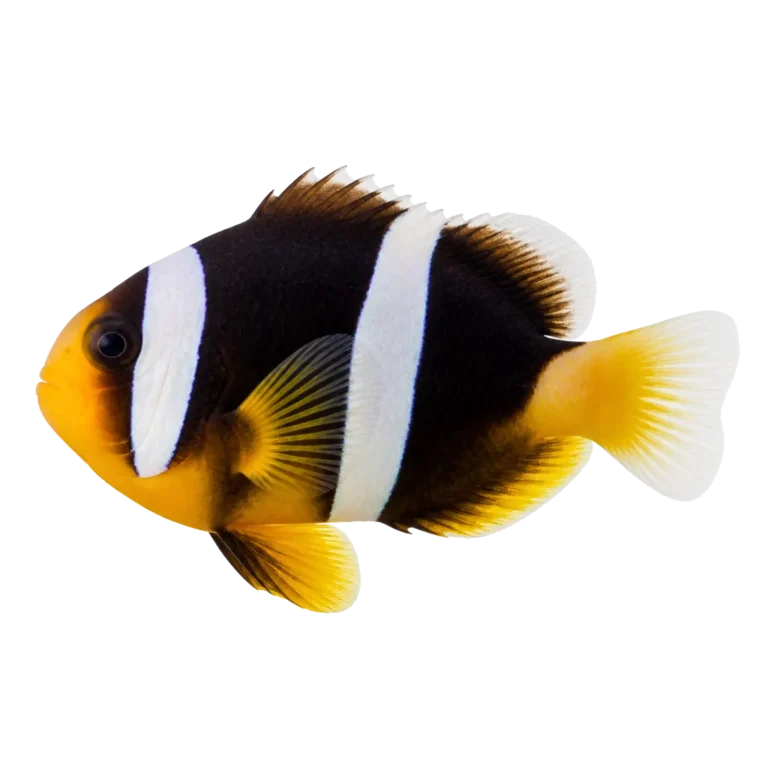
Madagascar Clownfish
Summary
The Madagascar Clownfish, Amphiprion latifasciatus, is a site-attached anemonefish that usually patrols a small home area rather than roaming the aquarium. A fish that repeatedly circles one rock, coral, or anemone is behaving normally; trouble begins when it actively excludes tankmates from that area.
In nature it is associated with Mertens’ carpet anemones, which helps explain its strong attachment to a chosen host or substitute. An anemone is not required, but once the fish adopts a location it may defend it with surprising persistence.
Care
Build the aquascape with a sheltered focal area and open water immediately around it. This species makes short, deliberate dashes between cover and its chosen territory, so a cramped rock pile or a host placed in a busy traffic lane can concentrate conflict.
Moderate, indirect flow is usually easier for it to use than a constant hard stream across its home area. If it spends all day sheltering behind rockwork, is repeatedly swept away from its chosen site, or is unable to feed in the open, reassess flow placement and pressure from tankmates.
Feeding
Offer a varied omnivore diet centered on appropriately sized marine frozen foods and a quality marine pellet or flake, with some algae-based content. Feed modest portions at least daily, or divide the ration into smaller offerings when the aquarium’s routine allows; this better suits a fish that naturally takes small drifting prey and also limits excess food around its territory.
Make sure food reaches the clownfish rather than relying on a single broad broadcast feeding. Fast planktivores and assertive wrasses can intercept most suspended food, so use a baster or target-feed near the clownfish’s home area if it hangs back. A diet made mostly of brine shrimp or one dry food is a poor long-term strategy and can lead to declining body condition despite eager feeding.
Compatibility
Keep either a single fish or a clearly compatible pair. Do not add an extra adult or another clownfish species to an established pair’s territory; the resident female is likely to treat it as an intruder, and prolonged chasing can be severe in a confined reef.
Choose confident, reef-compatible community fish that will not crowd its host area or relentlessly outcompete it at feeding time. Introduce timid fish before the clownfish pair becomes established, and avoid combining it with highly territorial damselfish, combative clownfish, or fish that occupy the same sheltered zone.
It is generally safe with corals and ornamental invertebrates, but reef-safe does not mean behaviourally neutral. Without an anemone, it may adopt a fleshy coral as a substitute host; repeated rubbing can keep that coral withdrawn or irritated, so be prepared to separate the fish or protect the coral if this becomes persistent.
Good to know
A pair forms a clear hierarchy: the larger dominant fish is female and the smaller partner is male. If the female is lost, the male can change sex and the highest-ranking subordinate can become the new male, so replacing a missing fish with another established adult often causes conflict rather than restoring the pair.
Once breeding starts, the pair may defend the nesting surface more fiercely than usual, including rushing a hand during maintenance. Repeated nipping close to one rock or host is a territorial warning; move maintenance tools deliberately and avoid placing slow tankmates where they must pass through that defended area.
Watch for rapid breathing, heavy mucus, loss of appetite, or sudden isolation, as clownfish can deteriorate quickly when affected by common marine infections. Treat these as urgent observable warning signs rather than assuming the fish is merely settling into a new territory.