
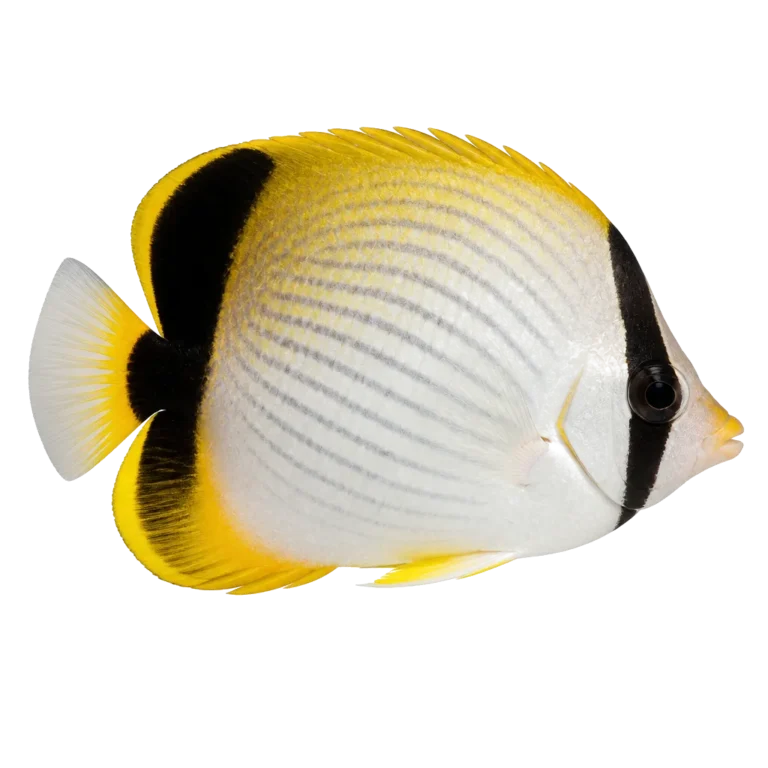
Madagascar Butterflyfish
Summary
Chaetodon madagascariensis is an active, deliberate browser that spends much of the day inspecting rockwork, coral surfaces, and other hard substrate for small food items. This natural feeding style explains why a fish that appears settled can still repeatedly nip at sessile animals rather than cruising only in open water.
Choose this species for a fish-focused marine display with abundant mature rockwork and regular feeding opportunities. Its generally calm manner does not make it reef-safe: persistent exploratory picking can damage coral polyps and may also bother other sessile invertebrates.
Care
Build the aquascape as a broad, open browsing route with rock faces, arches, and breaks in line of sight, rather than a dense wall of rock. Chaetodon madagascariensis needs room to make continuous circuits, while shaded recesses give it somewhere to withdraw when first introduced or pressured by established fish.
A newly added fish may spend its first days working the perimeter or staying close to cover. That is acceptable if it resumes browsing and joins feeding; persistent hiding, rapid breathing, or refusal to investigate food calls for prompt attention, because this species has a high feeding demand and can lose condition quickly.
Feeding
Offer several small, varied meals spread through the day. Use enriched mysis, finely chopped marine flesh, and quality omnivore preparations, and include foods with enough small particles that the fish can browse and pick rather than having to take only large pieces from the water column.
Feed this butterflyfish before or alongside fast, assertive feeders, and watch the individual rather than assuming food added to the tank is food eaten. A fish repeatedly shadowed away from the feeding area, or one that only pecks at rock after meals, may be underfed even in a busy, well-fed aquarium.
Do not rely on coral polyps or other invertebrates to support it. Persistent nipping is both a livestock risk and a sign that natural browsing remains a strong part of its feeding behavior, even when prepared foods are accepted.
Compatibility
Keep Chaetodon madagascariensis singly unless acquiring a known, established pair. Unfamiliar conspecifics and similarly shaped butterflyfish can be treated as territorial rivals, especially after one fish has already claimed the rockwork.
Favour peaceful to moderately assertive fish that leave it room to browse and allow it to feed. Avoid housing it with persistent bullies or highly competitive feeders that monopolize every feeding response; the practical outcome is often a butterflyfish that remains visible but gradually becomes thin.
Add it before territorial butterflyfish when possible, or introduce a compatible established pair together. It is not suitable for a conventional coral reef aquarium: coral-polyps are a direct target, and other sessile invertebrates may also be picked at.
Good to know
Observe body condition from the side and above, not just appetite. A Chaetodon madagascariensis can show interest in food yet receive too little when faster tankmates intercept most pieces; a pinched area behind the head or a progressively less rounded body means the feeding plan needs changing.
Territorial behavior may become clearer only after the fish has settled. Repeated following, cornering, or driving another butterflyfish away from a preferred rock face is a compatibility problem, not harmless schooling behavior; separation is safer than waiting for the subordinate fish to stop feeding.