
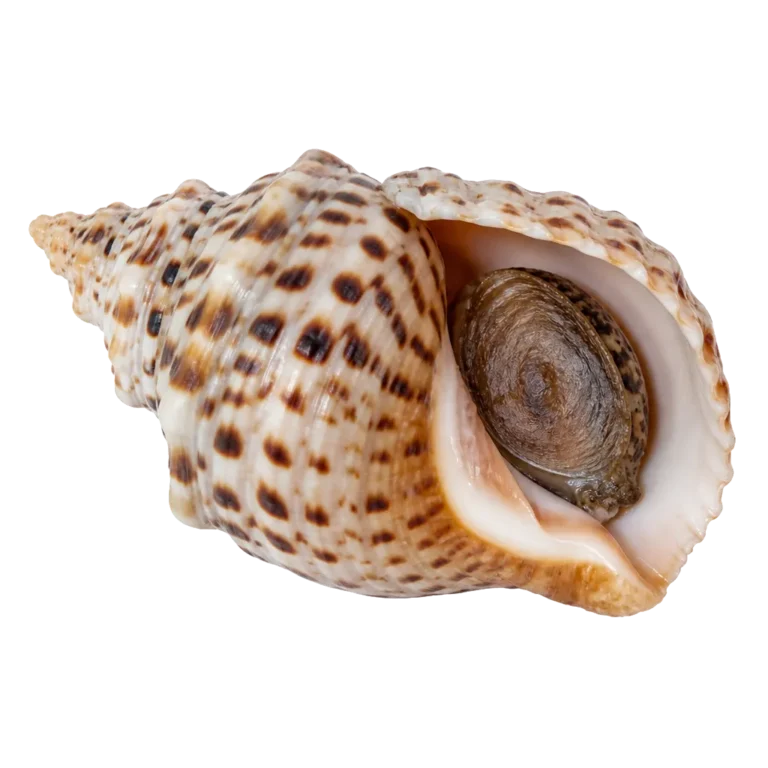
Little Bear Conch
Summary
The Little Bear Conch, Canarium urceus, is a true conch that spends its time travelling over open sand, using its long snout to pick through the surface for edible films and organic material. Its natural association with sandy or sandy-mud bottoms, often around sparse algae or seagrass, makes exposed substrate—not a rockwork-only display—the important feature of its aquarium setup.
Expect an active sand-roaming snail rather than a burrowed sand-bed animal. It may partially settle into the sand, but a specimen that remains tightly closed and does not emerge over several days warrants a check for predation, starvation, or poor acclimation.
Care
Provide a broad area of soft, fine sand that the conch can cross and probe easily. Coarse gravel, sharp crushed coral, or a tank dominated by bare rock limits its normal feeding route and can leave it repeatedly climbing glass instead of working the substrate.
Keep direct, forceful flow off the main sand runway. Moderate circulation is suitable when it does not continually expose or shift the sand around the snail; persistent blasting can prevent it from feeding normally.
Lighting is not a direct requirement, but the aquarium should be mature enough to maintain natural films, diatoms, and detrital food on the sand and lower surfaces. A newly set up or obsessively polished system can look suitable while offering too little for a grazing conch.
Feeding and role
Let the Little Bear Conch graze diatoms, microalgal films, fine detritus, and organic material on and just within the sand surface. Supplement with small, targeted offerings of sinking herbivore-oriented foods or finely broken marine foods when visible grazing is scarce; place food near its path after lights out if faster tankmates intercept it.
Treat it as a limited surface-cleanup snail, not a cure for a dirty sand bed or nuisance-algae outbreak. One conch can continually work a small feeding area, but it will not process heavy accumulations across an entire aquarium and should not be stocked as a substitute for nutrient control or manual maintenance.
Compatibility
This species is generally suitable around healthy corals because it feeds from the substrate rather than on coral tissue. Position loose frags securely, however, as a roaming conch can push lightweight pieces while crossing the sand.
Exclude animals that eat or dismantle snails, especially large predatory crabs, aggressive hermit crabs, puffers, triggerfish, and other shell-crushing or snail-hunting fishes. Repeated shell-pecking, a conch that stays withdrawn, or a damaged operculum are signs that tankmates are not safe.
Several can be kept where the sand area and natural food supply are genuinely sufficient. Add them cautiously rather than assuming a group will create more cleanup capacity: each additional conch increases competition for the same thin layer of food on the substrate.
Good to know
Acclimate slowly and avoid sudden salinity or temperature shifts. As a marine gastropod, it is highly vulnerable to copper and many medications intended for fish; move it before medicating the display rather than assuming a reef-labelled treatment is snail-safe.
Do not buy this conch solely for a spotless, food-poor aquarium. Gradual weight loss, extended inactivity, and little visible probing of the sand can indicate that its grazing resources are exhausted, in which case targeted feeding or reducing the number of competing grazers is more appropriate than waiting for it to recover on its own.