
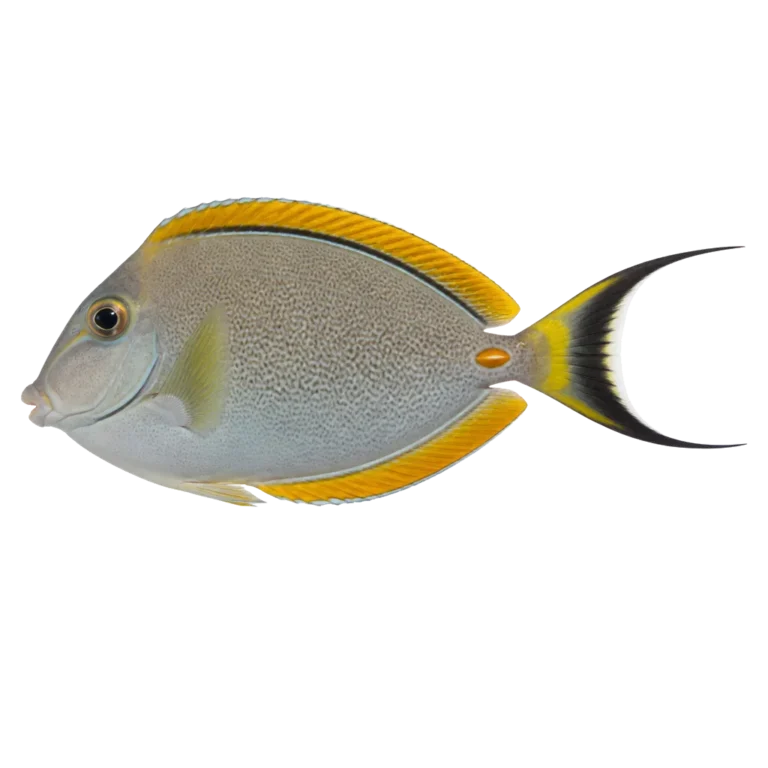
Indonesian Sawtail Tang
Summary
The Indonesian Sawtail, Prionurus chrysurus, is a large, continuously active algae grazer best suited to a mature reef with room to travel rather than a rock-packed display. In nature it works exposed, high-energy rocky areas and may move in loose groups, which helps explain its need for strong circulation, frequent grazing opportunities, and an unobstructed cruising route.
Care
Build the aquascape with substantial, securely fixed rock at the sides or rear and leave a broad open lane through the display. This fish repeatedly patrols while picking at surfaces; a maze of narrow passages can turn normal activity into pacing, scraped fins, and conflict at bottlenecks.
Provide vigorous, well-oxygenated water movement with calmer pockets where the fish can pause. It is adapted to surge-exposed habitat, so a specimen that persistently shelters, breathes heavily, or avoids the open water should be treated as a sign that it is stressed, unwell, or being intimidated rather than simply shy.
Feeding
Offer marine algae several times through the day, using algae sheets on a clip alongside herbivore pellets or frozen preparations with a strong plant component. Keep grazing material available in more than one place when other herbivores are present, because a dominant tang or rabbitfish can control a single clip and leave the sawtail underfed despite apparent feeding activity.
Do not depend on nuisance algae in the aquarium as its sole food source. A well-grazed, clean display can still leave a large herbivore short of intake; a hollow belly, fading condition, or frantic picking over bare rock calls for more frequent algae feedings and less competition at feeding stations. Expect the feeding regime to add substantial nutrient input, and export capacity should match it.
Compatibility
Plan on one Indonesian Sawtail per aquarium. Although loose groups occur in the wild, captive social behavior for this uncommon species is poorly documented, and adding a second established sawtail creates a meaningful risk of chasing and flank-to-flank disputes in a fish armed with a row of sharp tail plates.
Choose tankmates that occupy different niches, such as peaceful reef fish that neither compete intensely for algae nor resemble a tang. Be most cautious with other surgeonfish, especially similarly shaped, similarly sized grazers; if more than one surgeonfish is intended, introduce potential rivals together before either has claimed the rockwork, rather than adding one to an established tang territory.
It is suitable around corals, but its grazing can be a problem in displays built around ornamental macroalgae or deliberately cultivated algae patches. Protect or avoid relying on those plants if they are part of the display plan.
Good to know
Watch territorial behavior as the fish settles in: broadside displays, tail flicking, repeated pursuit, and guarding a grazing area are reasons to intervene early, not wait for visible damage. Rearranging contested grazing zones and separating incompatible surgeonfish is safer than allowing prolonged fights, because the sawtail’s fixed caudal plates can cut tankmates and injure handlers during capture.
Treat this as a specialist large-system herbivore rather than an algae-control purchase. Its natural association with cool, energetic upwelling areas means it may be less forgiving of warm, poorly oxygenated conditions than many commonly kept tropical tangs; reduced swimming, rapid respiration, and refusal to graze warrant prompt environmental and health checks.