
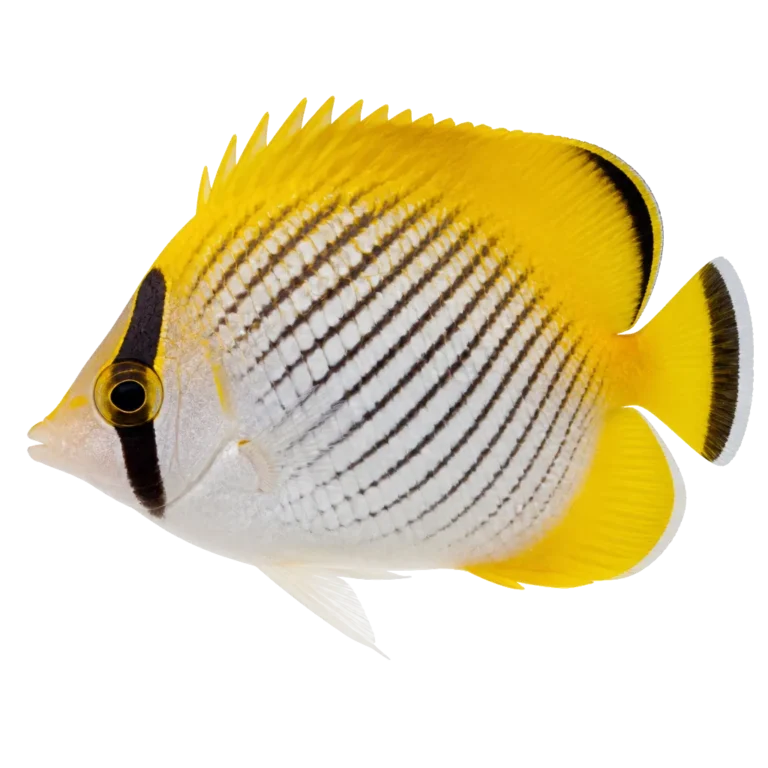
Indian Butterflyfish
Summary
Chaetodon mitratus is an active but usually restrained butterflyfish that spends much of the day making deliberate passes over rock, rubble, and attached invertebrates, pausing to inspect and nip at potential food. In an aquarium, repeated attention to a particular coral or sessile invertebrate is feeding behaviour, not harmless curiosity.
Its natural association with steep, structured reef areas helps explain why a bare, open display can leave it hesitant. It settles best when it can move between open water and broken rockwork rather than being forced to remain exposed.
Care
Build the aquascape with an open cruising route along the front and upper rockwork, plus irregular ledges, caves, and rubble-like pockets where the fish can investigate surfaces and retreat from attention. A dense wall of rock can restrict its normal searching and turning behaviour.
Introduce it to a mature aquarium with calm initial social conditions. A newly imported fish may remain close to cover at first; this is less concerning than persistent rapid breathing, clamped fins, or failure to emerge for food.
Use enough water movement to keep food moving through the display, but retain sheltered areas behind rockwork. The fish should be able to forage without continually fighting a concentrated blast of flow.
Feeding
Confirm that the individual is already taking prepared foods before purchase. Offer a rotating mix of mysis, enriched brine shrimp, finely chopped marine flesh, and quality algae-based foods in several small feedings spread through the day; variety is more useful than relying on one rich frozen food.
Deliver part of each feeding near the fish's usual route or into a low-flow pocket if faster tankmates intercept food in open water. A fish that repeatedly investigates food but does not swallow it, or begins to look pinched behind the head, needs a feeding response before it declines.
Do not treat coral grazing as nutritional insurance. Even a fish that nips living polyps can lose condition when it does not reliably consume aquarium foods.
Compatibility
Keep Chaetodon mitratus singly unless a bonded pair is obtained and introduced together. Unfamiliar individuals, similar butterflyfish, and fish with a comparable body shape may be treated as territorial rivals, especially after the first fish has established its routes through the rockwork.
Favour calm community fish that leave it room to feed. Avoid persistent chasers and rapid, food-dominant species that can keep a reserved butterflyfish from getting repeated bites at meals.
This is not a reef-safe butterflyfish. Expect it to sample coral polyps and potentially other sessile invertebrates; moving a repeatedly targeted colony may reduce access temporarily but does not make the combination dependable.
Good to know
The most common early failure is a fish that appears to be grazing and exploring but is not actually eating enough prepared food. Watch for confident swallowing at feeding time rather than judging its condition only by daytime activity.
Territorial behaviour can emerge after settling rather than on the first day. Repeated following, blocking access to rockwork, or short charges directed at another butterflyfish are signs to separate or rehome one fish before feeding access becomes uneven.
A sudden fixation on one coral colony is a practical removal warning. Once the fish has learned that a particular colony provides a preferred food, heavier feeding may not stop the repeated nipping.