
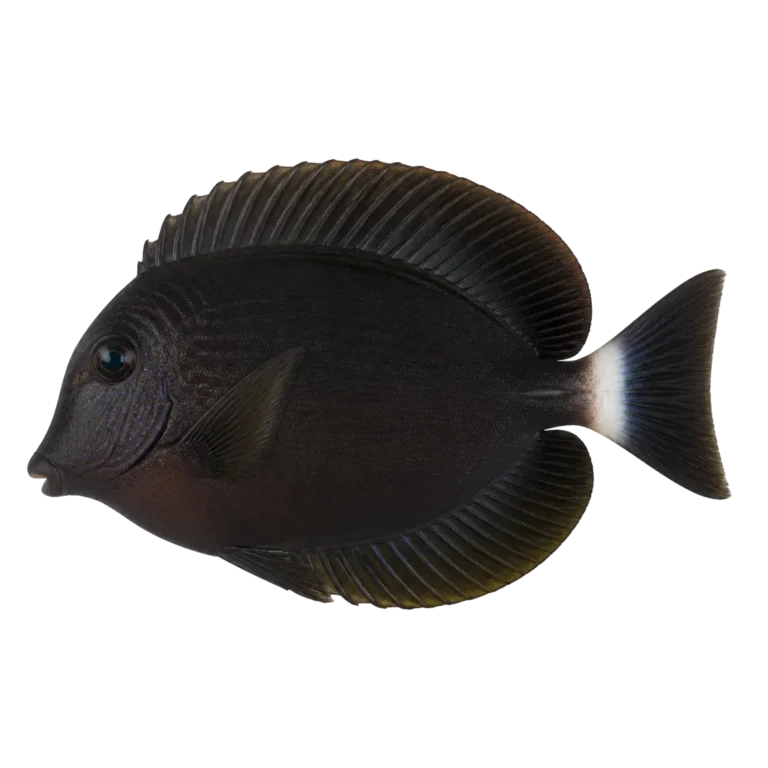
Hybrid Black Tang
Summary
The Hybrid Black Tang, Zebrasoma rostratum × Zebrasoma scopas, is an active algae-grazing surgeonfish that spends much of the day patrolling rockwork and open water rather than hovering in one shelter. Its long snout is used to pick algae from tight surfaces, so a fish that repeatedly works the rockscape is behaving normally; one that stays withdrawn or refuses to graze needs attention.
Use the scientific name when identifying this fish: “Black Tang” can also mean the pure Zebrasoma rostratum. Hybrid individuals can vary in colour pattern and body shape, but they should be stocked with the territorial behaviour expected of a Zebrasoma tang rather than as a milder community fish.
Care
Build the aquascape around a long, unobstructed swimming route with substantial grazing surface, leaving gaps and passes through the rock rather than making a solid wall. The fish should be able to cruise continuously and retreat briefly behind rock when startled; constant pacing at one pane or repeated confrontations at a single bottleneck suggest that the layout is too restrictive.
Provide strong circulation and good gas exchange, particularly because this is an active, high-waste grazer. Keep rockwork secure and away from the front glass, as a startled tang can turn sharply and use considerable force around the aquascape.
Feeding
Offer marine algae every day and make it the foundation of the diet: dried seaweed sheets, quality herbivore pellets, and varied algae-based frozen or prepared foods work well. Divide food across multiple smaller offerings when possible, because a tang built to graze throughout the day can lose condition when limited to a single brief meal.
Use more than one feeding point in a busy aquarium. A dominant fish can monopolize an algae clip while the Hybrid Black Tang looks active but gradually develops a pinched belly or hollow area behind the head. Meaty foods can be offered sparingly as a supplement, but should not displace plant-based feeding.
Compatibility
Keep one Hybrid Black Tang per aquarium in most setups. Avoid adding another Zebrasoma tang, especially a similarly shaped or coloured individual, because recognition as a direct competitor can trigger sustained chasing, flank displays, and tail-slashing rather than a short settling-in dispute.
Choose tankmates that are peaceful but not easily intimidated, such as smaller reef fish that occupy different areas of the aquarium. Other tangs from different genera may work only where there is ample room and several grazing areas; introduce them together when possible, or add this fish after less assertive grazers have settled. An acclimation box is useful if an established tang immediately charges a new arrival.
It is generally suitable with corals and sessile invertebrates, but reef-safe does not mean macroalgae-safe. Expect it to graze decorative macroalgae and do not rely on a display refugium as a protected food reserve.
Good to know
Territorial behaviour often becomes stronger after the fish has settled and claimed the rockwork. Brief displays can be normal, but intervene if one fish is denied access to food, stays pinned in a corner, shows torn fins, or is repeatedly struck with the tail spine.
Treat the caudal scalpel as a real handling hazard. Do not net or hand-catch the fish carelessly during transfers; it can snag in mesh and inflict a cut when the fish twists.
Like many tangs, this fish can show external parasite problems quickly after stress. Flashing, rapid breathing, cloudy eyes, or fine white spots are reasons to move from observation to a deliberate treatment plan rather than assuming the symptoms will resolve with feeding alone.