
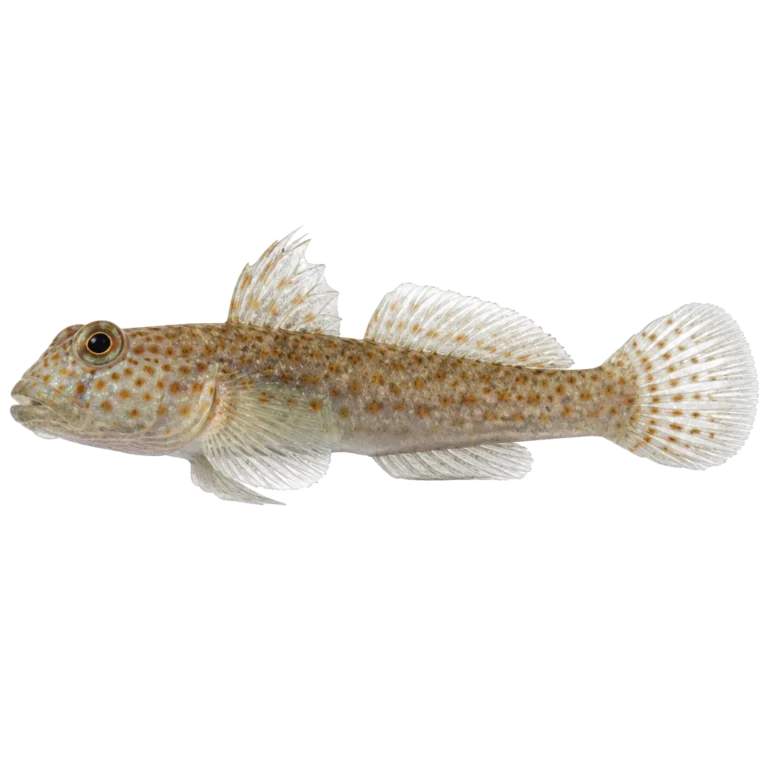
Freckled Goby
Summary
Amblygobius stethophthalmus is a bottom-oriented sand sifter that spends much of the day taking mouthfuls of substrate, retaining edible material and expelling the sand. Expect an active fish on open sand rather than one that stays perched in a single cave; repeated sifting is normal behaviour, while a fish that hides continuously or stops feeding deserves attention.
Its natural preference for sand-and-rubble areas explains two common aquarium traits: it will patrol the lower levels rather than swim in open water, and it may rearrange the sand around its chosen routes. Keep delicate animals that must sit directly on the substrate out of those paths.
Care
Build the layout around an open area of fine, movable sand with scattered rock or rubble at its edges. Set heavy rockwork securely on the tank bottom before adding sand, because persistent sifting can undermine rocks that are simply resting on the substrate.
Give it a calm lower-level territory with clear sight lines across the sand and sheltered retreats nearby. It is usually peaceful, but it needs room to move away from busier fish; a goby repeatedly pinned against the glass, breathing hard, or remaining hidden after feeding is being pressured rather than merely resting.
Use a secure, closely fitting cover. This species can launch from the aquarium when startled or harassed, especially during introductions or abrupt changes in lighting.
Feeding
Treat sand sifting as supplemental foraging, not as a complete feeding plan. Offer a varied mix of finely sized frozen meaty foods, quality sinking pellets, and algae-containing foods, placing some food near the bottom so the goby can eat before faster midwater fish take it.
Feed in small, regular portions and watch the fish itself rather than judging nutrition by how clean the sand looks. A hollow belly, thinning along the back, reduced sifting, or loss of interest in food indicates that natural sand-bed prey is not meeting its needs or that it is losing food competition.
Avoid relying on a newly established or overly sterile sand bed to support it. Prepared foods must remain part of its routine, particularly where other sand sifters, wrasses, or scavengers are consuming the same small benthic foods.
Compatibility
Keep one Freckled Goby unless you obtain a compatible established pair and introduce both together. Unrelated adults, or fish added one after the other, may treat each other as territorial rivals; chasing, blocked access to the sand, and one fish becoming reclusive are signs to separate them.
Choose peaceful community fish that leave the lower sand zone available. Avoid predatory fish that can swallow it and assertive bottom dwellers or similar-looking gobies that may claim the same feeding routes and shelter.
Add Amblygobius stethophthalmus before more forceful bottom-associated fish when possible, so it can establish a routine without being displaced. It is reef compatible, but sand thrown during feeding can bury or irritate low-placed corals, so mount vulnerable corals above the substrate or outside its usual sifting area.
Good to know
Sand movement is a predictable husbandry issue, not necessarily a sign of digging or distress. If the goby repeatedly deposits sand onto a coral, move the coral rather than trying to stop the fish from using that part of the substrate.
Do not assume a peaceful label prevents territorial conflict. A subordinate conspecific or similar goby may still be excluded from food and open sand long before visible injuries appear; loss of body condition and persistent hiding are more useful warning signs than brief chasing.
A sudden disappearance should prompt an immediate check of the floor, lid gaps, overflow, and equipment openings. Jumping is most likely after a fright, conflict with a tankmate, or a sudden lights-out event.