
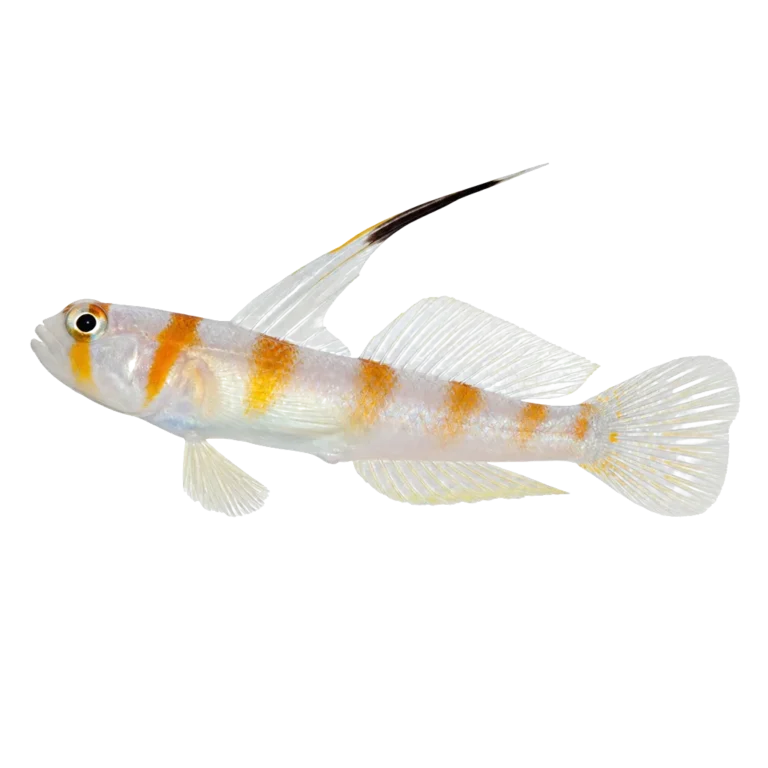
Flagtail Shrimp Goby
Summary
Amblyeleotris yanoi is a burrow-focused shrimp goby rather than an open-water swimmer. In nature it associates with alpheid snapping shrimp, especially Alpheus randalli: the shrimp maintains the burrow while the goby waits at the entrance as a visual lookout. In an aquarium, that translates to a fish that may hover briefly above one patch of sand, then retreat instantly when startled.
Expect it to choose a home base and spend much of its time facing outward from that refuge. A specimen that remains near its burrow is behaving normally; one that repeatedly searches the glass or is excluded from the bottom by other fish needs a quieter territory.
Care
Build the aquascape around a settled sandy area with several protected edges beneath securely supported rock. Put rockwork on the tank base rather than balancing it on sand if a snapping shrimp will be added, because burrowing can remove sand from beneath unsupported structures.
Amblyeleotris yanoi benefits from an open approach to its burrow rather than a tightly packed rubble field. Leave a visible sand-side entrance where it can perch and watch the aquarium; if every lower area is occupied by boisterous fish, it may stay hidden and feed poorly.
A compatible alpheid shrimp is optional for survival but strongly supports the species’ natural routine. Introduce the goby and shrimp together when possible, or release them close to the same sheltered sand area; they may not pair immediately, and repeated rearrangement of their chosen site can delay settlement.
Feeding
Feed small meaty marine foods in modest portions twice daily, using finely sized mysis, enriched brine shrimp, copepods, and finely chopped seafood. Deliver some food near the burrow entrance rather than relying only on food dispersed into the water column.
Watch feeding closely in tanks with fast, assertive feeders. The goby often makes short dashes from cover and may lose every pass to wrasses, anthias, or larger fish; target-feed with a pipette or baster until it is regularly taking food. A hollow belly, increasingly brief feeding appearances, or refusal to leave the burrow at feeding time calls for reduced competition and smaller foods.
Compatibility
Keep one Amblyeleotris yanoi per aquarium unless acquiring an established bonded pair. Unrelated individuals, and especially similarly shaped shrimp gobies, may dispute the same burrow zone even in an otherwise peaceful community.
Choose calm fish that leave the lower sand area alone. Avoid predators that can swallow a goby, persistent bottom-oriented bullies, and sand-sifting gobies that compete for territory or continually disrupt the burrow. Add Amblyeleotris yanoi before territorial bottom dwellers whenever possible, so it can establish a refuge first.
The goby is suitable around corals, but a paired snapping shrimp can move substantial sand. Keep loose frags and corals placed on the substrate away from the burrow zone, since they can be buried, shifted, or undermined as the shrimp remodels the entrance.
Good to know
Use a tight-fitting lid or cover every opening. Amblyeleotris yanoi can launch upward when startled, particularly during its first days in a new aquarium or after being chased from its burrow.
Do not assume a newly settled fish has disappeared permanently if it vanishes with a shrimp for days at a time. Observe quietly near feeding time and look for a goby at the entrance. Intervene only if it is not eating, appears thin, or repeated harassment prevents it from emerging.
Burrow location can change without warning when a shrimp partner excavates a new route. Treat fresh sand piles and a relocated entrance as normal activity, but check nearby rock stability and move vulnerable corals before repeated excavation turns into a collapse or burial problem.