
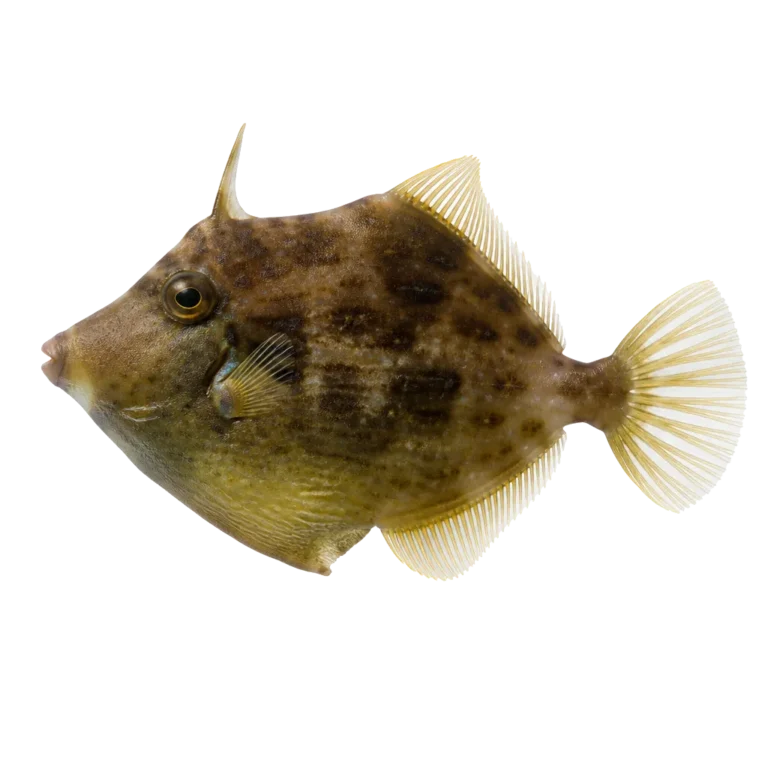
Fanbellied Leatherjacket
Summary
The Fanbellied Leatherjacket, Monacanthus chinensis, is a deliberate, browsing filefish rather than an open-water swimmer. It spends much of its time inspecting rock, algae, and sheltered surfaces for small food items, so it settles best where it can graze between meals instead of being expected to compete constantly in a busy fish community.
Its natural association with weedy, seagrass, reef, and soft-bottom areas explains its changeable appearance and cautious manner. A fish that hovers close to cover, changes shade after introduction, or spends time picking at surfaces is usually behaving normally; one that remains exposed, refuses food, and is repeatedly displaced needs a quieter setup.
Care
Give this species broad, broken-up aquascaping with sheltered lanes along rockwork, overhangs, and textured grazing surfaces, while retaining clear areas for it to move through. It is not a powerful swimmer, so relentless high-energy flow can leave it struggling to hold position and make feeding difficult; aim for gentler zones where it can forage without being swept away.
Introduce it to an established aquarium with natural algae and microfauna on hardscape. Those surfaces provide familiar browsing opportunities while the fish learns prepared foods, and a bare, newly arranged display can leave a shy individual with little cover or incentive to explore.
Avoid sudden rearrangement around its preferred retreat. A leatherjacket that begins wedging itself deep in rockwork or staying hidden after a change may be responding to lost shelter or pressure from tankmates rather than developing a disease problem.
Feeding
Offer a varied omnivorous diet in small, frequent portions: quality marine algae-based foods alongside finely chopped crustacean, mollusc, and other marine meaty foods. Let it browse between feedings, but do not treat surface algae alone as a complete diet.
Feed deliberately near its chosen cover and watch that it actually receives food. This species is easily beaten to suspended foods by fast, assertive feeders; a fish that continues grazing but develops a pinched belly or loses interest in prepared food is not getting enough nutrition.
Do not use hunger to encourage pest control or coral picking. Underfed individuals are more likely to investigate coral tissue, clam mantles, and ornamental invertebrates as potential food, while a full and varied diet reduces—but does not eliminate—that risk.
Compatibility
Keep a Fanbellied Leatherjacket as a single specimen in most home aquariums. Although wild social structure may include a male with females, reliably sexing and establishing a compatible captive group is not straightforward, and adding another leatherjacket after one has settled can turn its shelter and feeding areas into a dispute.
Choose calm fish that leave it room to browse, and add the leatherjacket before highly active or territorial tankmates whenever possible. Avoid large aggressive triggers, boisterous predators, and very fast feeders that can intimidate it or monopolize every meal.
Treat it as reef safe with caution rather than reef safe. It may pick at coral polyps, clam mantles, sponges, snails, crabs, shrimp, and other small decorative invertebrates; a mixed reef is only suitable if occasional losses or nipping are unacceptable.
Good to know
Colour shifts are normal for Monacanthus chinensis and can follow a move into different rockwork, algae, or lighting. Judge its condition by feeding response, body fullness, breathing, and willingness to emerge, not by a change from brown to cream or greenish tones alone.
Its rough skin and prominent dorsal spine can snag in coarse nets. Use a specimen container or a very soft net when moving it, and never pull a fish free if it has caught on mesh; damaged skin is an avoidable complication after transfer.
Expect an initially shy fish to become bolder only after it learns where food arrives and which areas are safe. If it remains hidden after the settling period, look first for food competition, excessive flow, or harassment rather than trying to force it into the open.