
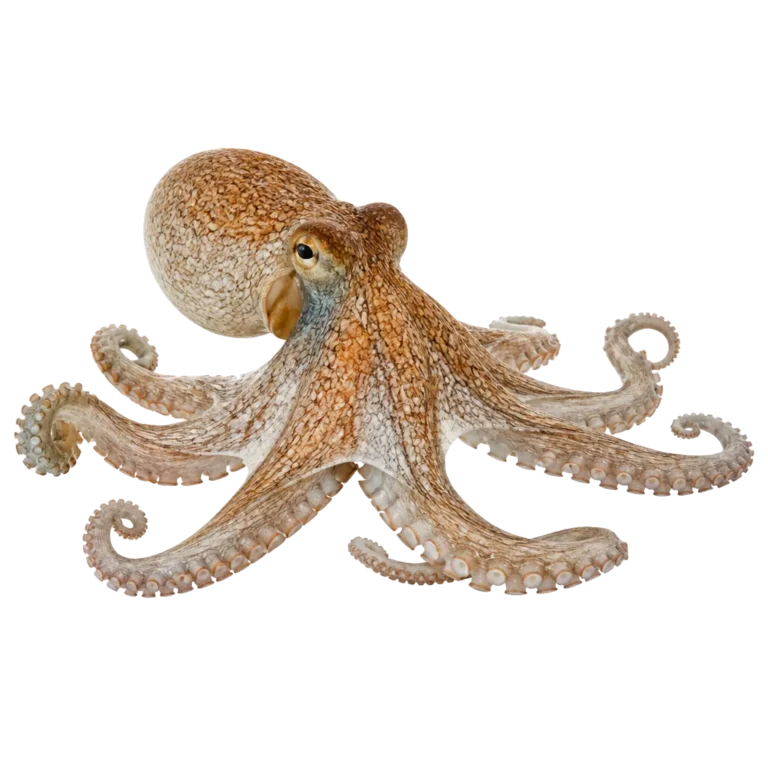
Day Octopus
Summary
Octopus cyanea is a large, solitary Indo-Pacific reef octopus that hunts actively during the day. Its habit of probing reef crevices for crabs, mollusks, and other concealed prey means it needs a dedicated system with secure dens and no small animals it can reach.
It uses rapid camouflage, strong problem-solving behavior, and physical manipulation of its surroundings. A day octopus that shifts rocks, explores plumbing, or investigates every seam is behaving normally, but those behaviors make it unsuitable for a conventional mixed reef aquarium.
Care
Keep Octopus cyanea in a mature, species-focused marine system with robust biological filtration and protected pump intakes. Its protein-rich diet produces substantial waste, and exposed intakes or narrow equipment gaps can injure an exploring animal or provide an escape route.
Build several dark, secure dens from heavy rock that cannot be undermined or pulled down. Coral rubble, rock, and sand are useful for natural exploration, but the rockwork must be stable before the octopus is introduced; unsecured structures and loose corals can be moved.
Use diffuse, well-oxygenated circulation rather than a direct jet aimed at its den. Bright reef lighting is unnecessary: a normal day-and-night schedule with shaded retreats better suits this diurnal species and lets it choose when to emerge.
Feeding and role
Feed a varied marine carnivore diet centered on crab, shrimp, and mollusk flesh, with occasional suitable marine fish items. Rotate fresh or properly thawed whole seafood where possible so the diet is not based on one food alone; refusal of food, loss of condition, or repeated hunting of unsuitable tankmates can indicate that feeding is inadequate.
Offer food with long feeding tongs and remove remains promptly. Octopus cyanea is a predator, not a cleanup-crew animal: it may consume a snail, crab, or leftover meaty food, but it will not manage algae or detritus and a missed meal can quickly worsen water quality.
Compatibility
Keep one Octopus cyanea per system. It is not a pair or group animal, and attempts to house conspecifics together risk aggression, predation, and cannibalism.
Assume ornamental crabs, shrimp, snails, clams, and other accessible mollusks are prey. Small or resting fish may also be taken, while large predatory fish and eels can injure or harass the octopus; a species-only setup is the reliable choice.
Do not treat it as coral-safe. It may not feed on corals, but it can dislodge unsecured colonies and rockwork while hunting. Stinging corals and anemones are also poor companions because its arms repeatedly contact the substrate and crevices it searches.
Good to know
Secure every opening before introduction, including the lid, overflow, plumbing penetrations, and cable gaps. This species can explore outside the aquarium; if it disappears, check the floor, sump, and external equipment immediately, then correct the escape route before returning it.
Avoid copper-containing medications and contaminated equipment. As a cephalopod, it is highly vulnerable to copper exposure, so it should never be placed in a system with residual copper treatment.
Acclimate gently to matched temperature and salinity, then transfer without exposing it to unnecessary handling. Do not handle the animal during feeding or maintenance: it has a powerful beak and venomous saliva, so any bite should be treated as a medical concern.
Have a response plan for inking. A severely disturbed octopus may release ink; remove it promptly, increase aeration, and investigate the trigger, such as harassment, a failing pump, or unsafe handling.