
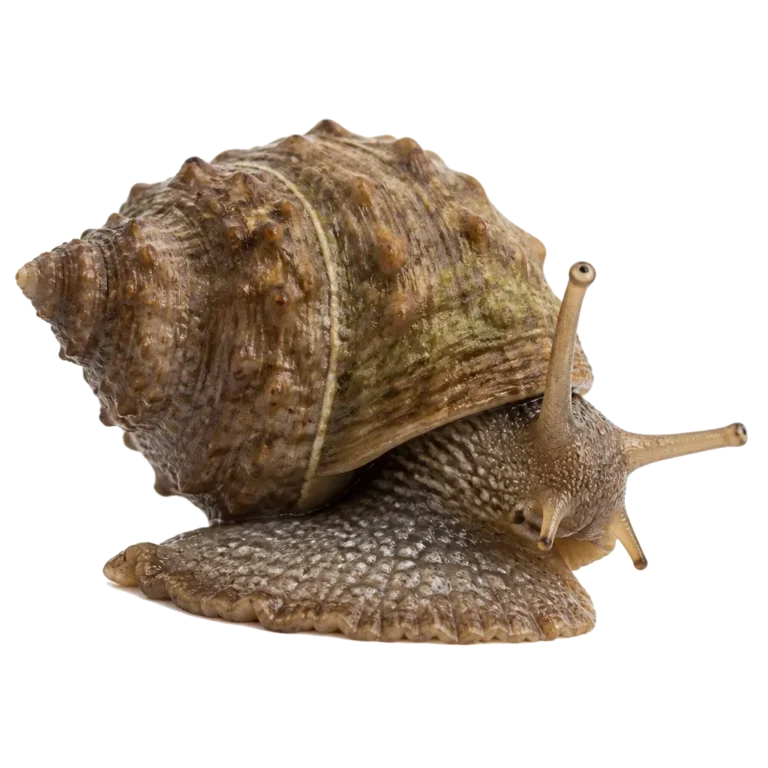
Crowned Turbo Snail
Summary
Lunella coronata is a heavy-shelled turban snail, sometimes still encountered under the older name Turbo coronatus. Its crowned, knobbly shell and large grazing foot suit a life on hard surfaces rather than in sand. In nature it occurs on Indo-West Pacific rocky shores, tide pools, and shallow reef-edge habitat, which explains why it spends most of its time working rockwork and glass.
Choose it for established systems with visible algal growth on accessible hard surfaces. Its size and traction make it an effective grazer, but also mean it can shift unsecured frags or small rocks while moving through the aquascape.
Care
Build the aquascape securely before adding this snail. It needs broad, algae-coated rock and glass to graze, and a loose frag plug, balancing coral, or unstable rubble piece may be pushed over as it travels.
A mature aquarium is important because newly set-up tanks rarely produce enough persistent surface growth to feed a large herbivorous snail. Lighting does not need to meet a special requirement for the snail itself, but it must support enough benthic algae and biofilm for regular grazing. Substrate type is secondary; this species is not a sand-sifting snail.
Offer crevices and shaded rock faces as resting routes, particularly if the aquarium is brightly illuminated. A snail that remains firmly attached by day and resumes grazing later is behaving normally; one that repeatedly loses its grip or stays withdrawn should be checked for acclimation stress or inadequate food.
Feeding and role
Lunella coronata feeds chiefly on attached algae, including film algae, diatoms, hair algae, and some turf growth, along with plant-derived material on hard surfaces. It is useful where these growths are already present, but it will not solve the underlying cause of a persistent algae outbreak and does not clean deep sand beds or remove accumulated detritus.
Supplement when grazing surfaces look clean or the snail is covering the same small area repeatedly. Secure dried marine-algae sheets, edible macroalgae, or a plant-based grazing food close to rockwork so it can reach the food during its normal route. A shrinking, inactive, or persistently withdrawn snail in an overly clean tank should be treated as a possible starvation case rather than expected cleanup-crew turnover.
Add only as many as the available algae can feed long term. One large specimen can noticeably clear accessible patches, so several snails can exhaust a modest aquarium's natural grazing quickly.
Compatibility
This snail is generally coral-safe as a grazer: it does not target healthy coral tissue. Its practical coral risk is mechanical, not dietary, so secure frags and lightweight colonies rather than relying on the snail to avoid them.
Keep it away from animals that eat or dismantle snails, including snail-eating wrasses, puffers, triggerfish, and large predatory crabs. Hermit crabs can also harass or attack a weakened snail for its shell, especially when food is scarce.
It does not require a partner or group. Add individuals according to available grazing area, not as a preset cleanup-crew number; several can coexist where there is extensive algal growth, but crowding herbivorous snails in a clean aquarium leads to food competition.
Good to know
Acclimate Lunella coronata carefully to the aquarium's salinity and temperature. A stressed individual may remain sealed behind its operculum, fall away from the glass, or fail to resume grazing after introduction; correct sudden parameter mismatch before assuming it is simply resting.
Like other marine snails, it is highly vulnerable to copper-based medications and should not be placed in a system where copper is present or has been used without confirming it has been removed. The consequence can be rapid loss of attachment and death.
Its intertidal ancestry gives it more tolerance of a brief accidental exposure than many strictly subtidal invertebrates, but it should not be deliberately left dry. Return a displaced snail promptly to the water and set it foot-down on a stable rock or glass surface so it can regain attachment.