
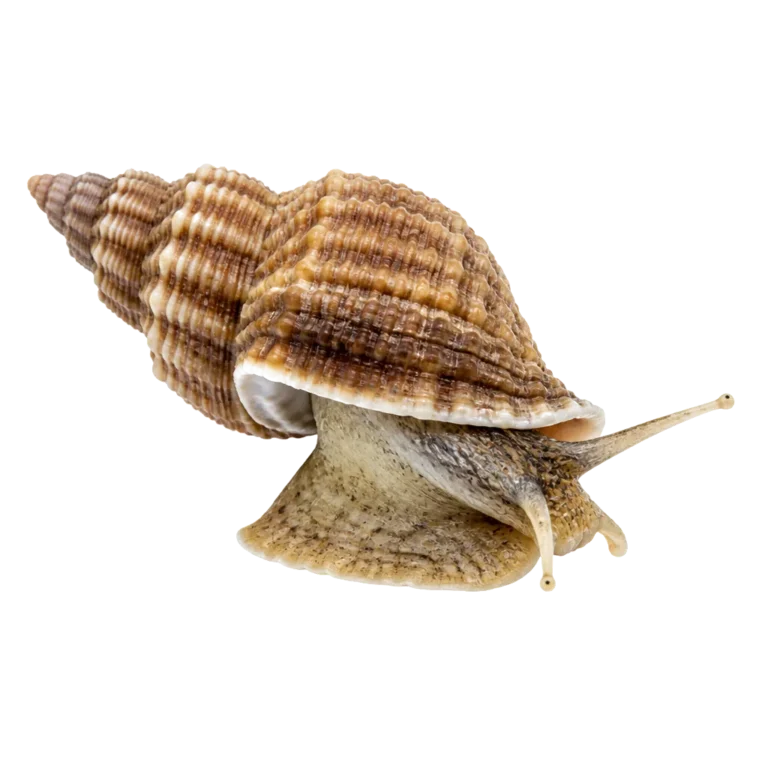
Channelled Dog Whelk
Summary
Nassarius dorsatus is a channelled dog whelk: a scent-led, burrowing scavenger that often stays concealed with its siphon above the sand, then emerges quickly when it detects meaty food. Its tropical Indo-Pacific background and use of sheltered muddy or sandy bottoms explain its need for an open, usable sand bed rather than a rock-only display.
It is not an algae grazer. A snail repeatedly racing across the sand after feeding is normal; a specimen that remains exposed and searches persistently may be short of food.
Care
Keep Nassarius dorsatus on a sand bed with enough open surface to burrow and move through. Fine to moderately sized sand is more suitable than coarse rubble, which can prevent normal burial and leave the snail exposed.
Add it to a biologically established aquarium where regular feeding and natural sediment life provide dependable food. Lighting is not important to this snail, and flow should not be so forceful across the substrate that it cannot settle, feed, or rebury itself.
Feeding and role
Feed meaty marine foods that reach the sand, such as sinking carnivore pellets or small pieces of shrimp, fish, clam, or mussel. Do not assume fish leftovers will sustain it; in lightly stocked or very tidy systems, target-feed when the snail emerges and no food is available on the substrate.
Its useful role is removing uneaten meaty food and carrion before it decays, while its burrowing stirs only the areas it travels through. It will not control film algae, turf algae, or algae on glass and rock, and one animal cannot compensate for overfeeding or neglected detritus removal.
Compatibility
Treat this species as reef-compatible with caution. It is generally a scavenger and should not be relied upon to harm healthy corals, but its size and opportunistic feeding mean weakened, very small, or immobilized benthic invertebrates can be at risk. If it gathers on an ailing animal, inspect that animal promptly rather than assuming the whelk caused the problem.
Avoid animals that crush shells or specialize in eating snails, including puffers, triggerfish, large predatory wrasses, and mantis shrimp. Hermit crabs can also attack it for its shell.
It can be kept singly or in a small group, but add only as many as the sand bed and feeding routine can support. More whelks competing around every feeding response is a sign that the group may outstrip the available food.
Good to know
Copper-based medication is dangerous to Nassarius dorsatus. Do not add the snail to a system with residual copper treatment, and do not medicate its display tank with copper.
Acclimate carefully to the display salinity and temperature, then place the animal directly onto the sand rather than leaving it stranded on rockwork. A healthy snail commonly buries soon after introduction; repeated failure to right itself, prolonged inactivity on the surface, or an empty shell are warning signs to investigate promptly.
Do not mistake scavenging for proof of predation. Nassarius dorsatus may arrive rapidly at a dead fish, injured snail, or failing crab because it detects the scent of damaged tissue; remove the affected animal and look for the original cause.