
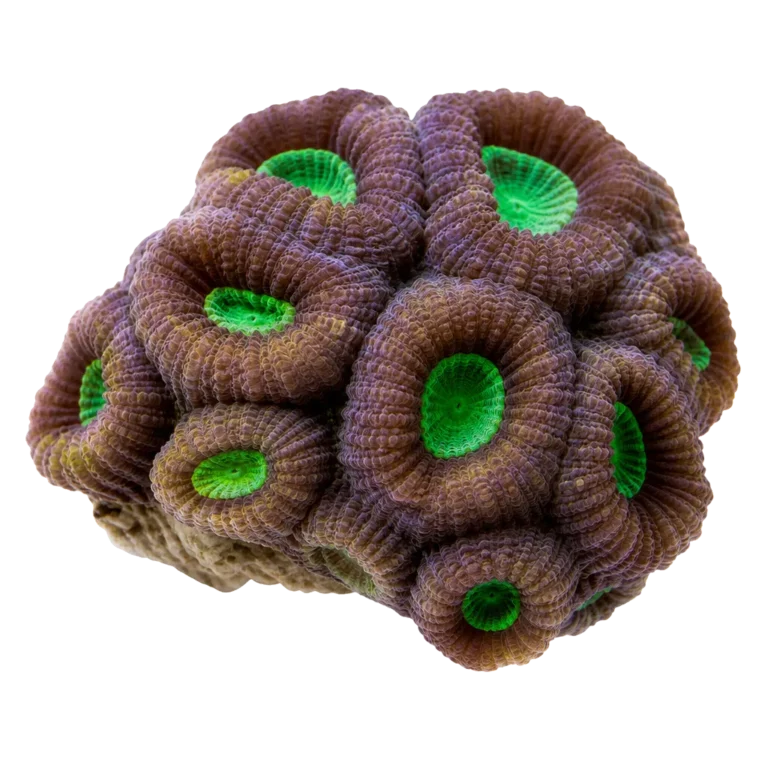
Caulastrea Coral
Summary
Caulastrea sp. is a branching LPS coral made of distinct, fleshy, round-headed polyps on a hard skeleton. Common names such as candy cane and trumpet coral can cover several Caulastrea species, so colony shape, head size, and colour vary; care should be guided by how fully the individual colony inflates and extends its feeding tentacles.
Its protected reef-slope habitat helps explain its preference for gentler conditions rather than intense light or direct, turbulent blast flow. Choose a healthy specimen with plump tissue that covers the rim of each corallite; avoid frags with receding tissue, bare skeletal edges around otherwise living heads, or damaged flesh between heads.
General care
Place Caulastrea sp. low to mid-level, where its polyps can inflate without being whipped against the skeleton. Secure branching frags firmly before introducing them: a fall can split branches or tear inflated tissue, and repeated disturbance often leads to recession around the head.
Handle it only by the bare skeleton, never by the fleshy polyp. Give a new frag time to settle before moving it again; a normally healthy colony should reopen after the handling stress passes, while persistently shrunken heads, exposed rims, or peeling tissue call for checking flow, light changes, and recent water-chemistry swings.
Lighting needs
Start a new Caulastrea sp. in a dimmer part of its intended zone, then raise exposure gradually only if the polyps remain full and colour holds. This is especially important when moving a coral from a system with unknown lighting, because abrupt exposure can bleach or keep the heads contracted.
Too little light is usually seen as slow growth, stretched-looking tissue, and reduced colour over time. Too much light is more urgent: tissue may stay tightly withdrawn during the photoperiod, become unusually pale, or recede from the upper-facing edges; reduce exposure rather than waiting for bare skeleton to appear.
Flow needs
Aim for indirect, low-to-moderate flow that makes the tentacles and expanded tissue move gently while allowing the polyps to stay round and inflated. Flow should carry away waste and food remnants without forcing the flesh to flap or fold against the sharp skeletal rim.
In insufficient flow, detritus settles between heads and the colony may look dirty or remain partly closed. In excessive or direct flow, polyps stay pinched, lean hard in one direction, or show tissue abrasion at the rim; redirect the outlet rather than simply placing the coral closer to it.
Feeding and growth
Caulastrea sp. can meet much of its energy demand through its symbiotic algae, but feeding is useful for newly established frags, recovery after stress, and faster budding. Offer small zooplankton-sized foods or finely chopped meaty foods when feeding tentacles are visible, and use only enough that each head can capture and swallow without food accumulating on the colony.
Growth usually occurs by new heads budding from the branching skeleton, so a small frag gradually becomes a wider cluster rather than a flat encrusting patch. Leave open space above and around the colony for new branches, and plan for the growing cluster to shade or contact nearby corals if it is wedged into a crowded rock crevice.
Compatibility
Caulastrea sp. is semi-aggressive and can deploy sweeper tentacles to sting neighbouring corals, particularly after dark. Keep at least 10 cm3.9 in of clear space from unlike corals and check the colony at night before deciding a seemingly safe daytime gap is sufficient.
Most reef fish ignore healthy Caulastrea, but persistent picking by angelfish, butterflyfish, large wrasses, or other coral-nipping fish can prevent polyp expansion and expose the skeleton. Watch for repeated daytime contraction tied to a particular animal; a clean, sharply localized bite or torn patch is more consistent with harassment than with a lighting issue.
Water parameters
Caulastrea sp. is generally more forgiving than many demanding stony corals, but it still responds poorly to abrupt changes in salinity and alkalinity because its inflated tissue and skeletal growth depend on steady conditions. Sudden, colony-wide failure to inflate after a water change or dosing adjustment should be treated as a stability warning rather than corrected with rapid additional dosing.
Maintain reliable calcium and alkalinity availability as the colony adds new skeletal heads, and avoid allowing nutrients to swing from scarce to excessive. Tissue that slowly thins, recedes from the rim, or leaves individual heads exposed can reflect unstable chemistry, prolonged stress, or damage; address the underlying change before attempting to force recovery with heavier feeding.