
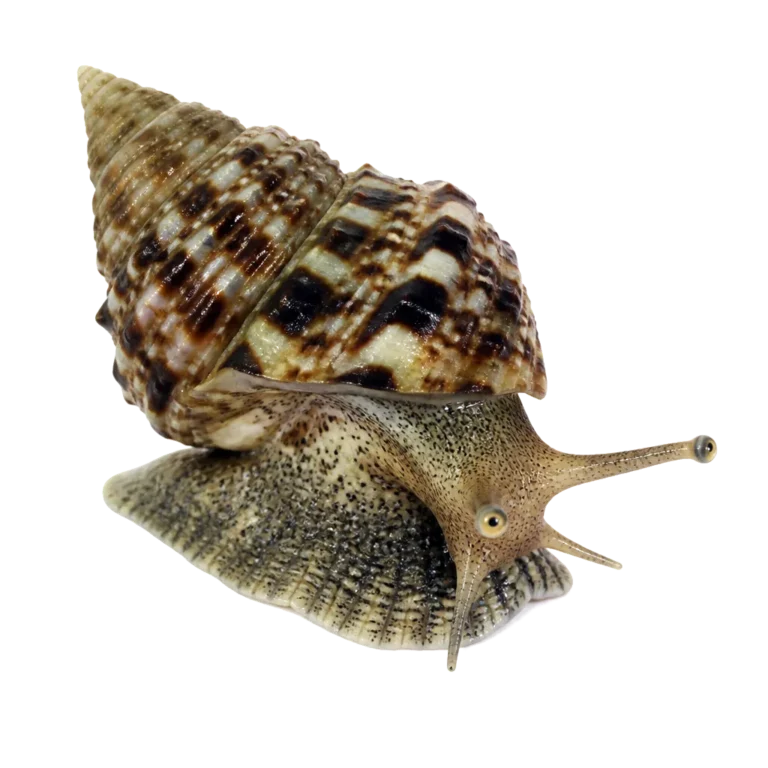
Cat’s Eye Turbo Snail
Summary
The Cat’s Eye Turbo, Turbo petholatus, is a heavy-shelled turban snail identified by its rounded shell and hard, circular “cat’s-eye” operculum. It comes from shallow Indo-Pacific coral reefs and rocky reef areas, where it shelters by day and grazes more actively after dark. In an aquarium, expect it to spend most of its time on rockwork and glass rather than moving through the sand.
Care
Add this snail to an established reef with algae film and biofilm already present on accessible rock and glass. Bare, newly set-up tanks offer too little grazing and can leave it without enough food even when water quality is otherwise suitable.
Provide stable rockwork with crevices or shaded undersides where it can settle during the day. No special sandbed is needed, but secure loose frags and small rock pieces: a large Turbo can push poorly attached items aside while grazing.
Lighting is only relevant because it supports the algae and biofilm this species eats; the snail itself does not need intense illumination. Keep pump and overflow openings screened if the snail can reach them.
Feeding and role
Turbo petholatus is an herbivore that rasps algae and biofilm from hard surfaces. Supplement with dried marine algae when grazing becomes scarce, especially after it has cleaned its preferred surfaces or in a lightly stocked, very clean aquarium. Place the algae where the snail can reach it rather than relying on food drifting through the water.
Its cleanup role is limited to grazing accessible algal films and some established algae on rock and glass. One snail will not correct the nutrient source behind a major algae outbreak, clean detritus from the substrate, or reliably remove every type of nuisance growth. If it stops finding visible grazing, provide algae promptly rather than assuming it can live on leftovers.
Compatibility
This is a reef-compatible grazer that does not normally feed on corals, but its size and strength can dislodge unsecured frags or small colonies as it travels across the rockwork. Mount corals firmly before adding it.
Keep it away from animals that crush, pick at, or pull snails from their shells, including snail-eating crabs and predatory fishes such as many puffers and triggerfish. Some wrasses and large hermit crabs may also harass it or target the foot and operculum.
Cat’s Eye Turbos are not known for territorial conflict with other grazing snails. Add individuals according to the amount of natural grazing available, rather than adding a group simply to increase cleanup capacity; too many herbivores can exhaust the food supply quickly.
Good to know
Acclimate carefully to the aquarium’s salinity because marine snails can be stressed by abrupt osmotic change. A snail that remains tightly closed and fails to attach after introduction may be stressed, whereas a healthy individual should extend its foot and grip a hard surface once settled.
Avoid copper-based medications and other treatments not explicitly confirmed as safe for marine invertebrates. Copper exposure can be fatal even when fish appear unaffected.
Check for an overturned snail, particularly around unstable rockwork or steep glass-to-sand transitions. If it cannot regain its footing, place it upright on a firm surface; repeated inability to attach or right itself warrants checking for harassment, unsuitable conditions, or decline.