
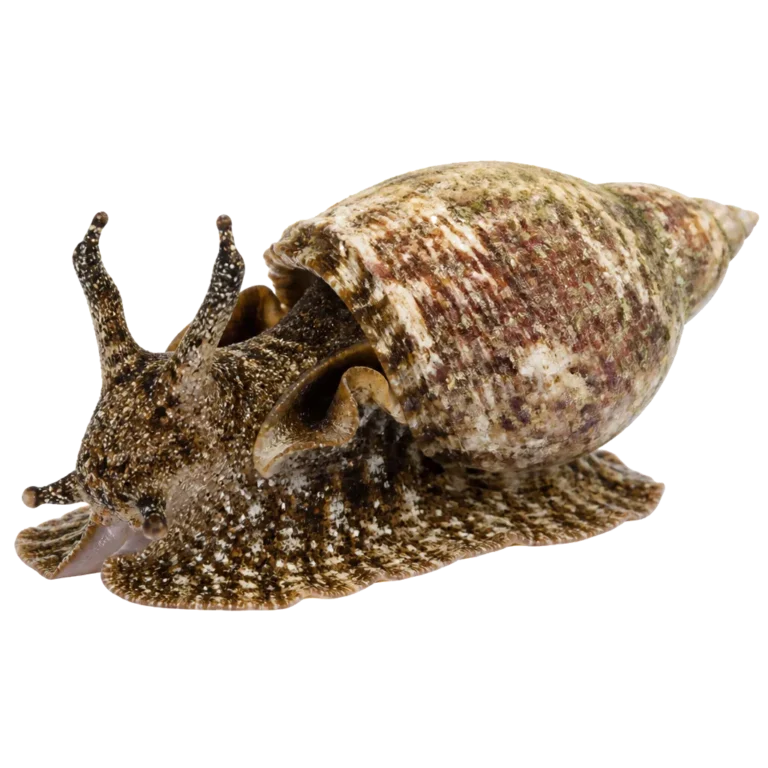
California Sea Hare
Summary
Aplysia californica is a large, soft-bodied sea slug with ear-like sensory tentacles and broad body flaps. It is a cool-water grazer from California’s rocky shore and kelp-associated habitats, not a tropical reef invertebrate. Its need for chilled water and a continuing supply of suitable seaweed makes it a specialist animal rather than a general cleanup-crew purchase.
Care
Set up a mature temperate marine aquarium around the sea hare’s cool-water requirement before acquiring it. A typical warm reef tank is unsuitable; prolonged warmth increases stress and makes a feeding animal difficult to keep successfully.
Provide broad, stable surfaces for grazing, with live rock, smooth sand, and attached macroalgae rather than a bare display built only around corals. It does not require bright light itself, but lighting must support any macroalgae grown as food. Use protected pump and overflow intakes: a sea hare can wander into equipment, be injured, and release defensive secretions.
Keep water movement diffuse enough that the animal can remain attached and graze without being continually blown loose. A sea hare spending long periods tumbling, contracted, or unable to hold onto rock is not coping with its placement or flow.
Feeding and role
Offer a dependable supply of fresh marine macroalgae, with suitable red algae as the dietary priority and varied brown or green algae only as complementary foods. Do not buy Aplysia californica unless food is already available or can be sourced consistently; an aquarium’s nuisance algae commonly disappear long before the sea hare’s appetite does.
This is an active macroalgae browser, not a detritus eater or a solution for every type of algae. One individual can noticeably reduce palatable film and attached macroalgae in a confined area, but it will not correct the nutrient source behind recurrent algae growth. Once the available algae are depleted, begin supplemental feeding immediately or arrange a suitable new home rather than waiting for visible weight loss.
Expect it to eat desirable macroalgae as readily as nuisance growth when the species is palatable. Keep decorative algae in a separate refugium or accept that planted display sections may be grazed down.
Compatibility
Aplysia californica generally leaves corals alone, but its size and wandering grazing path can dislodge unsecured frags, loose rockwork, and attached macroalgae. Secure corals and avoid placing it in densely packed displays where it must push through fragile branches or topple loose pieces.
Do not combine it with animals likely to bite, pinch, or repeatedly investigate a soft slug, including predatory fish, large predatory crustaceans, or stinging anemones. Harassment can cause injury or trigger inking, even when the attacker does not successfully eat it.
Add individuals singly unless the system has food production sufficient for every animal. They do not need a group for normal keeping; additional sea hares sharply increase the demand for fresh algae and may produce mating activity and egg masses.
Good to know
Purple ink or pale defensive mucus is an emergency response to handling, attack, entrapment, or severe disturbance. If this occurs, find and remove the stressor, check all intakes and tankmates, and use fresh chemical filtration and a prompt water change if the water is discolored or other livestock shows distress.
Acclimate slowly to the display’s cool temperature and salinity, because a rapid transfer from shipping water can cause immediate stress. Handle only when necessary and support the whole animal rather than pulling it from a surface.
Avoid copper-based medication and copper-contaminated systems. As a marine mollusc, it is highly vulnerable to copper exposure.
An adult may already be well advanced in its naturally short life cycle when purchased. If an otherwise well-fed individual becomes inactive and declines after a period of normal grazing, age may be a factor, but first rule out starvation, overheating, injury, and equipment entrapment.