
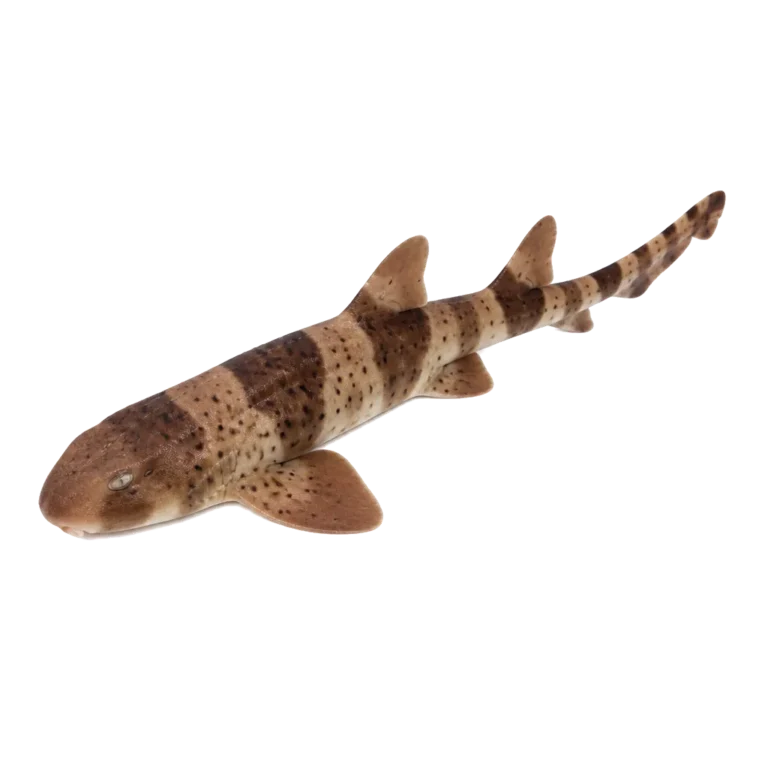
Brownbanded Bamboo Shark
Summary
Chiloscyllium punctatum is a bottom-oriented shark that spends much of the day resting in a shaded spot, then becomes more purposeful as the aquarium dims. It moves by working along the substrate and through low cover rather than by cruising continuously in open water, so a shark lying still is usually normal when its breathing and feeding response remain regular.
Its predatory behavior is practical rather than confrontational: it investigates food and tankmates at close range and will swallow fish or crustaceans that become manageable prey. Plan the display around a large, nocturnally active benthic predator, not a community fish that merely happens to rest on the sand.
Care
Build the aquascape around an uninterrupted, soft-bottomed turning area. Use fine sand and broad, low rock structures with shaded overhangs; narrow passages, sharp rock edges, and dense coral thickets restrict the shark’s movement and can abrade its underside.
Make every rock structure immovable before the shark is introduced. Chiloscyllium punctatum leans against, wedges beneath, and pushes through low structures, so loose rock, unsecured coral colonies, and rubble can shift onto the animal or destabilize the display.
Provide strong gas exchange and broad circulation without aiming a hard jet at its preferred resting site. A shark that repeatedly leaves cover, breathes conspicuously, or persistently seeks the surface should prompt an immediate check of oxygenation, flow failures, and water quality rather than being dismissed as normal activity. Cover or guard equipment that creates narrow traps or strong suction at the substrate.
Feeding
Offer a varied marine-meat diet on a deliberate evening routine, using pieces of marine fish, squid, shrimp, crab, clam, and similar foods sized so they can be taken cleanly. Present food with feeding tongs or a target near the bottom so the shark receives its ration instead of relying on leftovers from faster fish.
Feed several controlled meals across the week and adjust the portion by body condition and feeding response. A shark that is consistently slow to approach food, repeatedly drops it, or loses condition should not be competed against by active fishes at mealtime; separate or distract those tankmates and confirm that the shark is actually swallowing its share.
Do not use freshwater feeder fish as a staple. They are a poor long-term nutritional match and encourage an imbalanced diet; marine-origin whole foods and varied invertebrate items better reflect the prey types this shark can process. Avoid hand-feeding, as it teaches a powerful suction-feeder to associate hands with food.
Compatibility
Keep Chiloscyllium punctatum singly in a typical private aquarium. Do not add another bamboo shark simply to provide company: each animal needs extensive bottom access, and crowding turns resting places and feeding sites into conflict points.
Choose robust, calm fishes that are clearly too large to swallow and that will not harass a resting shark. Avoid small bottom fishes, slow or sleeping fishes that could become prey, and ornamental shrimp, crabs, and similar crustaceans. Also avoid persistent fin-nippers or forceful feeders, including tankmates that may target the shark’s eyes, fins, or food.
Stock the system as a shark system from the outset. Secure the rockwork and choose permanent tankmates before introduction; adding a small fish or crustacean later because it appears safe during the day can end with predation after dark. Corals are not the main concern, but unsecured colonies can be pushed over as the shark moves beneath or alongside the aquascape.
Good to know
Nocturnal activity can make this species seem inactive under bright daytime lighting. A regular pattern of resting by day and emerging to investigate food after dimming is expected; a sudden departure from its normal routine, especially paired with heavy breathing or food refusal, is more meaningful than daytime stillness alone.
Use a tightly secured cover and close gaps around plumbing or cables. Bottom sharks can climb, push, or surge unexpectedly when startled, and a night-time escape is a realistic risk even from an aquarium that otherwise seems too tall to leave.
Treat medication decisions cautiously. Elasmobranchs can react poorly to copper-based treatments, so a shark showing skin damage, abnormal respiration, or persistent anorexia should be assessed with shark-safe treatment guidance rather than medicating the display indiscriminately.