
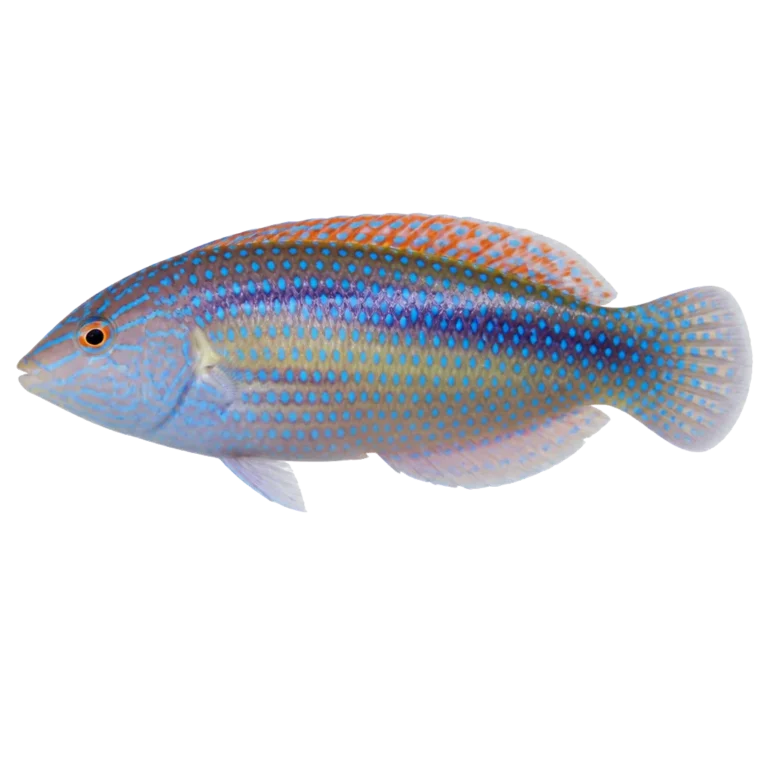
Blue Star Leopard Wrasse
Summary
Macropharyngodon bipartitus is a deliberate daytime forager that works rock, sand, and coral bases for tiny prey rather than taking long open-water laps. Its constant pecking is normal when it is settled; a newly introduced fish may instead dive into the sand when alarmed and remain out of sight while it adjusts.
Choose this wrasse for an established reef with a functioning population of small benthic life, not a newly assembled display. Its natural reliance on picking invertebrates from the substrate explains both its need for frequent small foods and why a fish that ignores prepared food can decline quickly.
Care
Build the aquascape around open sand lanes beside stable rockwork. Provide a broad area of fine, loose sand deep enough for complete burial, because this is its retreat and sleeping site; coarse, sharp, or cemented substrate can leave it exposed and stressed.
Keep the display calm at feeding time and leave unobstructed routes around the rockwork. This wrasse spends much of the day inspecting surfaces, so a layout crowded with territorial fish or dead-end rock piles can turn normal foraging into persistent avoidance.
Feeding
Offer small meaty foods in repeated, modest portions spread through the day: copepods, mysis, enriched brine shrimp, finely chopped marine foods, and suitably small frozen or dry foods once accepted. Begin with moving live foods when a new arrival will not recognize prepared fare, then mix in frozen foods gradually rather than waiting for it to begin eating on its own.
Feed where the wrasse can make repeated passes without being beaten to every particle by fast planktivores. A visibly hollow belly, reduced substrate-picking, or repeated refusal of food is a warning to intervene promptly; pods in the aquarium are useful supplemental forage, but are not a dependable sole diet in a stocked reef.
Compatibility
A single Macropharyngodon bipartitus is the lowest-risk choice. For a group, introduce females together into a mature, roomy system and avoid adding another male to an established male’s territory; established individuals can become intolerant of conspecific rivals even though the species is otherwise peaceful.
Favour calm community fish that do not dominate feeding zones. Avoid boisterous, predatory, or highly territorial tankmates that keep it buried or prevent it from feeding, especially during its first weeks in the display. It is safe with corals and clams, but it will hunt copepods and other small benthic invertebrates, so it is not compatible with a plan to maintain a large visible pod population or ornamental micro-crustaceans.
Good to know
Use a tightly secured lid from the first day. Startled leopard wrasses can launch themselves from the water, particularly during introduction, territorial disputes, or abrupt disturbance around the aquarium.
Do not assume a buried new arrival has died. Sand burial is a normal response to danger and a normal night-time routine; give it time to emerge and assess it by whether it resumes alert, methodical foraging and accepts food. Continued hiding combined with weight loss or feeding refusal is not normal settling and usually points to intimidation, inadequate food recognition, or poor acclimation.