
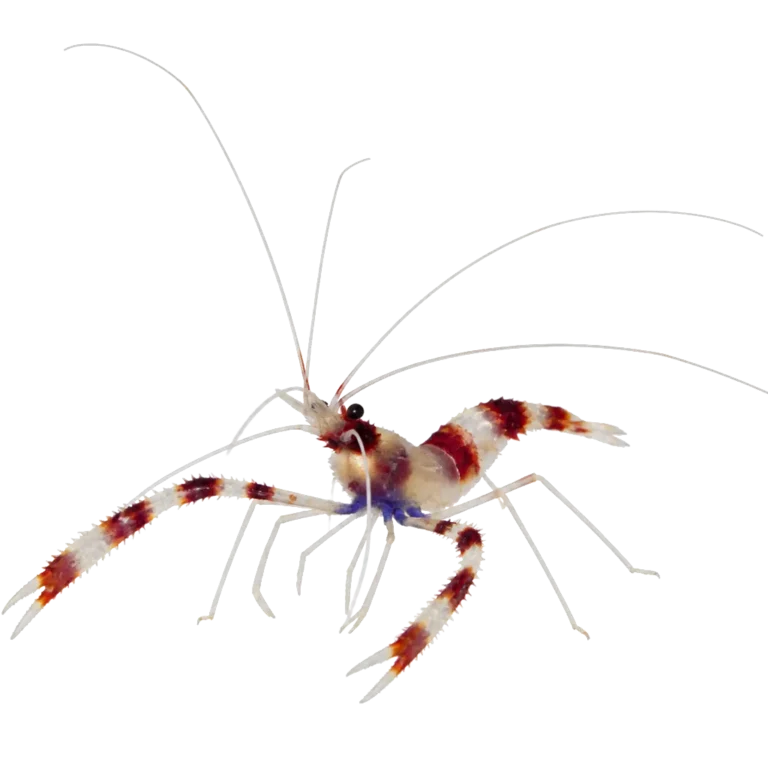
Blue Banded Coral Shrimp
Summary
Stenopus tenuirostris is a small Indo-Pacific stenopodid shrimp recognized by its blue body, banded limbs, exceptionally long antennae, and enlarged display claws. It naturally shelters in reef cavities and beneath overhangs, so a shrimp that spends much of the day tucked into one chosen recess is behaving normally rather than disappearing for a problem.
It is often sold as a cleaner shrimp, but it is also a territorial scavenger around its shelter. Plan for an animal that may clean willing fish occasionally while still defending its immediate area from other shrimp.
Care
Build stable rockwork with a shaded crevice, cave, or overhang that remains accessible after the shrimp is introduced. This species uses enclosed cover as a retreat and is more likely to stay visible at the entrance once it has a secure base.
A mature reef aquarium is preferable because the shrimp depends on dependable food availability and is vulnerable to abrupt changes during molts. Lighting does not need to be selected for the shrimp; shaded structure matters more than bright, open substrate.
Place its shelter away from a constant direct pump jet. It can live with normal reef circulation, but it should be able to hold position and feed from a protected area rather than being forced into exposed water.
Feeding and role
Target-feed a varied meaty marine diet, including mysis, finely chopped seafood, and suitably sized sinking foods. Deliver food near its retreat after the fish have been fed if it stays shy; an otherwise active shrimp that repeatedly loses food to fish can slowly starve despite a well-fed aquarium.
It will collect leftover food and small carrion and may remove material from cooperative fish, but it is not a substitute for nutrient control, routine maintenance, or a diverse cleanup crew. Do not rely on one shrimp to eliminate algae, process all detritus, or cure a fish parasite problem.
Compatibility
Stenopus tenuirostris is generally safe around established corals, but protect it from fish that hunt or crush crustaceans. Hawkfish, large wrasses, triggers, puffers, and similarly predatory tankmates can turn a normally reclusive shrimp into prey, particularly immediately after a molt.
Treat other ornamental shrimp and small crustaceans as a compatibility risk. A resident blue banded coral shrimp may defend its cave and can injure or kill another shrimp that enters its territory, even when it ignores fish nearby.
Keep one shrimp unless buying a confirmed compatible pair. Wild individuals are often found in pairs, but adding unrelated specimens together can lead to persistent chasing or loss of the weaker shrimp; do not assume several individuals will form a colony.
Good to know
Expect the shrimp to vanish into cover before or after molting. Leave the shed shell in place at first, as the shrimp may consume it, and do not disturb its refuge while its new exoskeleton is soft; exposure to fish or another shrimp at this stage is when injuries are most likely.
Do not use copper-based medications in the display aquarium with this shrimp. As a crustacean, it is highly sensitive to copper and similar invertebrate-toxic treatments.
Acclimate carefully to the aquarium’s salinity rather than making a quick transfer from shipping water. Sudden osmotic change can cause immediate stress or a delayed failed molt, so a shrimp that becomes motionless, cannot right itself, or remains uncharacteristically exposed after introduction needs prompt attention.