
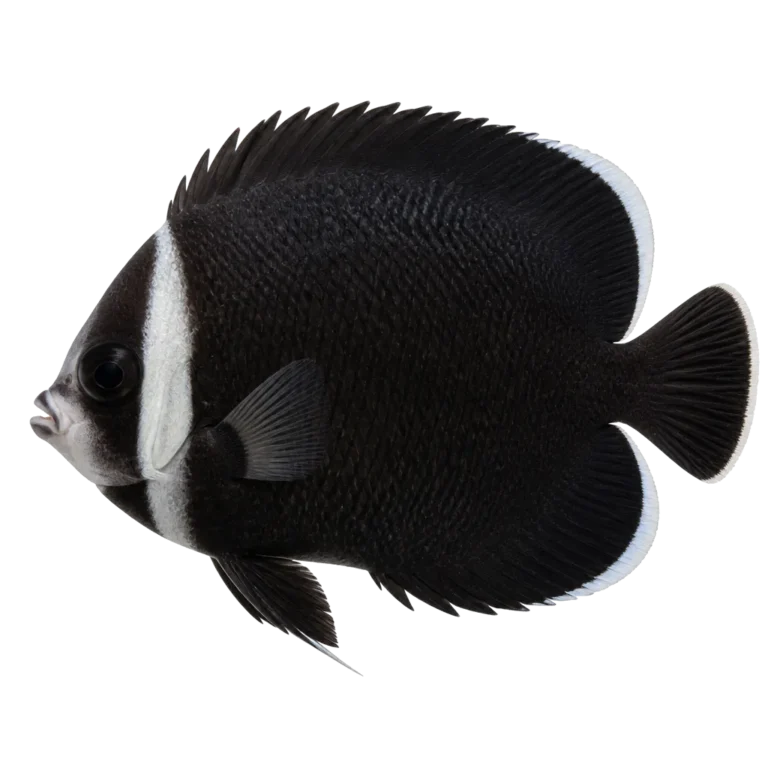
Black-velvet Angelfish
Summary
Chaetodontoplus melanosoma is an active, deliberate cruiser that repeatedly inspects rockwork for grazing opportunities rather than staying in open water all day. In the wild it occurs alone or in pairs around reef structure, which helps explain why a settled individual may treat a large part of the aquascape as its own patrol route and react poorly to similar-looking fish.
Care
Build the aquascape as a network of substantial rockwork, shaded retreats, and through-swims, while leaving an uninterrupted lane for cruising. A Black-velvet Angelfish that cannot move between cover and open water may spend its time pacing the glass, hiding persistently, or escalating territorial chases.
Use secure, mature rockwork with natural grazing surfaces and enough water movement to keep the fish actively working the reef structure. It should be able to disappear into cover when startled, but remain visible and confidently forage through the day once settled.
Feeding
Feed small, varied meals spread across the day. Make sponge-based marine angelfish foods a regular part of the diet, supported by marine algae or spirulina and enriched frozen meaty foods such as mysis. Do not rely on a meat-only menu; a fish that takes mysis eagerly can still lose condition over time if its diet lacks the grazing and sponge component it is adapted to use.
Broadcast some food across more than one area of the tank and, if necessary, offer a second portion near the angelfish’s preferred rockwork. Fast planktivores can strip the water column before it gets a meaningful share. Watch for a fish that remains interested in food but develops a pinched body profile, as that calls for more frequent feeding and a more varied diet rather than simply larger single meals.
Compatibility
Keep Chaetodontoplus melanosoma as the only large angelfish in most home aquariums. It is best paired with robust, non-aggressive fish of a clearly different body shape, while other angelfish and similarly shaped, laterally compressed fish are the most likely targets for sustained chasing. Add it after peaceful community fish have settled, and avoid introducing similar-looking fish into its established territory.
Reef compatibility is individual rather than dependable. A specimen may repeatedly sample soft corals, stony corals, and clam mantles, so do not choose this fish for a reef where those animals cannot tolerate testing or occasional damage. Observe closely after introduction; repeated focused nipping at one coral or clam is a stocking failure, not behaviour likely to be trained away.
Good to know
Territorial behaviour often becomes clearer after the fish has settled and learned the rockwork. Brief displays or chasing during the first days can be normal, but repeated exclusion of a tankmate from food, shelter, or an entire section of the aquarium should be acted on by changing the stocking plan or separating one fish.
New arrivals may spend the first days close to rockwork and feed cautiously. A useful sign of acclimation is regular grazing and confident emergence at feeding time; persistent hiding combined with refusal of prepared foods is more concerning because this species needs frequent, varied intake to maintain condition.