
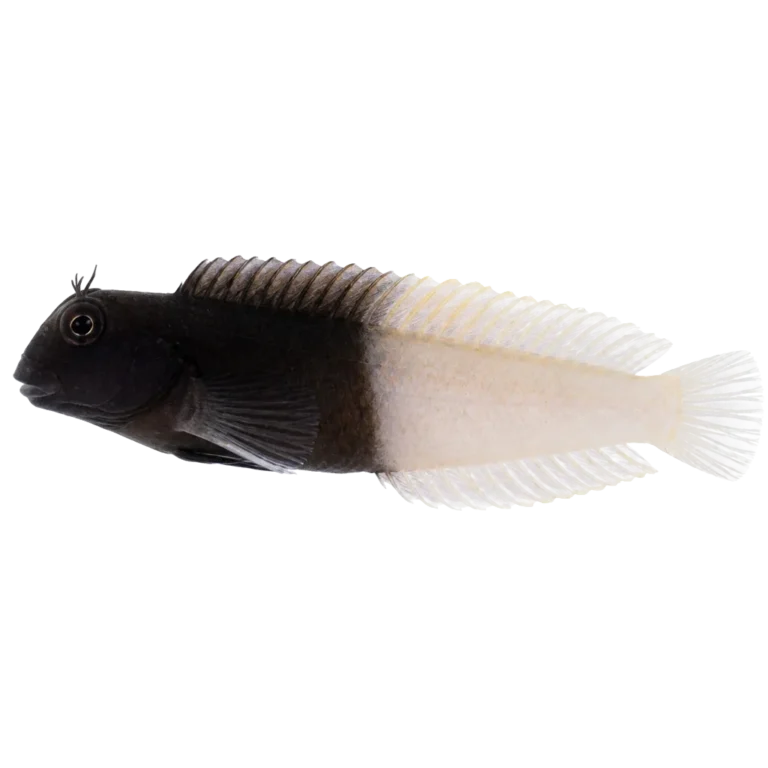
Bicolor Blenny
Summary
Ecsenius bicolor is a rock-perching combtooth blenny that spends much of the day watching from a hole or ledge, then making short dashes to graze nearby surfaces. This is normal behaviour, not a sign that it needs open-water swimming room or a bare aquascape.
Expect one fish to adopt a small patch of rockwork as its base. It is usually peaceful away from that area, but repeated charges at another blenny-shaped fish are territorial behaviour that can become persistent rather than a brief introduction dispute.
Care
Build the aquascape with connected live rock, low ledges, narrow crevices and several snug bolt-holes. Ecsenius bicolor uses these structures as lookout points and retreats; a fish that remains exposed at the waterline or is repeatedly displaced from every perch is being outcompeted or lacks secure cover.
Leave accessible algae-bearing rock in the system rather than treating the fish as a clean-up solution for an otherwise food-poor aquarium. It grazes in short, frequent bouts and does best when its territory provides both perches and natural picking surfaces.
A secure, gap-free lid is important. This species may launch from rockwork when startled or chased, and an unexplained disappearance is often a jumping loss rather than a fish hiding indefinitely.
Feeding
Offer marine algae daily in forms the fish can crop easily, such as nori secured near its preferred rockwork and algae-based pellets or flakes. Supplement with suitable prepared foods it accepts, but keep plant material as the dependable basis of the diet rather than relying on incidental film algae.
Feed in more than one location when quick planktivores or larger fish dominate the water column. Place a clipped sheet or sinking herbivore food close to the blenny’s perch and confirm that it is taking repeated bites; a fish that only watches feeding may slowly lose condition despite an apparently well-fed tank.
Do not allow a very clean display to become its only food source. Hunger increases the chance that an individual will investigate coral tissue or clam mantles, especially fleshy LPS corals.
Compatibility
Keep Ecsenius bicolor singly for the most predictable result. A known, established pair may coexist where rockwork provides separate retreats, but retail fish are difficult to sex reliably and adding a second blenny to an occupied territory can lead to relentless chasing.
Favour peaceful fish that use different parts of the aquarium, especially open-water or midwater species. Avoid other combtooth blennies, similarly shaped perchers, and assertive rock-dwelling fish that can claim the same holes or prevent the blenny from feeding.
Introduce the bicolor blenny before more forceful territorial rock dwellers whenever possible. Once another fish has claimed the lower aquascape, the blenny may be confined to exposed perches and become a poor feeder.
Treat reef compatibility as individual-dependent. Most specimens ignore corals, but any fish repeatedly taking bites from fleshy LPS tissue or clam mantles should be considered a direct husbandry problem, not harmless grazing; improve access to algae-based food and be prepared to remove the fish if the behaviour continues.
Good to know
Territorial behaviour can intensify after the fish has settled and selected a preferred hole. Brief displays are common, but repeated pursuit that stops another fish from perching, grazing or emerging calls for separating the competitors or changing the stocking plan.
Ecsenius bicolor occurs in more than one colour phase, so an individual may not always show a sharply divided dark-and-yellow pattern. Do not diagnose illness from colour pattern alone; reduced appetite, laboured breathing, persistent hiding and loss of body condition are more useful warning signs.
If the fish begins nipping a particular coral, observe whether this occurs most often before or during feeding. That pattern commonly points to food-seeking behaviour, but continued tissue damage warrants intervention even if the blenny otherwise appears well fed.