
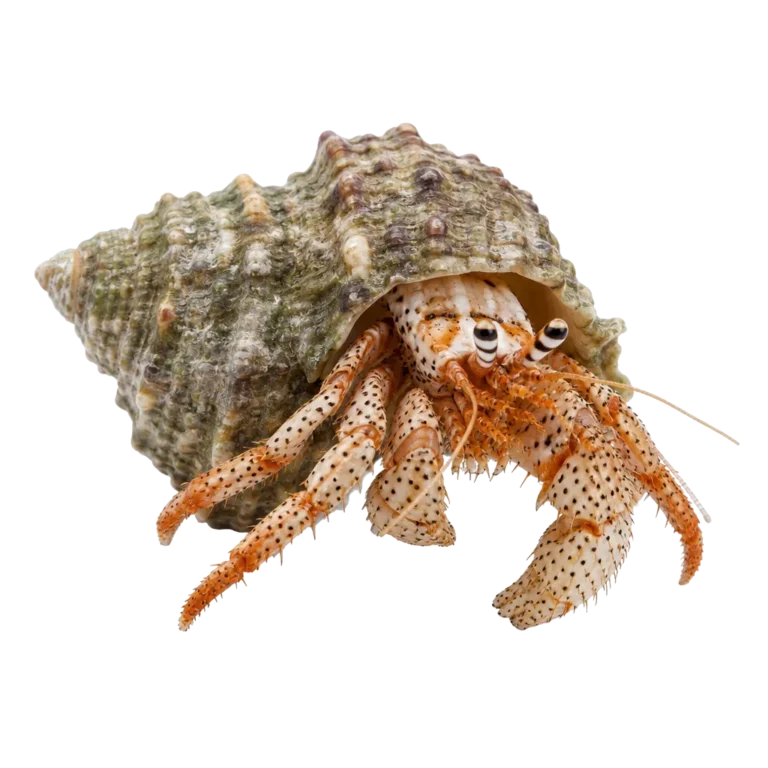
Banded Eye Hermit Crab
Summary
Paguristes tortugae is a western Atlantic hermit crab that lives in an empty gastropod shell, so its shell is both armor and a limiting resource. Its banded eyestalks and legs can help distinguish it from more familiar reef hermits, but identification matters: similar-looking hermits can differ substantially in appetite and aggression.
It occurs on a range of coastal bottoms, including rock, algae-covered hard substrate, sand, and rubble. In an aquarium it spends much of its time picking over surfaces and retreating into its shell; repeated attention to another snail or hermit usually indicates shell competition rather than routine grazing.
Care
Keep this crab in a biologically mature marine aquarium with established rockwork and substrate to forage over. A mixed sand, rubble, and rock layout suits its natural flexibility better than a bare display, while stable rockwork prevents collapses when it climbs beneath or around it.
Offer crevices and shaded spaces where it can remain undisturbed during vulnerable periods. It does not require species-specific lighting or a special flow pattern, but avoid directing a forceful pump outlet at the area where it normally shelters.
Feeding and role
Feed a varied omnivorous diet rather than relying on nuisance algae or leftovers. Small sinking crustacean foods, finely chopped marine foods, and occasional dried seaweed are useful supplements, especially in tidy aquariums where film algae and detritus are scarce. A crab that repeatedly prowls at feeding time or investigates tankmates’ shells may need more available food or better shell options.
It will consume small scraps, detritus, biofilm, and some algae, but one Paguristes tortugae is not a solution for a persistent algae problem or for uneaten food accumulating in inaccessible areas. Its useful role is opportunistic surface scavenging; remove excess food and address the underlying cause of algae or detritus instead of adding more hermits.
Compatibility
This species is generally suitable around corals, though it may climb colonies and dislodge unsecured frags while foraging. Mount loose corals and small rocks firmly. The greater reef-safe limitation is its potential to attack snails or smaller hermit crabs for a shell, particularly when suitable vacant shells are unavailable.
Do not combine it with predators that readily crush or pick at crustaceans, such as large aggressive crabs, mantis shrimps, triggerfish, puffers, and predatory wrasses. Add it singly when snail losses would be unacceptable. More than one can be kept where food is adequate and a broad selection of clean, empty gastropod shells is always available, but monitor closely for shell inspections, chasing, or evictions.
Good to know
Keep several unoccupied shells of varied shapes and slightly larger openings available before adding this hermit, then replace them as they are used. Shell scarcity is a practical cause of snail and hermit losses; a crab persistently climbing onto occupied shells, pulling at them, or fighting with another hermit is a sign to add more appropriate options.
Paguristes tortugae molts to grow and may remain hidden before or after shedding. A motionless, hollow-looking shell or shed exoskeleton should not be removed immediately, because the crab may be concealed nearby and can consume the molt for minerals. Avoid disturbing its shelter during this period.
Like other crustaceans, it is highly vulnerable to copper-containing medications and abrupt changes in salinity or water chemistry. Use a slow acclimation process, and never place it in a system being treated with copper.