
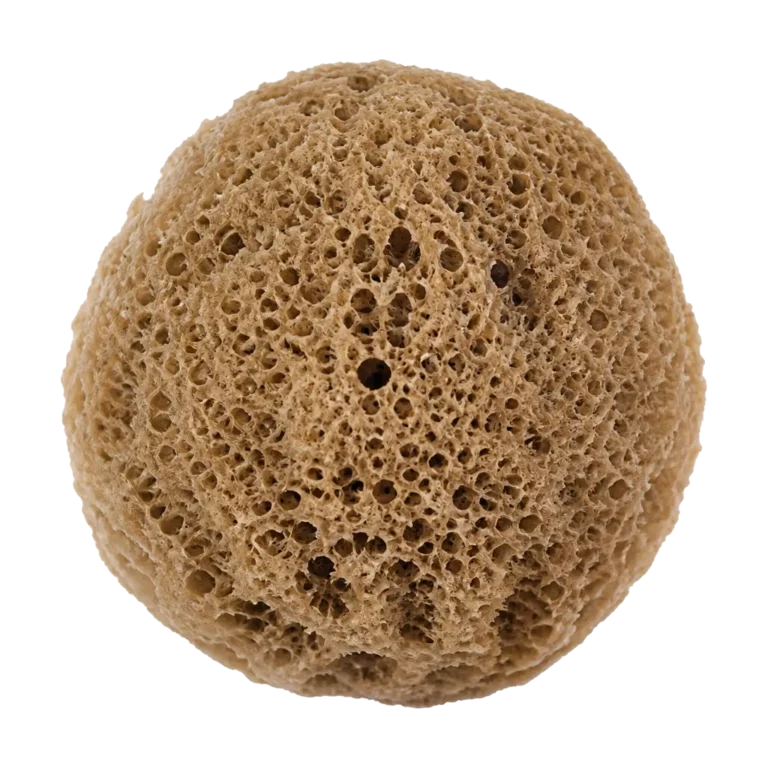
Ball Sponge
Summary
Cinachyrella australiensis is a non-photosynthetic, usually rounded sponge with a bristly surface of projecting spicules that can collect sand and fine sediment. It occurs in varied Indo-West Pacific coastal habitats, including reefs, mangroves and marine lakes, so a light dusting of sediment is not automatically a problem; sustained smothering, algae growth, or clogged openings is.
paragraphs
Care
Add a Ball Sponge only to a mature reef with a dependable supply of suspended planktonic food. Place it in shade or low light, where continuous indirect flow carries fine particles across the sponge and prevents debris from settling into its surface. Avoid a harsh jet aimed directly at it, which can abrade tissue or keep the sponge folded against its attachment point.
Secure it where it will not be moved, buried, or shaded by expanding coral or macroalgae. This is not a suitable animal for a newly established or highly nutrient-stripped display: it may remain intact for a time while gradually starving.
Feeding and role
Feed fine suspended foods frequently, including phytoplankton, bacterioplankton-based products, and suitably fine commercial sponge or plankton foods. Broadcast food into the water column with circulation running so particles pass over the sponge rather than settling on it; concentrated, coarse food placed on the surface can foul its tissue.
A Ball Sponge filters microscopic plankton and fine organic particles from the water. It is not a practical substitute for mechanical filtration, does not remove visible detritus from the sandbed, and will not control nuisance algae. Its cleanup contribution is limited to the small volume of water it can filter while being fed enough to survive.
Compatibility
Cinachyrella australiensis is peaceful and reef-compatible, but it is vulnerable to fish that nip or specialize on sponges. Do not house it with sponge-feeding angelfish or butterflyfish, or with any persistent picker that repeatedly damages its surface; repeated nipping can lead to localized tissue loss and decay.
It does not sting corals, but give it unobstructed water flow and prevent neighboring corals, algae, or encrusting organisms from growing across its surface and openings. Keep it as an individual unless the system is deliberately maintained to feed several sponges; it has no social need for companions, while each additional sponge increases the demand for fine suspended food.
Good to know
Keep the sponge submerged during acclimation and placement. Air trapped in its internal canals can interrupt water movement through the body and cause tissue death, so open the transport bag underwater and transfer it without lifting it into air.
Do not expose the display to copper medications or other treatments intended for fish while the sponge is present. Watch for whitening, a slimy surface, rapid shrinking, or tissue sloughing rather than treating a dusty exterior as disease; these signs more often indicate damage, inadequate feeding, blocked flow, or decline. Remove a specimen that is clearly decomposing, because dying sponge tissue can foul the aquarium.