
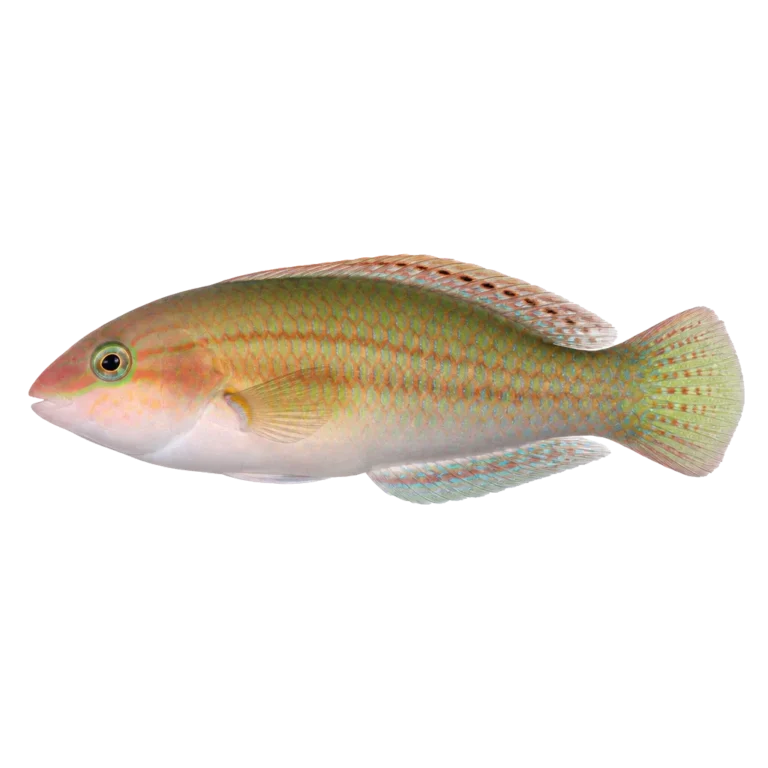
Babi Wrasse
Summary
The Babi Wrasse, Halichoeres pallidus, is a constantly foraging Halichoeres that spends the day weaving through rockwork and over the sand in search of small animal prey. Its habit of disappearing into the substrate is normal: it buries to sleep and may also do so when startled or settling after introduction.
This is best treated as a single active fish for a mature reef with open cruising room and a usable sand bed, rather than as a decorative fish that will remain in one cave or perch. Wild groups include females with a dominant male, which helps explain why established individuals may not welcome another similar wrasse into their space.
Care
Build the aquascape with open lanes around and between stable rock structures so the fish can make repeated foraging passes without being forced into the water column. Leave part of the substrate unobstructed and use fine, soft sand deep enough for complete burial; coarse gravel or sharp crushed coral can injure a wrasse that dives into it when alarmed.
Provide shaded rock overhangs and visual breaks, but do not expect the wrasse to use a cave as its primary nighttime shelter. A newly added fish may stay buried for a period after transport; allow it to emerge on its own rather than digging through the sand, which can turn a normal stress response into a prolonged setback.
Keep it with fish that allow it access to the lower rockwork and substrate. Persistent chasing by established territorial fish can prevent feeding and leave the wrasse buried through much of the day.
Feeding
Offer several small, varied carnivore-focused feedings across the day, using items such as mysis, finely chopped marine crustacean flesh, enriched frozen foods, and a quality small pellet once it recognizes prepared food. Scatter or direct some food near the rock base and sand so a shy newcomer can feed without having to compete at the surface.
Do not rely on pods, worms, or nuisance invertebrates in the display to sustain it. Those foods may encourage natural hunting, but an otherwise clean aquarium can leave an active wrasse underfed; a pinched body or reduced daytime searching should prompt more reliable prepared feeding.
Watch fast plankton-feeding tankmates at meals. If the Babi Wrasse repeatedly investigates food but loses it to damsels, anthias, or larger wrasses, briefly slow circulation or feed in more than one area so it can take substantial bites.
Compatibility
Keep one Babi Wrasse in most home reefs. Although Halichoeres pallidus occurs naturally in small female groups with a dominant male, adding a second individual to an established aquarium can lead to persistent chasing; only attempt a group when all fish can be introduced together into a substantially larger, highly structured system with multiple feeding areas.
Favour peaceful to moderately assertive fishes that occupy different niches, such as many gobies, cardinalfish, clownfish, and non-belligerent tangs. Avoid housing it with larger, forceful wrasses or highly territorial fish that patrol the same rock-and-sand zone, especially if they are already established.
Add the Babi Wrasse before more aggressive later additions when possible, so it can learn feeding routes and choose a burial area without immediate territorial pressure. Its reef-with-caution status is primarily an invertebrate issue: small ornamental shrimp, tiny crabs, and other small mobile invertebrates can be treated as prey even when corals are left alone.
Good to know
Fit a tightly secured lid or screen before introduction. This species can launch from the aquarium when startled, during disputes, or while reacting to sudden light changes; an apparently settled wrasse can still jump later.
Expect the fish to vanish into the sand at night and sometimes after a scare. Do not dismantle the aquascape or sift its chosen resting area in response; concern is warranted instead if it remains missing unusually long and there are additional signs of harassment, injury, or failure to eat after reappearing.
A fish that begins repeatedly targeting ornamental crustaceans is expressing normal predatory behaviour, not necessarily hunger or aggression. Move vulnerable invertebrates rather than expecting feeding alone to make them safe.