
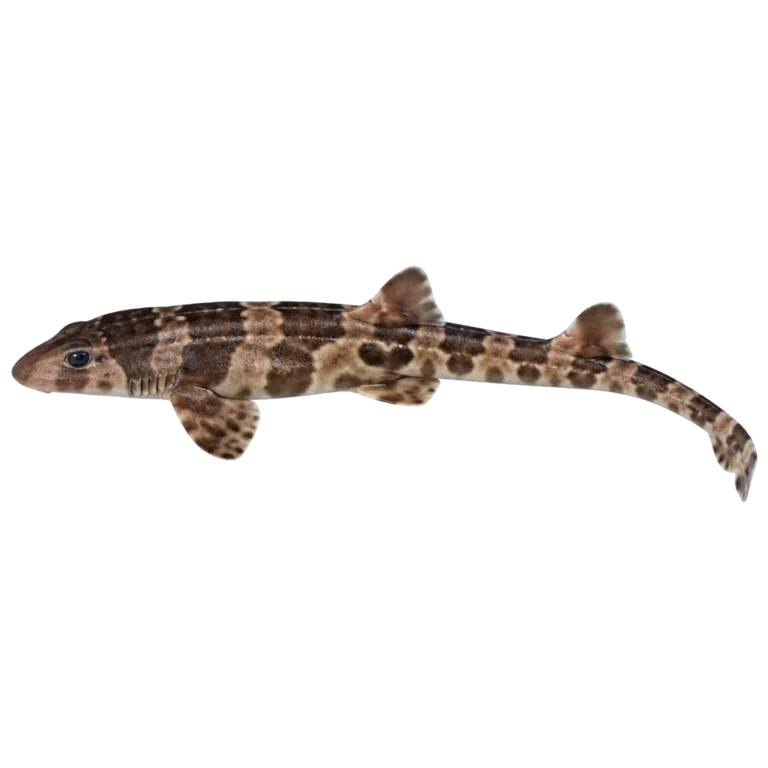
Australian Marbled Catshark
Summary
The Australian Marbled Catshark, Atelomycterus macleayi, is a bottom-oriented, largely nocturnal shark that spends much of the day resting under cover and becomes more purposeful around feeding time. Its preference for sandy and rocky inshore bottoms explains why it is a poor fit for a conventional coral reef display built around dense rockwork, small fish, and ornamental crustaceans.
Treat this as a specialist shark-system animal rather than a community reef fish. A shark that repeatedly circles glass, abrades its underside, or cannot settle beneath a secure ledge is telling you that the floor space, substrate, or layout is unsuitable.
Care
Build the aquarium around uninterrupted bottom area, not vertical rockwork. Use deep, fine, non-abrasive sand and keep broad turning routes clear; sharp rubble, coarse gravel, and narrow rock corridors can damage the soft belly and fins as the shark rests or moves along the substrate.
Secure any rockwork directly and permanently before the shark is introduced, with caves or overhangs large enough for it to lie beneath without being wedged. Rearranging rock around an established shark risks crushing it or removing its daytime refuge.
This species needs a high-oxygen, heavily filtered marine system that can process substantial meaty-food waste without leaving debris on the sand. Aim flow so it maintains oxygenation and moves waste toward filtration, while leaving sheltered bottom areas where the shark can rest without being continuously pushed by current.
Feeding
Offer a varied marine carnivore diet at dusk or after lights-out, when the shark is most likely to search actively. Rotate appropriately sized pieces of marine fish, shrimp, squid, clam, mussel, crab, and other whole marine foods rather than relying on one item such as peeled shrimp.
Target-feed on the substrate with feeding tongs or place food immediately in front of the shark’s snout. Fast daytime fishes often take food first, while a catshark may remain still until competitors move away; a shark that regularly misses meals needs separation at feeding time, not simply more food added to the tank.
Avoid allowing uneaten seafood to remain in the aquarium. Food left on the sand rapidly worsens water quality, while chronic overfeeding can leave the shark inactive and excessively heavy rather than properly conditioned.
Compatibility
Keep with calm, non-nipping fishes that are too large to be swallowed and that will not dominate every feeding. Large triggers, puffers, assertive wrasses, and similarly intrusive fishes can bite at the eyes, fins, or skin of a resting shark; even a seemingly minor wound can become a serious problem.
Do not regard it as reef safe simply because it may leave corals alone. Shrimp, crabs, and similar mobile invertebrates are potential prey, and small fishes can be taken when they settle to sleep near the bottom at night.
Social behavior in this species is not well documented for home aquaria, so do not assume several will school or share shelter peacefully. Keep a single individual unless the system has been designed specifically for multiple sharks, with ample separate resting places and enough floor area for each animal to avoid continual contact.
Add the catshark only after the sand bed and shelter layout are final, and before assertive feeding competitors become established. Introducing it into a busy mature community often produces a shark that hides continuously and loses feeding opportunities.
Good to know
Nocturnal behavior can be mistaken for illness. A healthy individual may remain motionless under cover through the day and then investigate the bottom after dark; concern is warranted when it also refuses food, breathes persistently hard, cannot right itself, or develops abrasions.
Use only shark-safe treatment planning. Catsharks are highly sensitive to copper-based medications, so medication errors can be dangerous even when the product is tolerated by bony fishes.
Fit a secure lid with no gaps around plumbing or cables. A startled shark can surge upward or travel along the glass, and an escape attempt is an acute emergency rather than a behavior to wait out.