
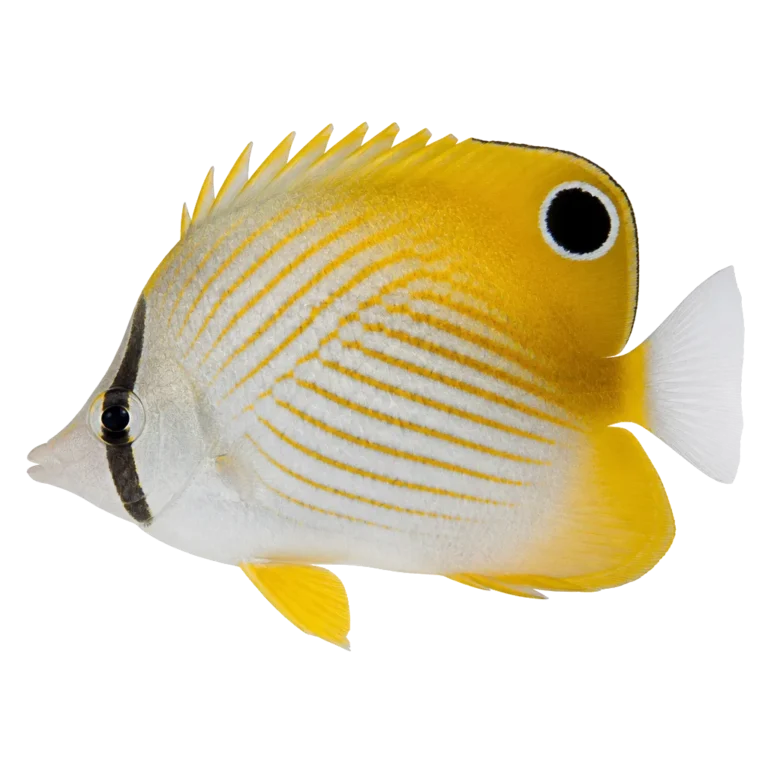
Auriga Butterflyfish
Summary
Chaetodon auriga is an active daytime browser that repeatedly cruises rockwork, sand margins and open water, stopping to inspect and pick at surfaces. This constant foraging behaviour means a fish that spends its day pacing the glass, searching every coral, or repeatedly working one small area is not simply “busy”: it may be underfed, short of grazing opportunities, or confined by the layout.
Its flexible natural diet makes it more adaptable to prepared foods than many specialist butterflyfish, but it also explains its poor fit for a conventional reef display. Expect it to test coral tissue, anemones and other attached invertebrates rather than treating them as scenery.
Care
Build the aquascape around uninterrupted swimming lanes, with rock structures placed as islands or along the back rather than forming a solid wall. Chaetodon auriga needs room to turn and cruise while still being able to weave through ledges and overhangs during its regular picking behaviour.
Use stable, mature rockwork with many surfaces to investigate, and leave at least one calm retreat where the fish can get out of sight. A newly introduced specimen may stay close to cover at first; persistent hiding, rapid breathing, or refusal to emerge for food is a warning that it is being intimidated or has not settled.
Aim flow across the aquarium rather than a narrow, forceful jet into its preferred route. It is an active swimmer, but should be able to pause and feed at the rockwork without being continually pushed away.
Feeding
Offer a varied marine diet in small, repeated feedings spread through the day. Combine finely chopped meaty foods such as mysis and other marine crustaceans with quality algae- or spirulina-containing preparations; rotate foods rather than relying on enriched brine shrimp as the main item.
Feed in more than one area when fast planktivores, tangs or assertive wrasses are present. Chaetodon auriga often spends time picking food from surfaces instead of winning a brief open-water rush, so watch that it actually swallows food and does not merely investigate it.
Do not treat coral picking as evidence that the fish is fully fed. Coral, anemones and worms may still be sampled even by an individual eating prepared food well; a visibly narrowing body or a hollow area behind the head calls for a prompt increase in feeding access and diet variety.
Compatibility
Keep one Chaetodon auriga unless obtaining a proven, compatible pair. Unfamiliar adults or similarly shaped butterflyfish can be treated as territorial rivals, with chasing and exclusion becoming more likely after one fish has claimed the aquascape. Do not assume that adding a second fish later will create a pair.
Choose calm-to-moderately assertive fish that leave it access to food and swimming space. Avoid housing it with persistent bullies, especially established large angelfish, triggerfish, aggressive tangs, or pugnacious butterflyfish that can prevent it from feeding normally.
Add it before strongly territorial fish where possible, or rearrange established territories before introduction. This species is not reef-safe: coral polyps, anemones, feather dusters and other sessile invertebrates are all at risk of repeated picking or consumption.
Good to know
Inspect feeding response before purchase and continue to assess body condition during the first weeks. A specimen that pecks at food but does not take it in, loses fullness, or becomes increasingly reclusive needs intervention early; butterflyfish can decline quickly when feeding is only superficial.
Territorial behaviour may appear after an initially peaceful settling period. Repeated following, flank displays, nipping, or keeping another butterflyfish confined to one end of the aquarium indicates a failed social match, not normal play; be prepared to separate or rehome one fish.
Use a secure cover. An alarmed or newly introduced butterflyfish can jump, particularly when chased or startled during lights-on and lights-off transitions.