
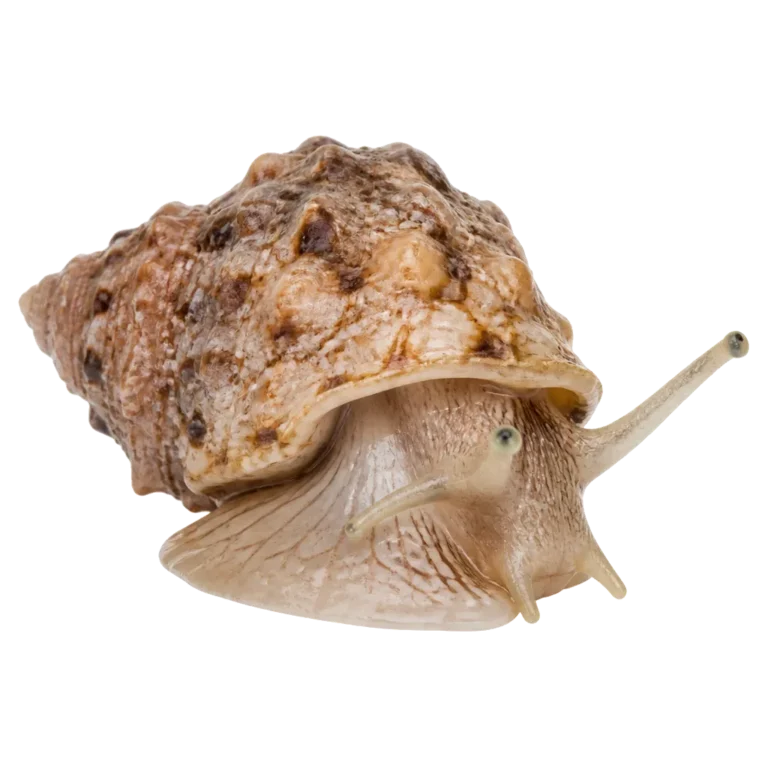
Astraea Snail
Summary
Astraea tecta, also listed in current taxonomy as Lithopoma tectum, is a conical, heavily sculptured marine snail that spends its time grazing hard surfaces. Its rocky Western Atlantic and Caribbean habitat explains its aquarium preference for algae-coated rock and glass rather than open sand: it is a surface grazer, not a sand-sifting snail.
Care
Add Astraea snails only after the aquarium has developed visible film algae, diatoms, and biofilm on rock or glass. Provide stable rockwork with broad, accessible grazing surfaces; they do not need a dedicated burrowing substrate or shelter. Sand is acceptable in a reef, but avoid creating steep, loose areas where a fallen snail can remain upside down.
Lighting is relevant indirectly because the snail depends on algae growth, not because it needs light itself. In a very clean or newly established aquarium, there may be too little natural food to support it.
Feeding and role
Astraea tecta grazes film algae, diatoms, and other microalgae from glass and rock. If those surfaces stay visibly clean, offer dried seaweed or algae-based sinking foods where the snail can reach them; a snail that repeatedly searches bare glass and rock may be short of food.
Use it as one part of a cleanup crew, not as a cure for an algae outbreak. It is most useful against thin algal films and diatom coatings on hard surfaces, but it will not meaningfully remove detritus, turn sand, or solve nutrient-driven nuisance algae on its own.
Compatibility
This snail is reef compatible and does not prey on corals. Keep it away from animals that eat or crush snails, including predatory crabs, mantis shrimp, puffers, and snail-eating wrasses or triggerfish; an empty or damaged shell is the usual observable result of a compatibility failure.
Keep conspecific numbers proportional to the available algae. Several can coexist peacefully, but add them gradually rather than stocking a large group into a small amount of grazing area, since food competition can leave the least successful snails starving after the glass has been cleaned.
Good to know
Check for overturned snails, especially after maintenance, rockwork changes, or strong-flow events. Astraea tecta often cannot right itself on smooth sand or bare-bottom areas; turn an upside-down snail upright on a firm surface promptly, because an otherwise healthy snail can die if left stranded.
Acclimate carefully to avoid abrupt salinity and temperature change. Like other marine snails, it is highly vulnerable to copper-based medications; do not place it in a system treated with copper.