
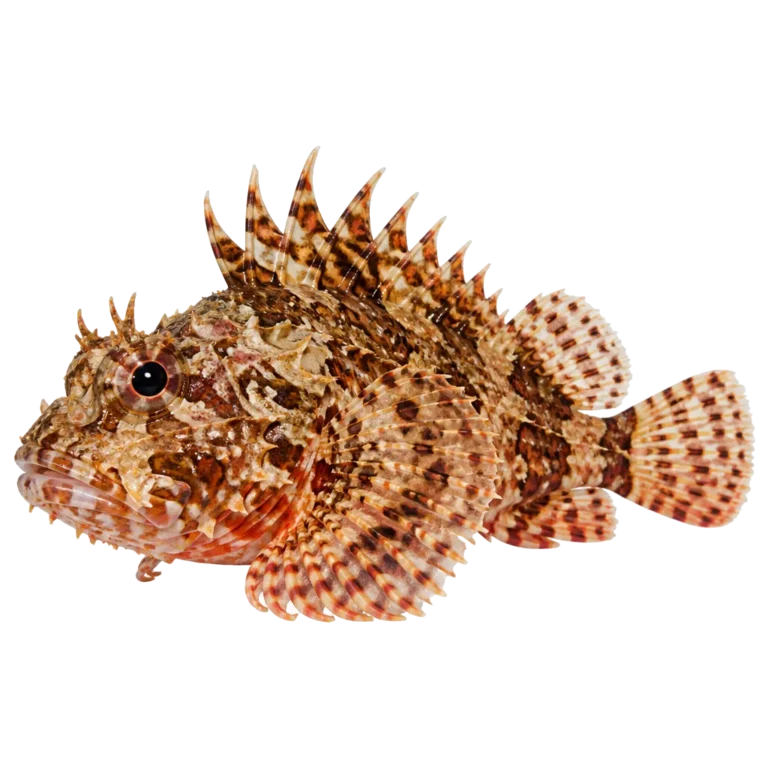
Ambon Scorpionfish
Summary
Ambon Scorpionfish is a solitary, cryptic ambush predator that spends much of the day motionless on the bottom, relying on camouflage rather than open-water swimming. Its tendency to disappear into algae-like décor, rubble, or shadow is normal; a fish that remains perched but watches passing food is usually behaving as intended.
Its prey response is sudden and size-based: anything small enough to fit in its mouth can be treated as food, including established tankmates that initially seemed too quick or too large to interest it. Stock for its eventual mouth size, not its apparent inactivity.
Care
Build the aquascape around resting stations rather than long swimming lanes. Use stable rock, rubble, and sheltered sand-level areas where the fish can perch and blend in, while leaving a clear feeding zone in front of its chosen cover. Avoid directing strong, turbulent flow at those stations; a fish repeatedly struggling to hold position or abandoning its preferred perch needs a calmer refuge.
Secure every rock structure before adding it. This fish may wedge beneath ledges or sit against rockwork, and its stillness makes it easy to overlook during maintenance. Plan routine access so algae cleaning, coral placement, and equipment work do not force hands close to the fish.
Feeding
Offer varied marine-based meaty foods with feeding tongs or a feeding stick, placing each item close enough for the fish to strike without chasing it through the aquarium. Chopped marine fish, shrimp, clam, and other suitably sized frozen seafood are useful staples; rotate foods rather than relying on a single item.
Feed deliberately and remove missed food promptly. The Ambon Scorpionfish has a low-activity ambush lifestyle, so repeated heavy feeding can leave food decomposing in the aquarium or produce an overconditioned fish. Newly imported specimens may initially refuse nonliving food; use movement from tongs to trigger a strike and transition away from freshwater feeder fish, which are nutritionally unsuitable as a staple.
Compatibility
Keep one Ambon Scorpionfish per aquarium. It is naturally solitary, and adding another cryptic bottom predator can create competition for resting places and food without giving the keeper an easy way to read escalating tension.
Choose calm fish that are clearly too large to swallow and that will not harass its fins or monopolize every feeding. Avoid small gobies, dartfish, juvenile fish, ornamental shrimp, and similarly sized crustaceans; reef compatibility is conditional because these animals can become prey. Add vulnerable small livestock before this fish only if it will remain safely beyond its swallowing range, not because it has ignored them during the first few days.
Good to know
Treat every dorsal spine as venomous. Never attempt to net, hand-catch, or move the fish by pressing it against a container; use a rigid specimen container when relocation is necessary, and visually confirm its location before placing hands into the aquarium. A sting is a realistic maintenance hazard because the fish often remains perfectly still until disturbed.
Do not interpret camouflage, colour change, or long periods without roaming as illness by itself. Investigate instead when it stops orienting toward food, cannot maintain its perch, breathes unusually hard, or develops visible damage around the mouth and fins.