
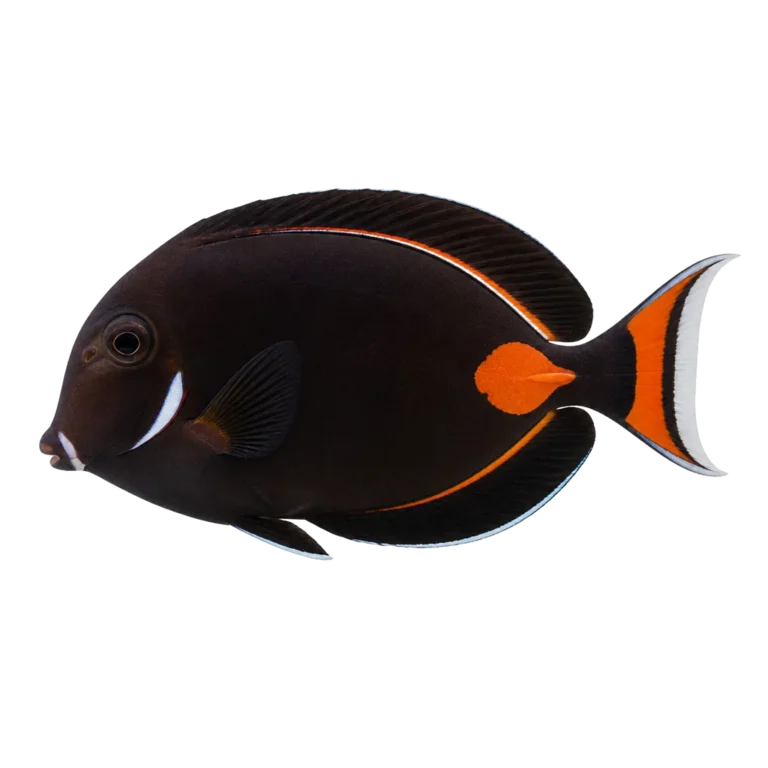
Achilles Tang
Summary
Acanthurus achilles is a continuously active algae grazer from surge-exposed reefs. In an aquarium, it should spend much of the day cruising into strong flow and picking at rockwork; persistent pacing along the glass, hiding, or labored breathing is a warning that its environment, social pressure, or acclimation is not working.
This is a demanding surgeonfish rather than a general community tang. Its grazing territory and laterally compressed body make it quick to challenge similar fish, while its need for highly oxygenated, moving water leaves little margin for a poorly established or crowded system.
Care
Build the aquascape around an open, uninterrupted swimming circuit, with firmly secured rockwork placed to the sides rather than as a wall across the tank. Add several shaded crevices and breaks in line of sight so the fish can withdraw when startled or when another fish passes through its route.
Provide vigorous, broad water movement and strong gas exchange rather than a single harsh jet aimed at the fish. Acanthurus achilles is adapted to turbulent, oxygen-rich water; hanging near the surface, seeking pump outlets constantly, or breathing faster than other fish should prompt an immediate check of oxygenation, temperature, and aggression.
Treat the listed minimum tank size as a floor, not a reason to fill the available swimming space with additional large fish. This species needs room to turn, graze, and evade conflict without being forced into repeated face-to-face encounters.
Feeding
Offer marine algae repeatedly through the day, using secured sheets or clips as well as established grazing surfaces on the rockwork. Supplement with varied herbivore preparations and small portions of quality frozen foods so the fish maintains body mass without losing the constant fiber intake that drives its normal feeding behaviour.
Use more than one feeding point when fast, assertive fish are present. An Achilles Tang that is repeatedly displaced from algae may look active but gradually develop a pinched belly, reduced grazing, escalating aggression, or opportunistic picking at small invertebrates.
Do not rely on leftover flakes or a single large feeding. Underfeeding is especially risky for this high-demand grazer and can turn normal foraging into persistent harassment of tankmates or reef inhabitants.
Compatibility
Keep Acanthurus achilles as the only Achilles Tang in most home aquaria. Attempts to keep a pair or group commonly become a dominance contest once the fish establish feeding routes, and the subordinate individual may be trapped in hiding or denied food.
Favour fish with a different shape, feeding niche, and use of the water column. Avoid adding similarly shaped surgeonfish, especially other Acanthurus species, or established territorial grazers that will contest the same rockwork and swimming lanes.
Add the Achilles Tang after less assertive fish have settled, but before another highly territorial surgeonfish becomes established. If other tangs are unavoidable, introduce carefully planned companions at the same time in a substantially larger, aquascaped system; adding one to an entrenched tang territory is the higher-risk scenario.
It is generally suitable for coral reefs, but an underfed individual may pick at small invertebrates. Treat such picking as a feeding and competition warning first, rather than assuming the fish is inherently reef-safe under all conditions.
Good to know
This species is notably vulnerable to external parasite outbreaks and can decline quickly when stressed. Refusing algae, flashing, excess mucus, rapid breathing, or fine white spotting should be treated as an urgent health problem, especially because stress from transport or tang aggression can make signs appear soon after introduction.
Handle with care during capture or removal: the sharp tail spine can injure both other fish and the aquarist. Use a specimen container where possible instead of forcing the fish into a net, which can provoke tail-lashing and damage fins or skin.
Aggression may not be obvious on the first day. Watch over the following weeks for repeated lateral displays, circling, tail-slashing, blocked access to algae, or one fish remaining hidden; these are signs that the social hierarchy is becoming unsafe rather than harmless settling-in behaviour.